There’s a building in Bengaluru’s commercial corridor that went up in 2018 with premium ACP facade panels PVDF coated, BIS certified, properly specified. By 2022 it looked like it had been there since 2008. Not because the material failed. Because nobody cleaned it.
The panels were fine. The coating was performing exactly as it should. What had happened was four years of Bengaluru’s dust, vehicle exhaust, and construction particulate accumulating in layers baking on in summer, washing into differential streaks in monsoon, hardening in the post-monsoon dry. By the time anyone looked critically at the facade, the contamination had bonded to the coating surface to the point where standard cleaning required considerably more effort than the straightforward maintenance that would have prevented it.
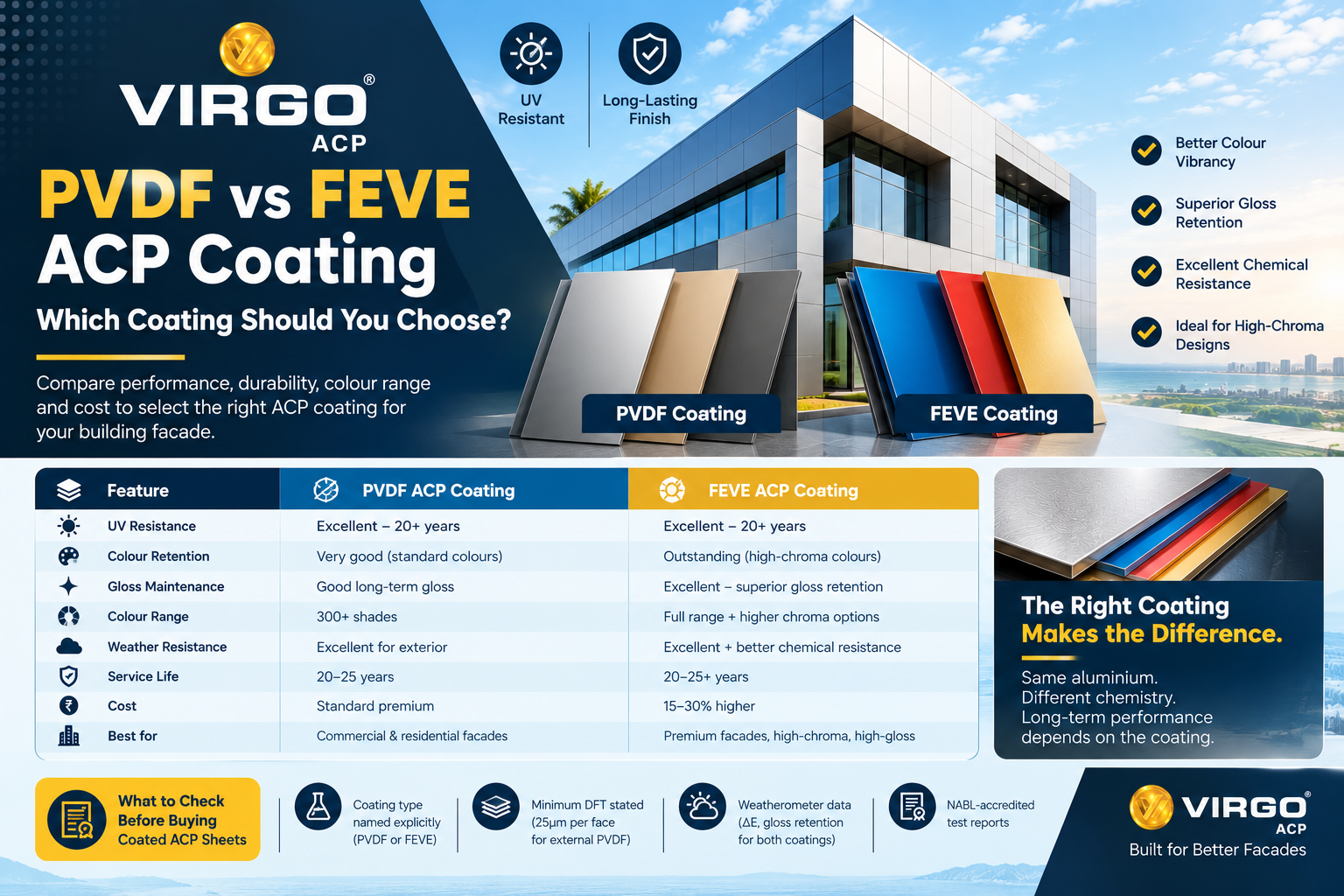
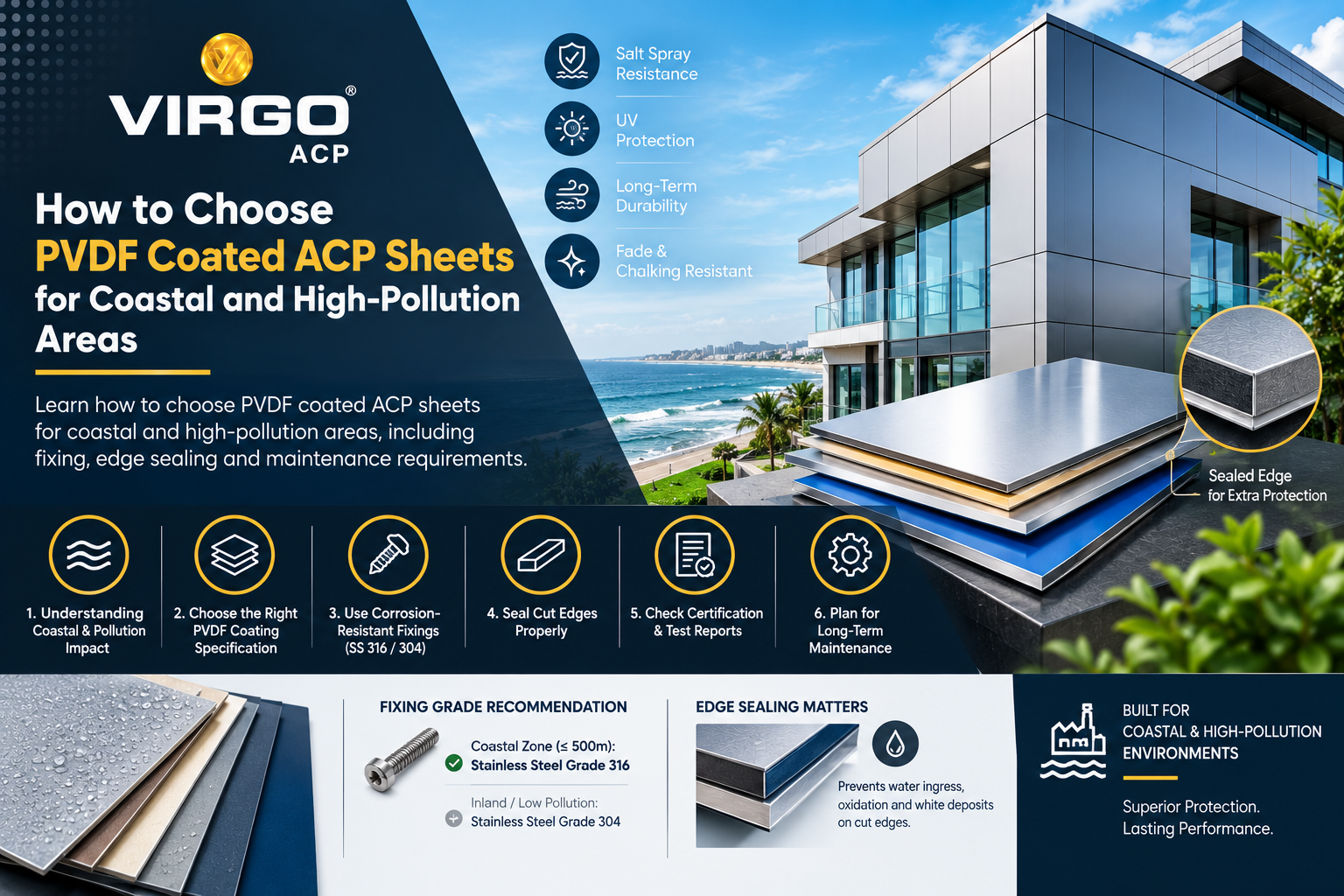
PVDF coated ACP facade panels are sold as low-maintenance correctly but low-maintenance doesn’t mean zero-maintenance. The distinction matters enormously for what a building looks like at year five, ten, and fifteen. With properly specified PVDF coated ACP sheets, regular maintenance can help preserve both appearance and performance. This is also an important consideration for projects using ACP cladding sheets from manufacturers such as Virgo ACP.
What Actually Accumulates on an ACP Facade
Atmospheric dust and particulate
In Indian urban environments, a fine particulate layer settles on every surface within weeks. Left on the facade, it traps moisture, binds with organic material in the air, and transitions from something you can rinse off to something that requires detergent, and eventually to something harder still. This is particularly noticeable on exterior wall cladding panels exposed to busy roads and construction activity.
Bird contamination
Guano is acidic uric acid in bird droppings can begin etching PVDF coating if left in contact for extended periods. On buildings with regular bird activity at horizontal ledges or overhangs, this needs to be addressed quickly. It’s one of the few maintenance issues where delaying by even a few weeks makes a difference.
Sealant staining
Silicon sealant at panel joints can discolour and pick up dirt, creating visible dark lines that detract from appearance even when panels are clean.
How Often to Clean, and How to Decide
| Environment | Recommended Cleaning Frequency |
|---|---|
| Rural or low-pollution | Once per year |
| Standard urban commercial | Twice per year pre- and post-monsoon |
| High-pollution / industrial zone | 3–4 times per year |
| Coastal areas | 3 times per year minimum |
| Below tree canopy | As required for biological growth |
The pre-monsoon clean is worth emphasising specifically. Removing dust and pollution that has accumulated through the dry months before monsoon begins prevents that material from being driven into panel joints, sealant lines, and fixing points by the first heavy rains. Regular cleaning is especially useful for maintaining the appearance of ACP facade panels in demanding urban environments.
Correct Cleaning Method
- Rinse facade with clean water to loosen surface dust before any contact
- Apply mild pH-neutral detergent solution (1 part detergent to 20 parts water)
- Clean with soft cloth, sponge, or low-pressure soft brush never abrasive pads or wire wool
- Rinse thoroughly top to bottom; allow to dry naturally
- Do not use: abrasive compounds, solvent-based cleaners, high-pressure jets closer than 300mm
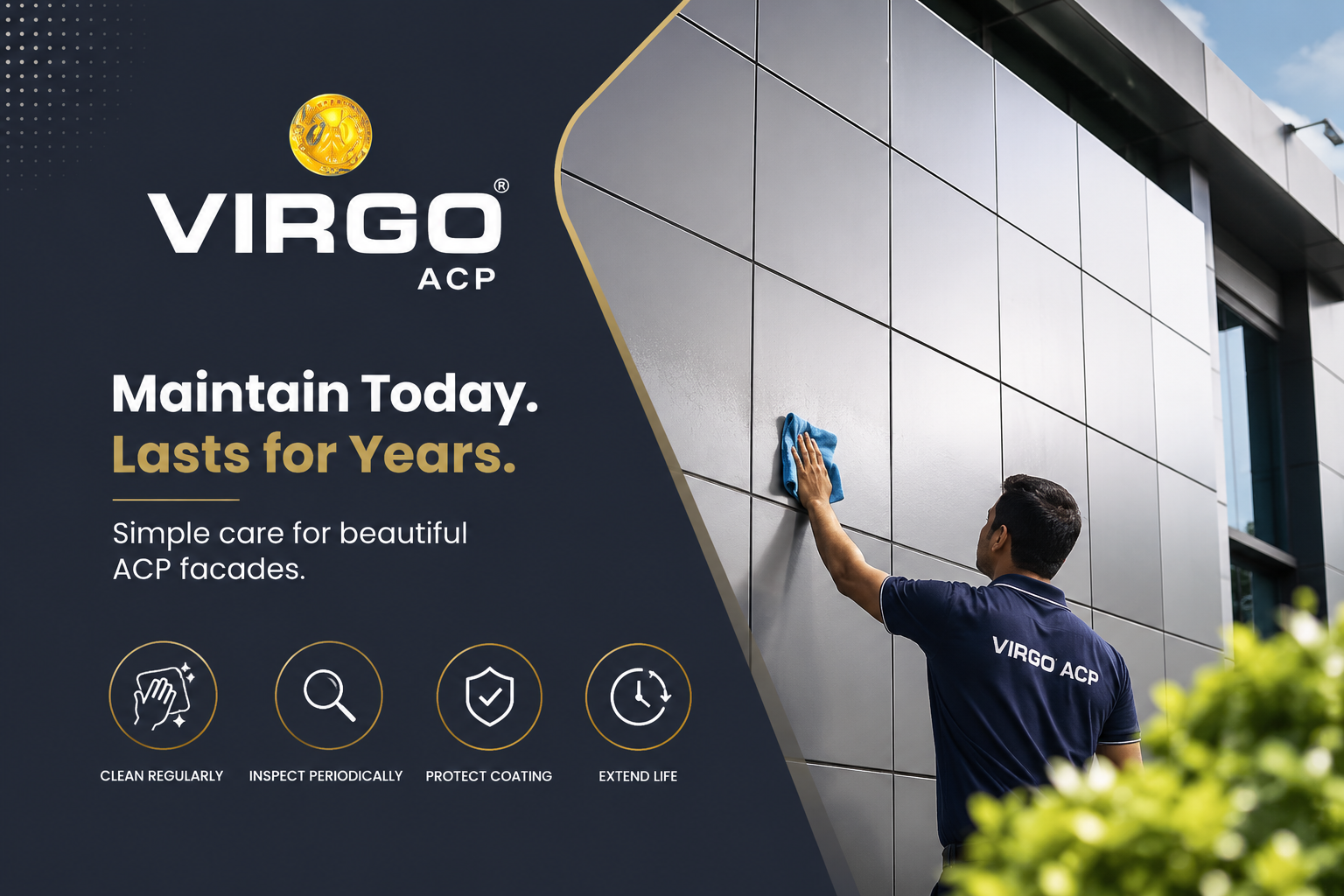
For PVDF Coated ACP Sheets, using the correct cleaning method is important because harsh chemicals or abrasive materials can affect the coating surface. Following these simple steps helps Virgo ACP panels and similar facade systems maintain their finish for longer.
Annual Inspection: What to Look For
Panel alignment and fixing integrity
Look for any panel that has shifted, shows a widening gap at one edge, or rattles when pushed. A shifted or rattling panel has a fixing problem. Catch it early and it’s a single repair. Miss it for two years and it’s a panel replacement.
Sealant condition
Silicon sealant has a service life of approximately ten to fifteen years. Cracked or missing sealant allows water into the wall assembly. Check all horizontal and vertical joints annually.
Coating condition
Run a clean dark cloth across a panel surface and look at what transfers. A fine white powder indicates chalking PVDF resin beginning to break down. On correctly specified panels at 25+ microns DFT, chalking should not appear within fifteen years.
Handling Specific Stains
| Stain Type | Recommended Treatment |
| Graffiti / marker pen | Isopropyl alcohol on soft cloth test on inconspicuous area first |
| Bird droppings | Dampen with water to soften first never scrape dry; then mild detergent |
| Oil / grease | Mild detergent immediately; aluminium-safe degreaser for hardened deposits |
| Rust staining from metalwork | Specialist rust stain remover rated safe for aluminium surfaces |
| Sealant discolouration | Remove and re-apply sealant surface cleaning rarely effective |
Frequently Asked Questions
How often should ACP facade panels be cleaned?
Once per year for low-pollution locations; twice per year for standard urban commercial buildings; three to four times per year for coastal or high industrial-pollution environments.
What products are safe for PVDF coated ACP sheets?
Mild pH-neutral detergents diluted in water. Specialist coated-aluminium facade cleaners for stubborn staining. Isopropyl alcohol for graffiti. Avoid abrasives, solvent-based cleaners, and anything not rated safe for PVDF.
When should ACP panels be replaced rather than cleaned?
When there is structural damage to the panel tray or fixing points; when coating has chalked beyond what cleaning restores; when the panel has delaminated; when impact damage has bent the panel out of plane.
How do I find a matching replacement panel after years?
Original delivery documentation with shade code, series name, manufacturer, and batch reference. Without the shade code, matching is unreliable. Virgo ACP‘s technical team can assist with shade matching contact at virgoacp.com.
How long does a PVDF coated ACP facade last with proper maintenance?
A correctly specified PVDF coating at 25+ microns DFT, maintained with regular cleaning and periodic inspection, should retain its appearance and performance for 20 to 25 years on Indian facades. Proper care also helps exterior wall cladding panels retain their finish and overall appearance over time.
For PVDF product specifications and coating data, visit https://virgoacp.com/products/