The complaint usually surfaces six to eight months after possession.
A homebuyer in a new residential project Indore’s Vijay Nagar corridor, or one of Panchkula’s newer sectors pushing toward the Extension sends a legal notice. The facade panels on the south-facing elevation are discolouring. Or lifting at the edges. Or, in a case nobody wants to think about, a neighbour’s association is asking for the fire-rating documentation on the external cladding and nobody can produce it.
The builder calls their procurement team. The procurement team calls the dealer they sourced from. The dealer produces an invoice. The invoice says ‘ACP panels, 4mm, as discussed.’ There’s no manufacturer name. No BIS certificate. No coating specification. Nothing that holds up to professional scrutiny.
This isn’t a rare story. It’s a pattern that repeats across India’s Tier 2 construction markets because the conditions that create it are structural, not accidental. And Indore and Panchkula two cities growing faster than their building material supply chains have matured are places where builders who don’t get ahead of this problem will eventually meet it the hard way.
The Structural Gap No One Talks About
Here’s what’s actually happening in regional ACP markets like Indore and Panchkula, and why it matters specifically to builders rather than architects or fabricators.
When a large commercial building goes up in Delhi or Hyderabad, there are enough informed stakeholders specification consultants, experienced project managers, architects with repeat exposure to material documentation that the supply chain gets questioned at multiple points. A dealer who supplies sub-standard product develops a reputation. Word travels. The market creates some correction.
In Indore’s Siyaganj market or among the building material suppliers working the Panchkula-Chandigarh corridor, that correction mechanism is slower. The volume of large, specification-sensitive projects is smaller. The number of buyers asking the hard questions is lower. Which means a dealer who couldn’t survive in Delhi’s competitive market operates here without much friction.
None of this is a moral failing. It’s how markets develop. The problem is that the buyer who pays for this gap is the builder whose RERA obligations, buyer commitments, and warranty exposure don’t adjust downward just because the local supply ecosystem is less mature than a metro.
Indore is India’s cleanest city, and it wants to be its best-built one too. The smart city projects, the expanding institutional campus around IIM Indore, the hospital construction wave in Bhanwarkuan, the commercial surge along Super Corridor these projects deserve materials that match the ambition. Panchkula, sitting in the shadow of Chandigarh’s planning legacy and holding its new developments to Tricity standards, has buyers who compare. That comparison doesn’t favour builders who cut corners on specification.
What Indore’s ACP Market Actually Looks Like Right Now
Siyaganj is where most Indore builders start when sourcing materials. It’s the city’s wholesale hub dense, competitive, and well-connected to suppliers across the country. You’ll find ACP here. You’ll find a range of it.
What you won’t always find is clarity on what you’re actually buying.
The dealers operating in Siyaganj and the secondary corridors around Banganga and Palasia range from legitimate authorised distributors of established manufacturers to traders who’ve bought from three different sources this quarter and couldn’t tell you which manufacturer produced which panel. Both kinds of business quote with confidence. Both use the same language. FR grade, PVDF coated, BIS compliant.
The AB Road commercial corridor, the Vijay Nagar residential developments, the institutional construction near Rau and around the Super Corridor these are projects where the ACP specification matters both aesthetically and structurally. A facade on a premium residential tower in these zones that starts showing coating failure within five years isn’t a materials story.
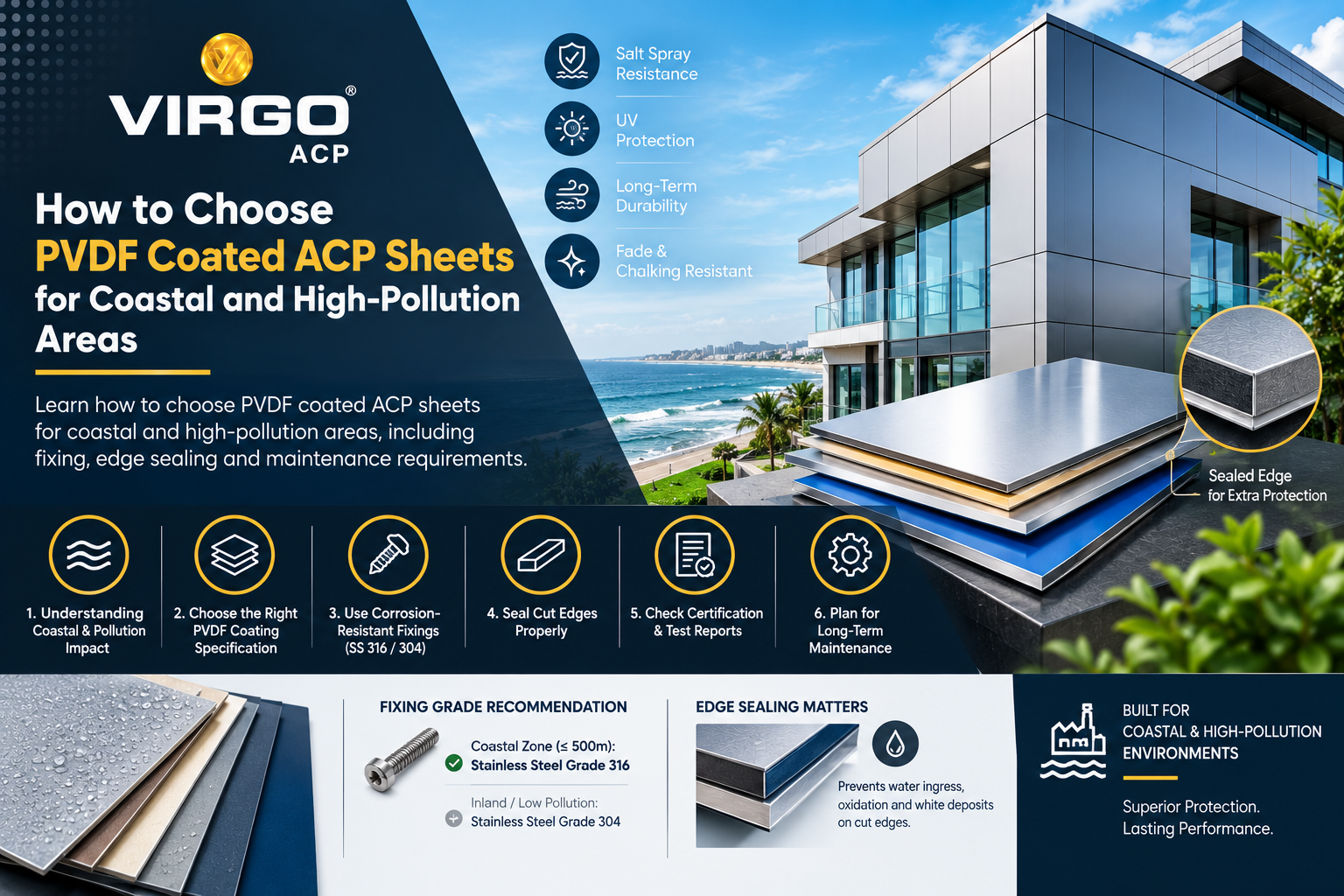
Indore’s summer peaks at 42–44°C. The UV load through April, May, and June is significant. Polyester coatings don’t hold up against sustained UV of that intensity not over a decade, and often not over five years. The choice between PVDF and polyester coating isn’t a premium decision for Indore projects. It’s a durability decision that shows up in the builder’s warranty calls.
What Panchkula’s Market Adds to the Picture
Panchkula is doing something interesting. It’s taking on construction ambition that its supply chain infrastructure hasn’t fully caught up with yet.
Sitting inside the Chandigarh tricity with Mohali on one side and Chandigarh’s planned perfection setting the reference standard Panchkula’s residential buyers increasingly hold developers to tricity-level expectations. Projects in the newer sectors pushing toward Panchkula Extension and the Kalka direction are being sold on specifications that would have been unusual in this market five years ago.
The practical consequence for builders: the specification you commit to in your HRERA filing and your buyer agreements needs to be deliverable and documentable. Not just at the time of the sales pitch at possession, and beyond.
Panchkula’s climate is more demanding than it looks. Summers touch 39–42°C, but winters drop to 4–7°C and the thermal swing between those extremes, repeated over years, places specific demands on peel strength and coating adhesion that buildings in more moderate climates don’t face the same way. A panel with a weak skin-to-core bond installed on a Panchkula north-facing elevation will show stress at the fixings before a similar panel in a coastal city does.
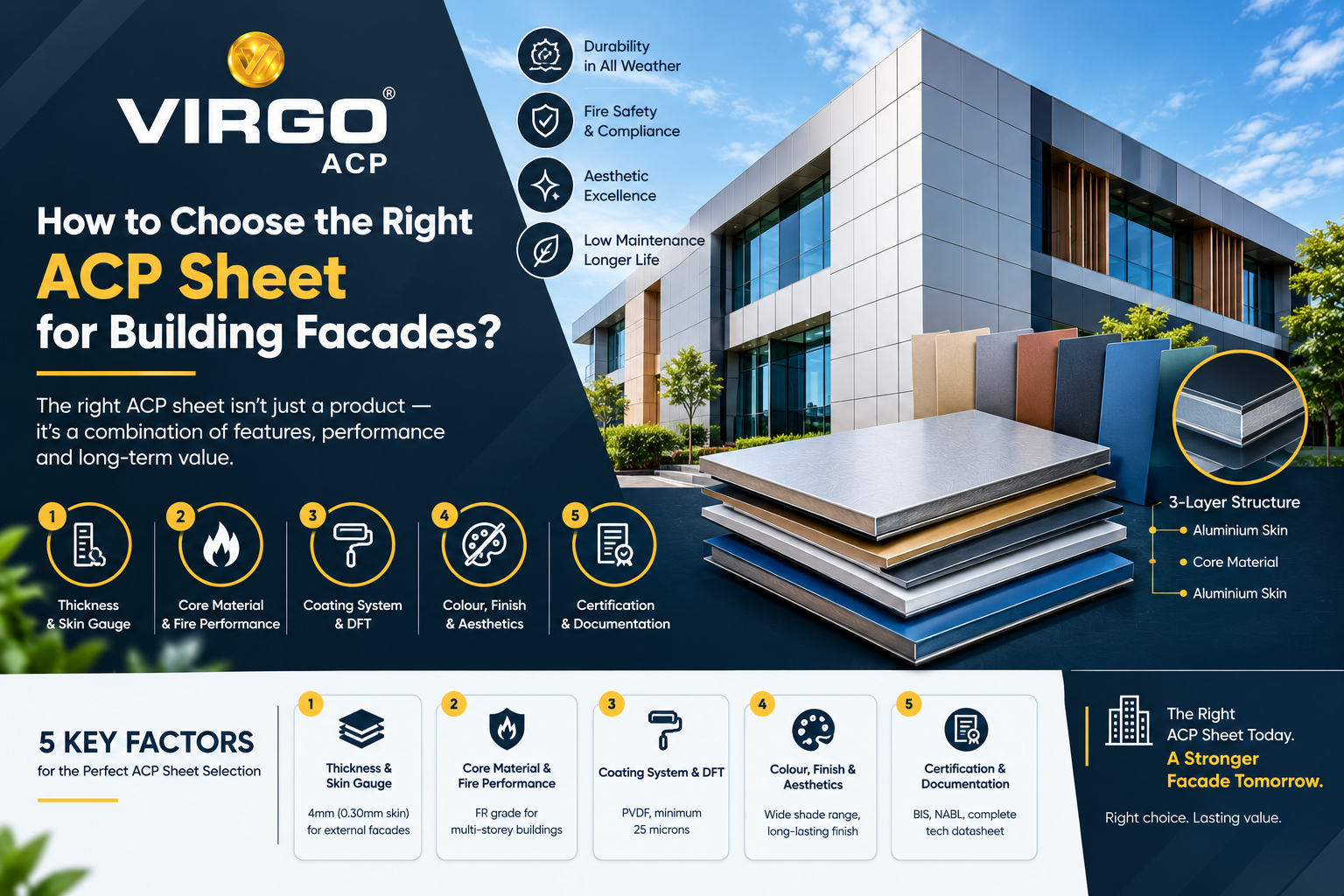
FR-grade core for any external application on multi-storey construction is standard. PVDF coating is the specification that survives Panchkula’s full weather range. Neither is optional if you’re building something you expect to stand behind.
A Practical Comparison: Indore vs Panchkula Specification Requirements
| Factor | INDORE | PANCHKULA |
| Summer peak | 42–44°C | 39–42°C |
| Winter minimum | Mild (10–12°C) | Cold (4–7°C) |
| Primary climate risk | UV degradation, thermal expansion | Thermal cycling, coating bond stress |
| Correct core | FR-grade | FR-grade |
| Correct coating | PVDF, 25+ microns DFT | PVDF, 25+ microns DFT |
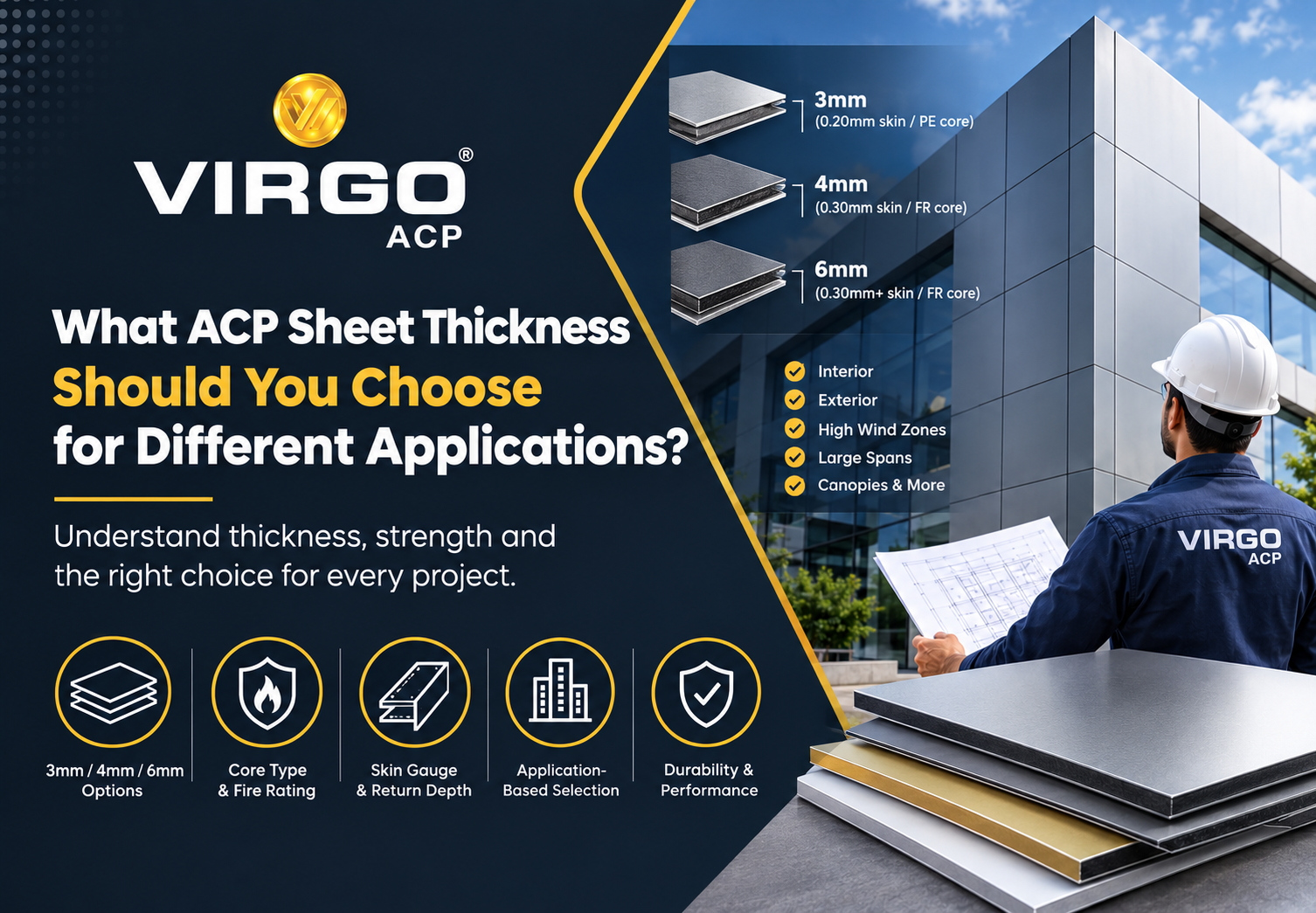
| Aluminium gauge | 0.30mm minimum per face | 0.30mm minimum per face |
| Regulatory framework | MP RERA | HRERA |
| Key supply hub | Siyaganj, Banganga corridor | Chandigarh tricity distributors |
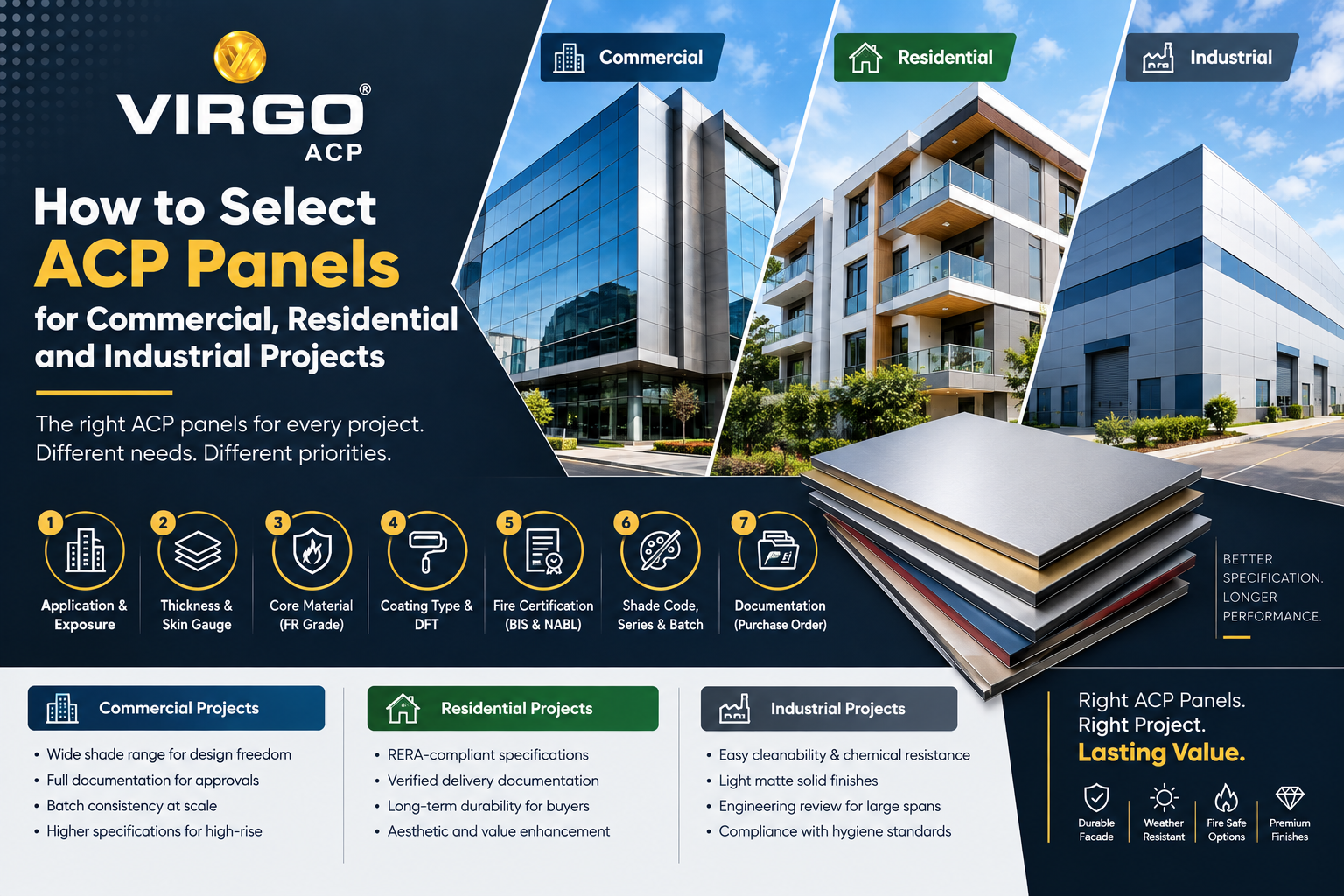
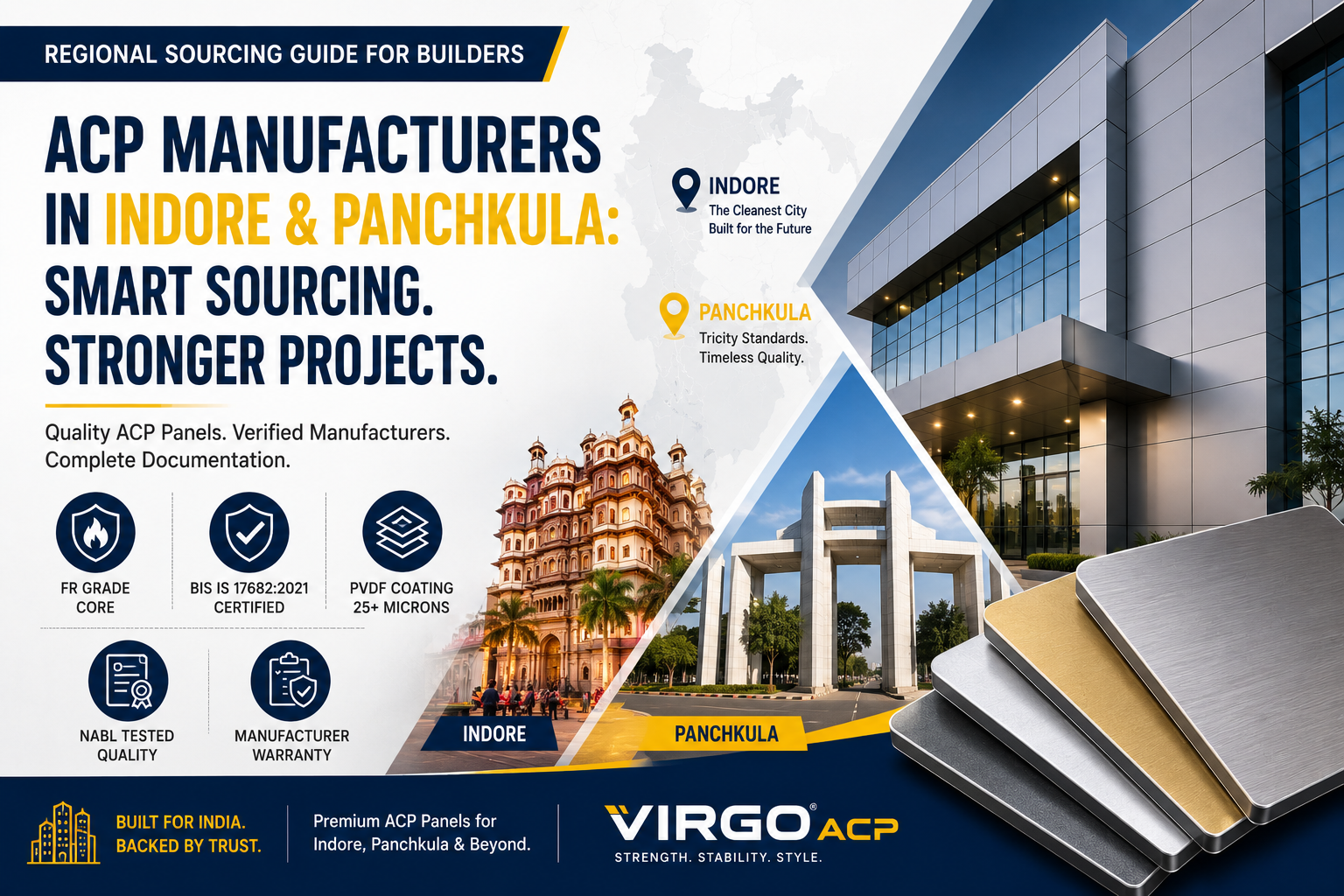
Both cities need the same core specification. What differs is the failure mode you’re protecting against UV and thermal expansion in Indore, thermal cycling and bond stress in Panchkula. PVDF and FR-grade address both.
The Builder’s Actual Problem: It’s Not About Finding ACP
Let me be direct about something.
Builders in Indore and Panchkula don’t have trouble finding ACP. They have trouble finding ACP that comes with documentation robust enough to survive a scrutiny they’ll eventually face from a buyer’s solicitor, from a RERA audit, from their own warranty team, or from a building committee asking for the fire-rating certificate on the external cladding of a building where someone’s child goes to school.
The documentation problem in regional markets is subtle. It doesn’t look like a problem when you’re placing the order. It looks like a problem later, when you need something the dealer never produced.
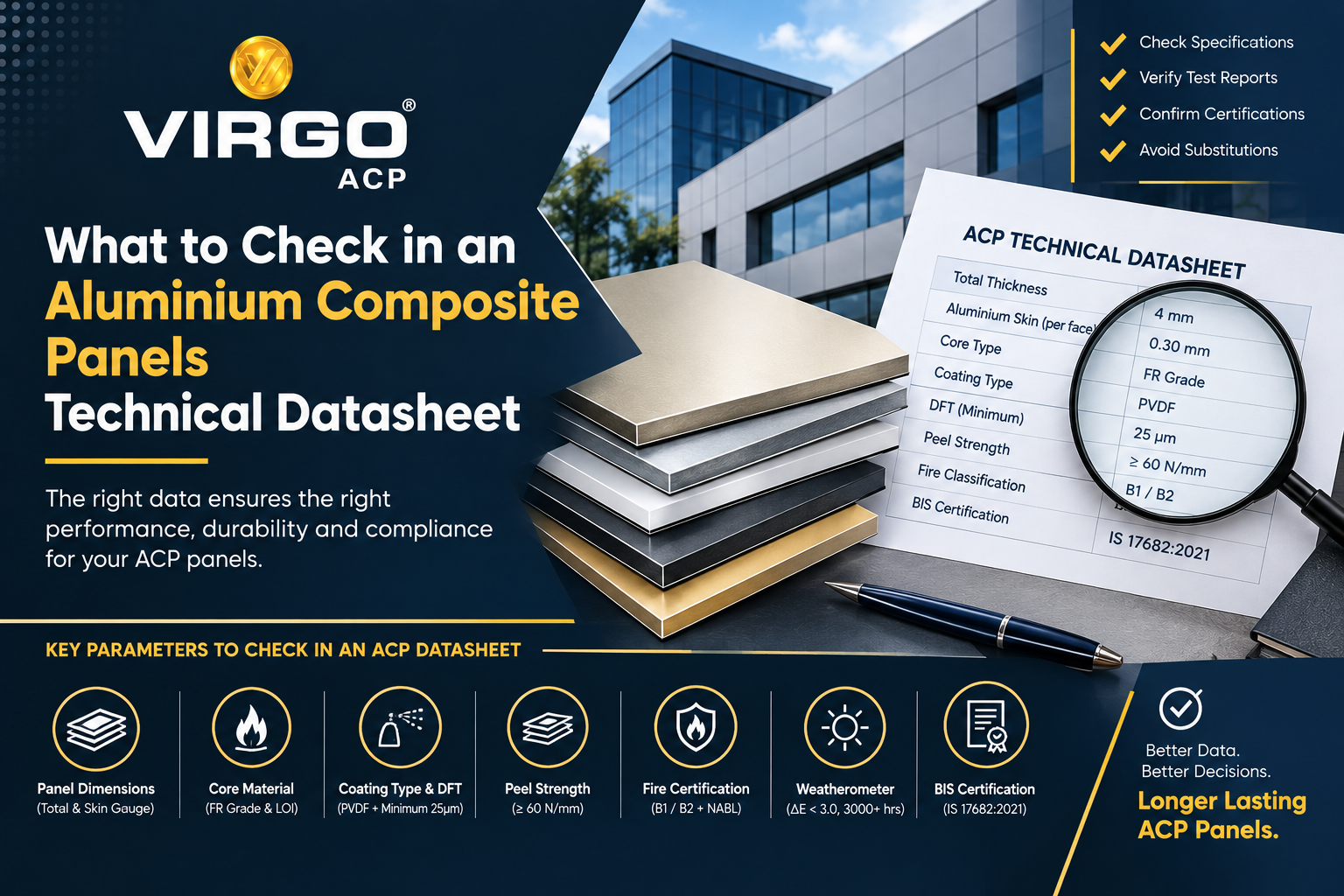
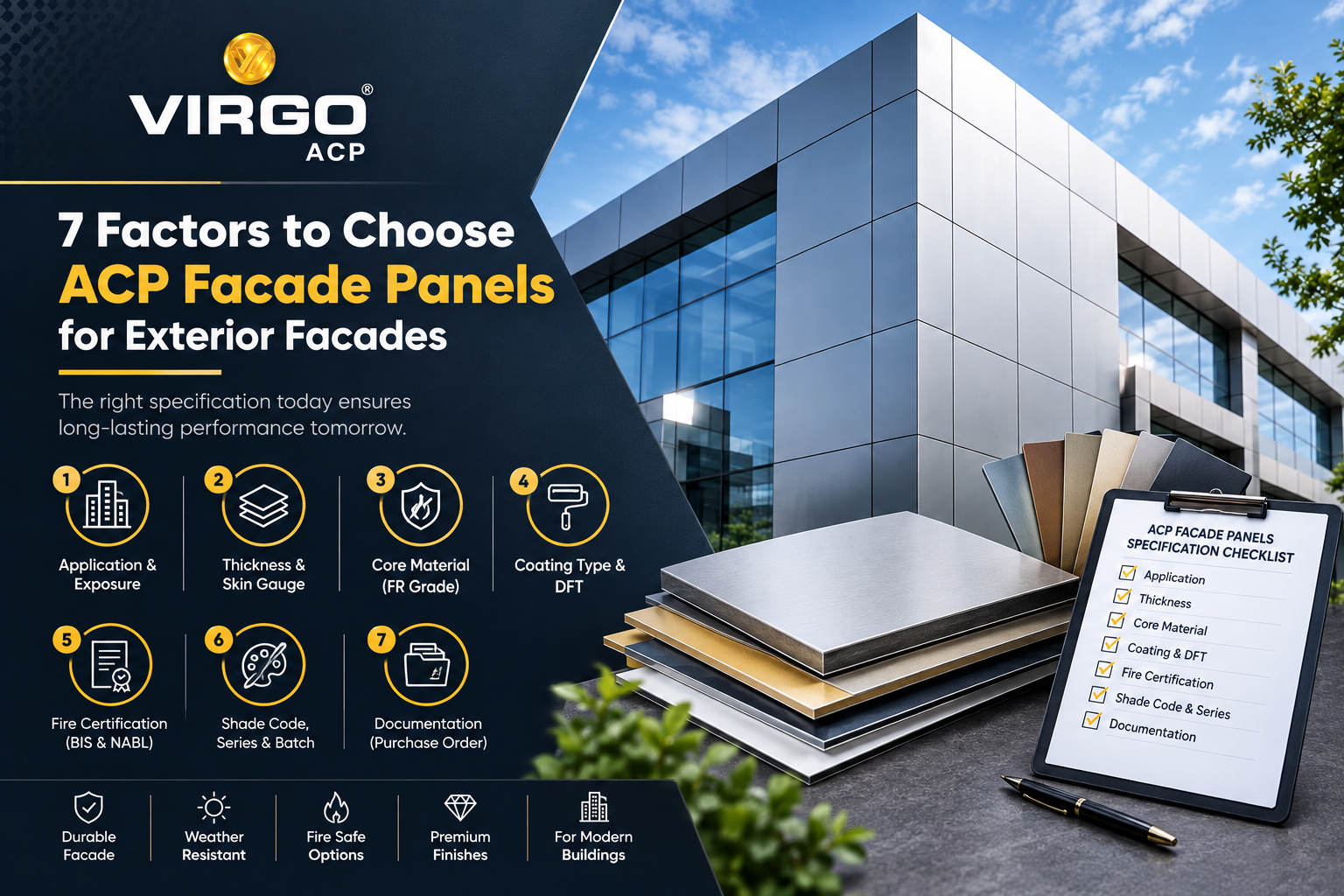
Here’s what a properly documented ACP procurement should come with:
Tax invoice naming the manufacturer, specifying product series, coating type, core grade, and shade code not just ‘ACP panels, 4mm, as discussed.’
Current BIS IS 17682:2021 certificate from the manufacturer, with a licence number that checks out on the BIS public directory at bis.gov.in.
NABL-accredited laboratory test data covering peel strength, coating adhesion, and fire performance for FR-grade products dated within 18 months.
Written warranty naming the manufacturer as the warranting party, specifying the coverage period, and describing the claims process. Not a verbal assurance.
Most local ACP dealers in Indore and Panchkula can produce some of this. Few can produce all of it without considerable delay and some substitution. A manufacturer supplying directly one who generates these documents as a matter of production routine can produce all of it before the panels leave the factory.
Six Questions Worth Asking Before You Sign With Any Regional ACP Supplier
Which manufacturer made these panels, and what’s their BIS licence number?
This question filters out most of the risk. A supplier who can name the manufacturer and produce a BIS IS 17682:2021 licence number that verifies at bis.gov.in is a supplier with a real relationship with a certified manufacturer. One who hedges or produces an unverifiable number is telling you something important.
Is this FR-grade core, and does that appear on the invoice?
Get it in writing not verbally during the negotiation. For any external application on a building above ground-floor level, FR-grade is non-negotiable. For a RERA-filed residential project, it needs to match the specification in your registered documentation.
What coating is this, and what’s the dry film thickness in microns?
PVDF at 25-plus microns per side is what Indore’s UV profile and Panchkula’s temperature range require. Ask for the technical data sheet with this number on it not the salesperson’s verbal answer.
Can you supply this exact specification across the project’s full delivery timeline?
18–24 months. The panels going on in month three need to match month eighteen. A dealer sourcing spot-market can’t guarantee this. One with a stable manufacturer relationship can.
What test documentation comes with the delivery?
Specifically: NABL-accredited certificates covering peel strength, coating adhesion, fire performance. Dated within 18 months. Tied to the specific product in your order. If the dealer can’t describe exactly what documentation arrives with the panels, it probably doesn’t exist in a form that helps you.
Who backs the warranty, and what does ‘backed’ actually mean?
A named manufacturer. A defined warranty period. A described claims process. For residential projects in Indore or Panchkula, this document is part of what you implicitly commit to your buyers when you sell the unit.
When Going Directly to an Aluminium Composite Panel Manufacturer Makes the Economics Work
For most Indore and Panchkula projects above 5,000 sqft, the direct-manufacturer conversation is worth having before you default to a local dealer.
The price difference is straightforward. A local dealer applies a margin typically 12 to 18 percent to whatever the manufacturer charges them. On a 10,000 sqft FR-PVDF project at ₹95/sqft, that margin is ₹1,14,000 to ₹1,71,000. That’s the cost of going through a distribution layer rather than around it. Direct supply removes it.
The documentation difference matters more for builders than for architects or fabricators. When you buy direct from an aluminium composite panel manufacturer, the BIS certificate on your delivery paperwork is an original document tied to your production batch. The warranty is backed by the entity that made the product. For RERA documentation packages, this distinction is real a buyer’s advocate asking for the ACP fire certificate on a Panchkula residential project is asking for a document tied to the panels on that building, not a general certificate the dealer maintains on file.
| Trade-off: minimum order quantities and longer lead times than local stock. On a planned project with a 20-month timeline, both are manageable. For an urgent 400-sqft requirement, a local dealer is still the practical answer. |
Virgo ACP: Manufacturing Depth That Regional Projects Actually Need
Virgo ACP is part of the Virgo Group manufacturing since 1993, with annual ACP capacity of 4.5 million-plus square metres. For builders in Indore and Panchkula, what matters isn’t where the manufacturer is. It’s whether they can supply with the consistency, documentation, and product depth a serious project demands.
Phased project supply without the batch consistency problem. Virgo’s production volume means a builder’s multi-phase project can be committed to a single production specification from the outset same shade, same coating, same core grade across deliveries spanning a year or more.
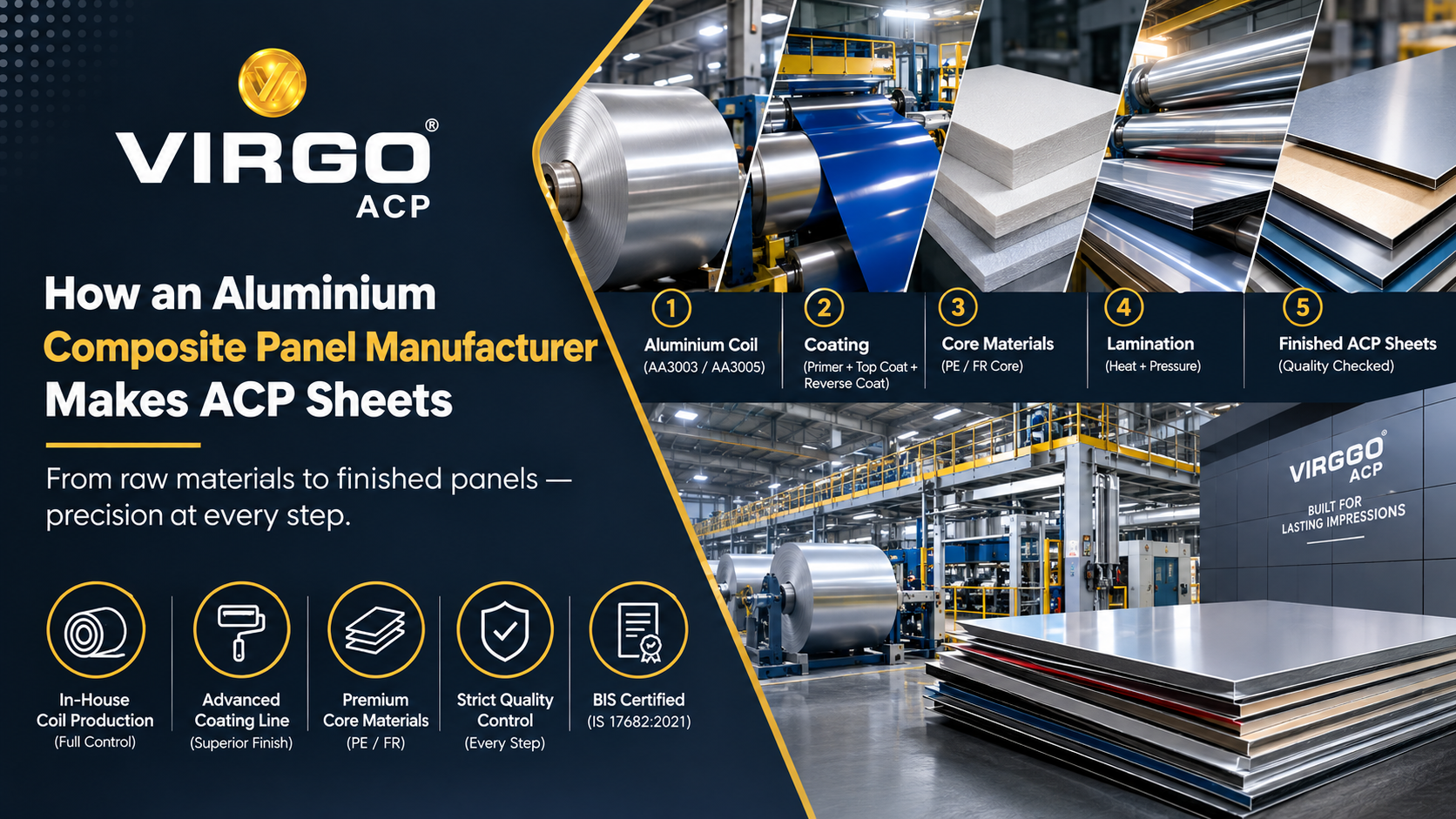
In-house aluminium coil production. Virgo manufactures its own aluminium coils one of the very few ACP manufacturers in India that does. The alloy, the coating application, the thickness controlled within the same production system. For builders managing 24-month phased projects, this manufacturing control shows up in the second and third deliveries matching the first.
FR-grade core across all 16 product series. Elite, Valencia, Metauxe, Stone Craft, Wooden, Metallic, Sparkle all available with FR-grade core. No trade-off between design choice and compliance specification.
PVDF at 25+ microns DFT as standard on the exterior range. Not a tier to unlock at premium pricing the default. What Indore’s UV load and Panchkula’s thermal cycling demand is what Virgo supplies as the baseline.
BIS IS 17682:2021 certified, triple ISO certified (9001, 45001, 14001). Current, verifiable, original documentation not dealer copies. What your MP RERA or HRERA project file needs.
| Start a regional project enquiry → virgoacp.com/acp-manufacturers-in-indore/ |
Frequently Asked Questions
Q1. Are there ACP manufacturers in Indore or Panchkula?
There are no large-scale ACP manufacturing facilities in either city. ACP production in India is concentrated in NCR, Gujarat, and a few other industrial clusters. What both cities have is a network of dealers and distributors supplying panels made elsewhere. For builders, the relevant question is whether the supplier has a verified, documentable relationship with a BIS-certified aluminium composite panel manufacturer not where the factory is. Virgo ACP supplies directly to projects in both cities with full manufacturer documentation.
Q2. What ACP specification should I use for buildings in Indore?
FR-grade core, PVDF coating at a minimum 25 microns dry film thickness per side, and aluminium skin gauge of 0.30mm or above per face. Indore’s summers peak at 42–44°C with significant UV conditions that degrade polyester coatings within five years and stress weak panel bonds through thermal expansion. BIS IS 17682:2021 certification is the baseline documentation requirement for any MP RERA-governed project.
Q3. What ACP specification should I use for buildings in Panchkula?
The same FR-grade core, PVDF at 25+ microns DFT, 0.30mm aluminium gauge per face. Panchkula’s temperature swings are more extreme than most Indian cities: summers of 39–42°C and winters of 4–7°C create thermal cycling that stresses peel strength and coating adhesion over time. Both failure modes are addressed by correct specification. HRERA documentation requirements parallel MP RERA BIS certification and NABL-accredited test data should accompany procurement.
Q4. How do I source ACP for a Panchkula facade project?
For smaller orders under 3,000 sqft, a verified Chandigarh-based authorised distributor of a certified manufacturer is the practical option. For 5,000 sqft and above, going direct to an aluminium composite panel manufacturer delivers better pricing, better documentation, and better supply consistency. Virgo ACP accepts direct Panchkula project enquiries at virgoacp.com.
Q5. What does ACP cost for builders in Indore and Panchkula in 2026?
Both markets follow North Indian pricing. Premium FR-grade PVDF panels from certified manufacturers run ₹85–130/sqft at standard volume. Direct manufacturer pricing removes the local dealer margin of 12–18%, bringing effective per-sqft costs toward the lower end for orders above 5,000 sqft. Economy PE-polyester panels run ₹35–55/sqft but are not appropriate for external facades on multi-storey construction in either city.
Q6. What documentation do I need for ACP on RERA-filed projects?
MP RERA and HRERA both require materials to match specifications in registered project documentation and sales agreements. For ACP: a tax invoice naming the manufacturer with product series, coating type, core grade, and shade code; a current BIS IS 17682:2021 certificate with a verifiable licence number; NABL-accredited test certificates for the specific product; and a written manufacturer warranty. Builders should retain this documentation for the full statutory defect liability period.
Q7. Can Virgo ACP supply directly to Indore and Panchkula project sites?
Yes. Virgo ACP supplies directly to builders, developers, and contractors in Indore, Panchkula, and surrounding Madhya Pradesh and Haryana regions with full manufacturer documentation, BIS certification records, and direct warranty. For project enquiries, technical consultations, or sample requests, contact the team at virgoacp.com.
The Closing Point That Matters Most
The legal notice I described at the start of this article the one that surfaces six to eight months after possession is preventable. It’s not prevented by hoping that the local dealer’s word was good. It’s prevented by asking for the documentation before the order, verifying the certification before the delivery, and choosing suppliers whose accountability is built into their product rather than dependent on their goodwill.
Builders in Indore and Panchkula are delivering into markets that are getting more sophisticated. Buyers are more informed than they were five years ago. RERA’s enforcement on specification compliance is real. The buyers who purchase in Panchkula’s premium sectors and Indore’s new commercial corridors have options, and they talk to each other.
The specification decision on ACP is made once at procurement. Getting it right then costs a few extra days of due diligence. Getting it wrong costs something considerably larger, and considerably later.