Walk into any building materials market in Delhi, Mumbai, or Ahmedabad, and you’ll hear the same pitch from a dozen vendors: premium quality, best price, BIS certified, PVDF coated.
Every one of them.
The trouble is, most of them are lying or at least stretching the truth far enough that it snaps under scrutiny. India’s ACP industry has a quality problem, and it’s been quietly ignored for years because the consequences are slow-moving. A bad panel won’t collapse on Day 1. It fades. It peels. It fails a fire test nobody thought to run. And by then, the vendor has moved on, the project is complete, and someone else is holding the repair bill.
If you’re an architect specifying ACP for an upcoming project, a fabricator tired of getting burned by inconsistent supply, or a builder who got caught out once and swore it wouldn’t happen again this guide is for you.
Let’s talk about what quality actually means in an ACP panel, how to spot it, and just as importantly how to spot when someone’s pretending.
What “Quality ACP” Actually Means (It’s Not What Most People Think)
Here’s something the glossy catalogues won’t tell you: two ACP panels can look completely identical and perform worlds apart. Same silver finish. Same 4mm thickness. Same sheen under the showroom lights. But one has a PVDF coating that’ll look the same in fifteen years, and the other has a polyester coat that starts chalking within three monsoon seasons.
Quality in an ACP panel isn’t one thing it’s four things, all working together.
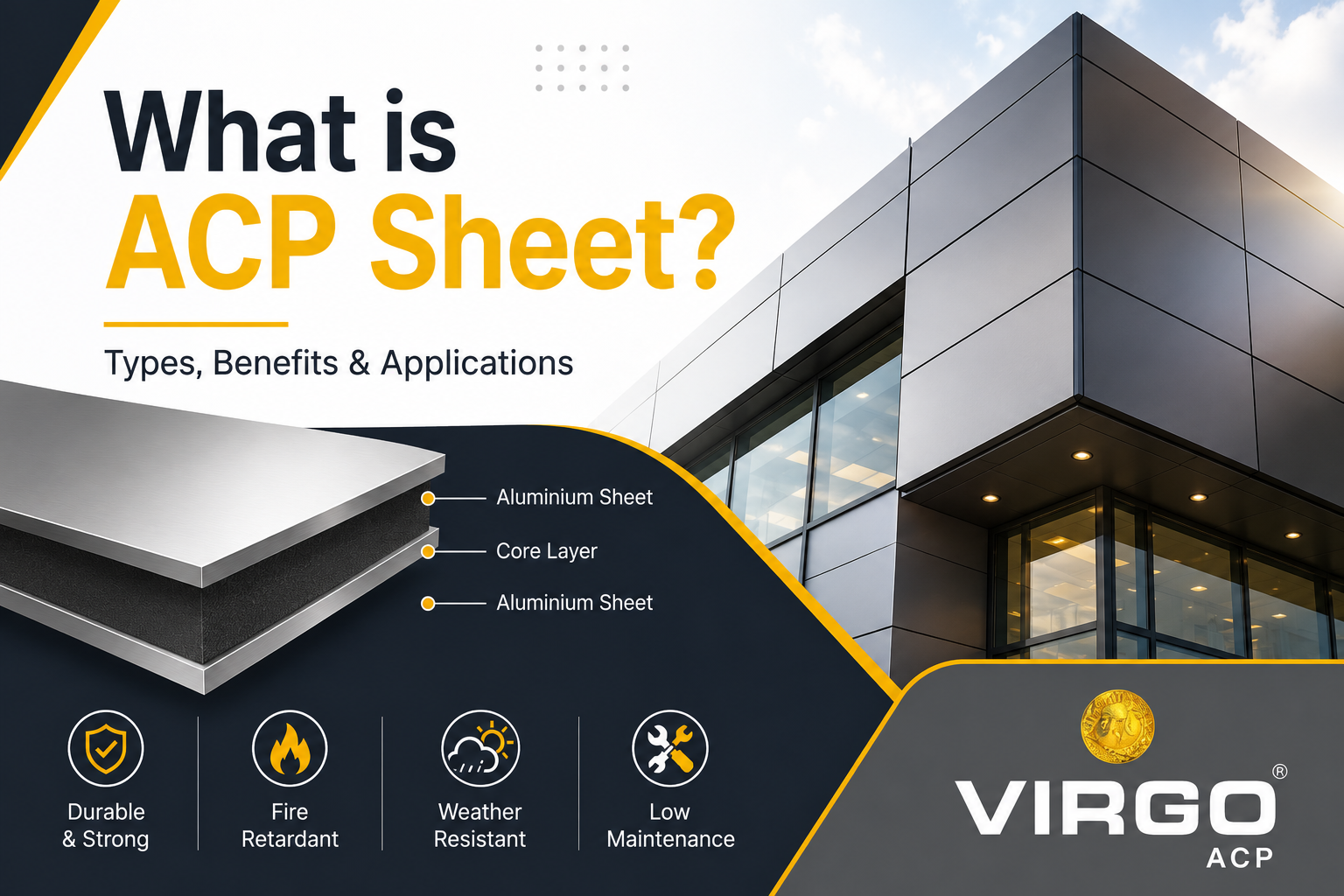
The core material. The inside of an ACP panel is either polyethylene (PE) or a fire-retardant (FR) compound. PE is cheap, flexible, and catches fire readily. FR core contains mineral fillers that slow flame spread dramatically. For anything going on an external facade especially a building with people in it there’s really no debate about which one you should be using.
The coating. This is the finish you see. PVDF (polyvinylidene fluoride) is the gold standard it handles UV radiation, temperature swings, and weather exposure without breaking down for 20+ years. Below PVDF, you have FEVE coatings (newer, comparable performance), SDP (super durable polyester, decent for semi-exposed applications), and standard polyester, which has no place on any exterior that matters.
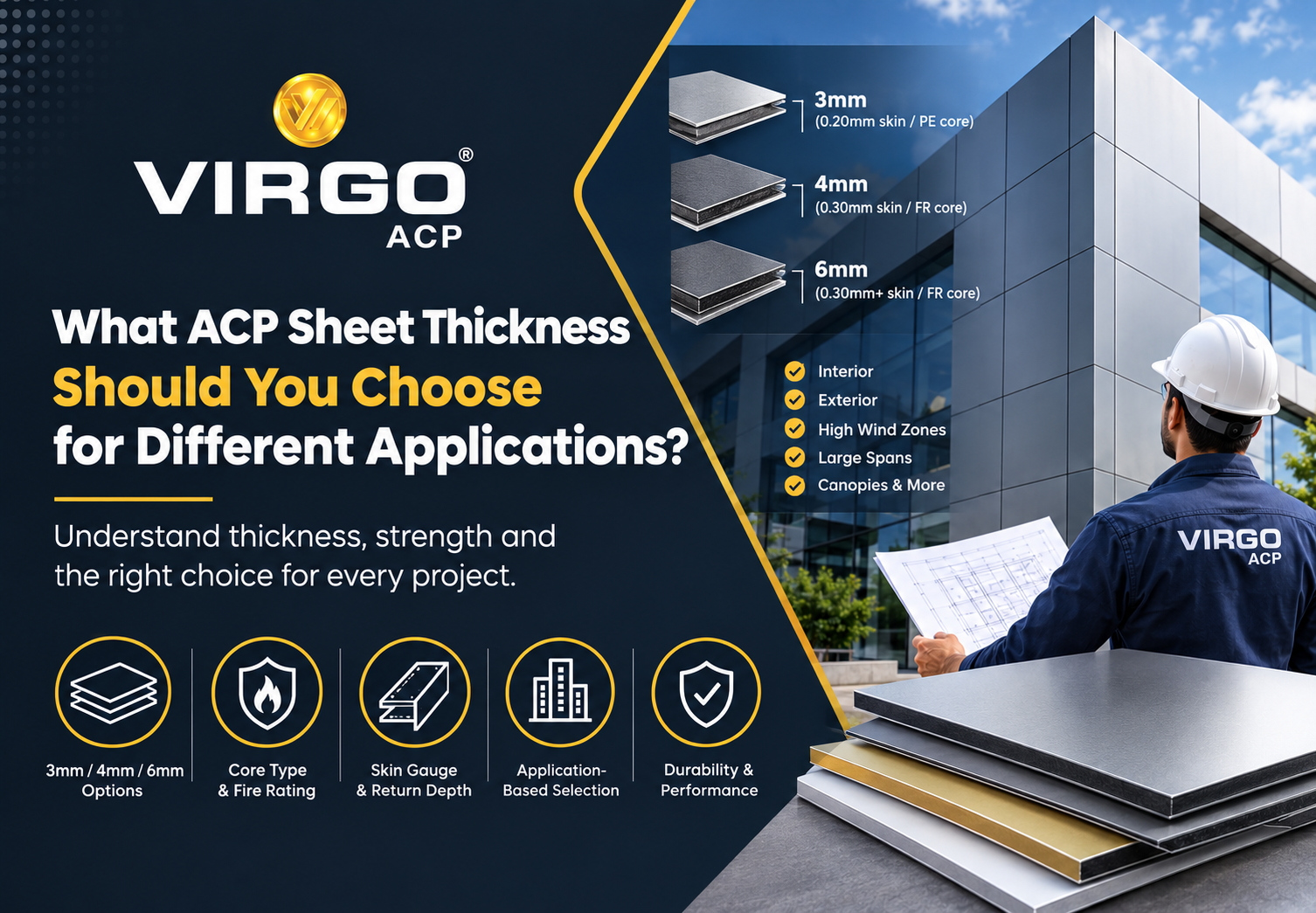
The aluminium skin gauge. A 4mm ACP panel can have aluminium skins as thin as 0.12mm or as substantial as 0.50mm. That number determines how the panel resists impact, handles thermal expansion, and holds its flatness over time. Nobody advertises a thin skin you have to ask.
Peel strength. This is the bond between the aluminium and the core. When it fails, the skin physically separates from the panel you’ve seen it on older buildings, those bubbly, lifting patches on facades that look like someone tried to peel them apart. IS 17682:2021 sets a minimum peel strength of 60 N/mm. A lot of what’s floating around the market doesn’t come close.
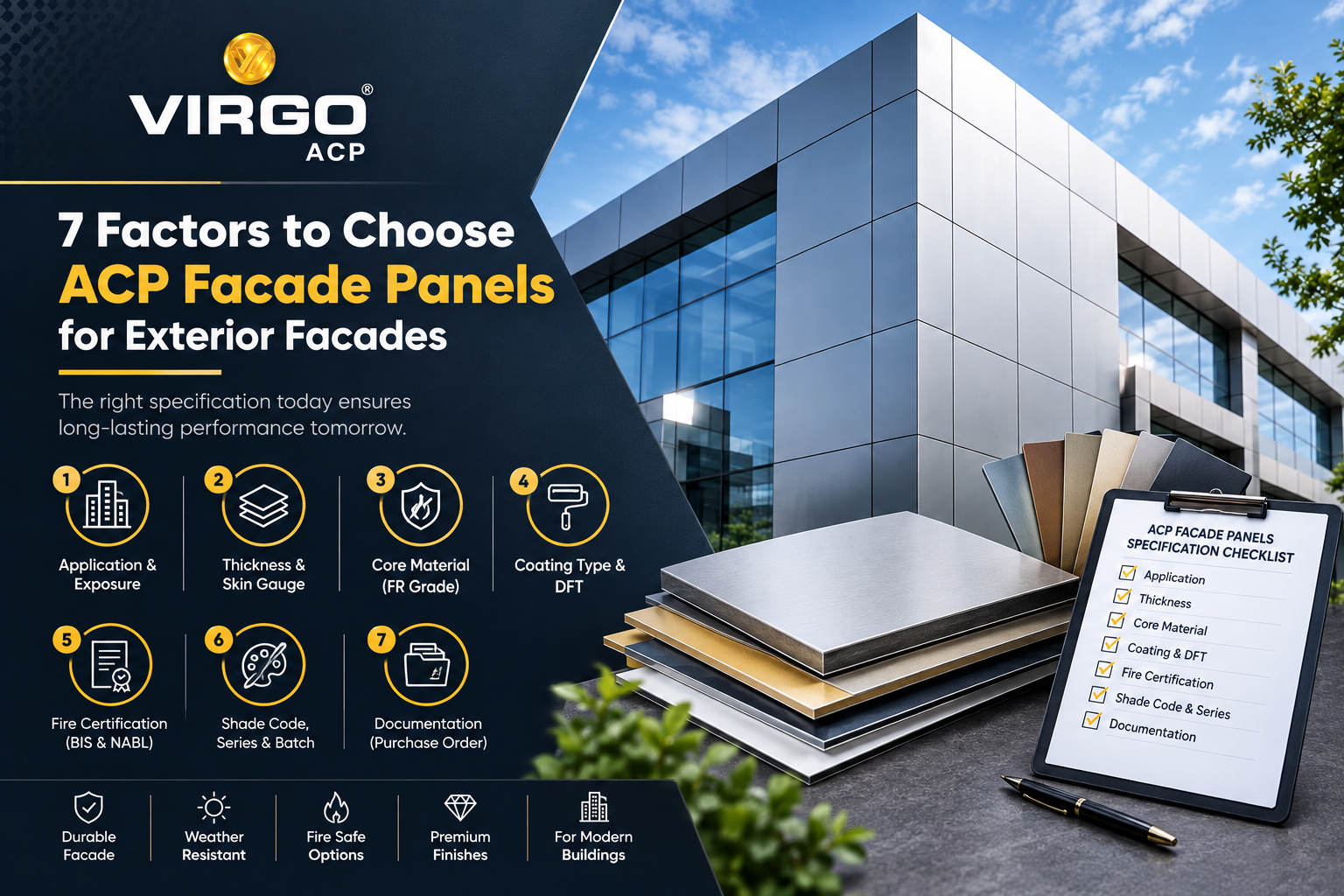
7 Ways to Verify Quality Before You Commit to Any ACP Panel Manufacturer
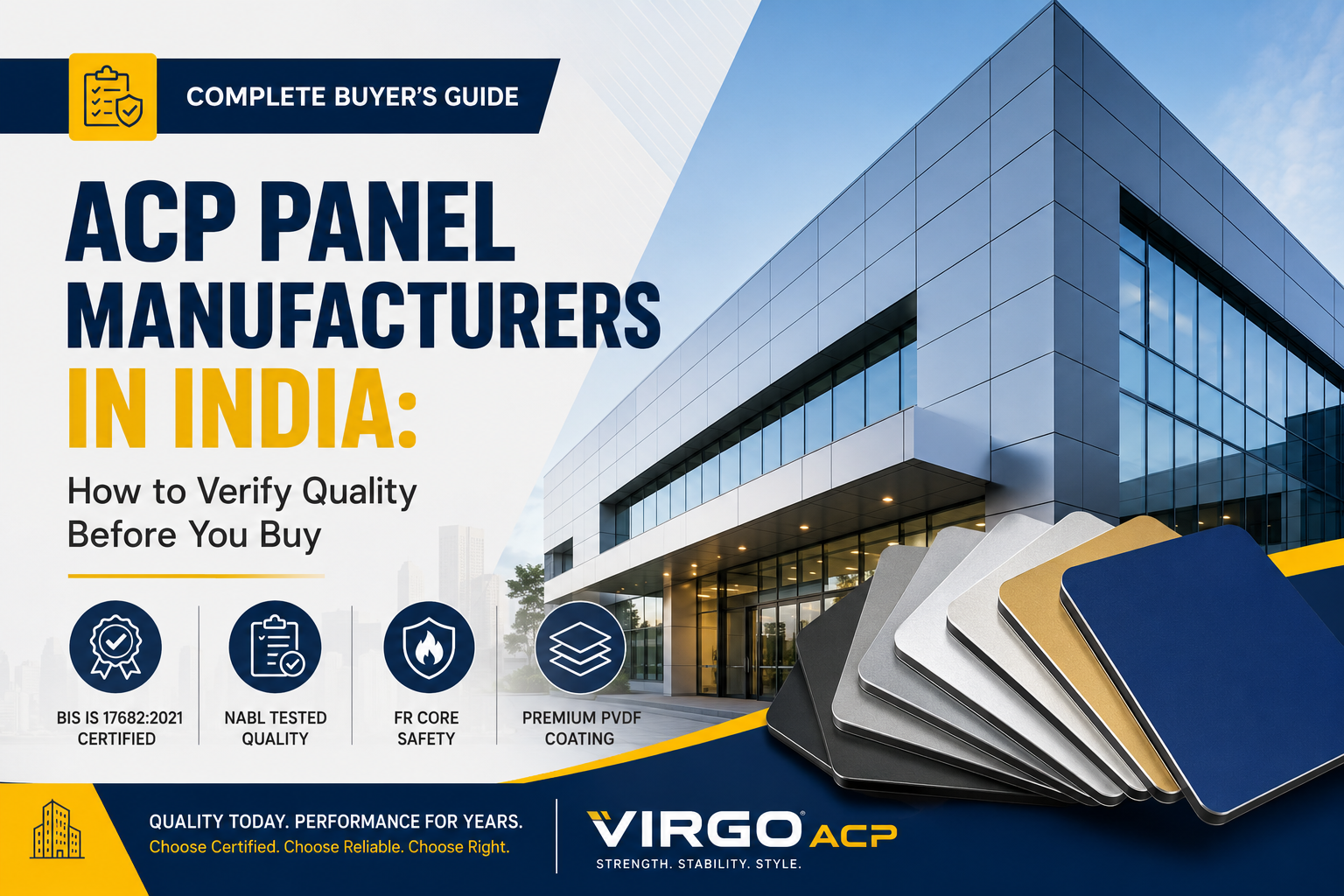
1. BIS IS 17682:2021 – Ask for the Licence Number, Not Just the Claim
Every second Aluminium Composite Panel Supplier in India will mention BIS certification in conversation. Very few will hand you an actual licence number without hesitation.
BIS IS 17682:2021 is India’s Bureau of Indian Standards specification for ACP panels. Getting certified isn’t a one-time test it requires ongoing audits and periodic re-testing. Which means a licence number can also lapse. A manufacturer who was certified two years ago and hasn’t renewed? Still mentions BIS in their pitch.
The fix is simple: ask for the licence number, then verify it yourself at bis.gov.in. The licensed products directory is public. Takes three minutes. If the number doesn’t show up, or if they can’t produce one at all, you have your answer.
This matters especially for government infrastructure projects, hospitals, schools, and any multi-storey building categories where fire-rated, certified materials are increasingly non-negotiable under Indian building regulations.
| Quick check: Search the BIS licensed product directory at bis.gov.in under IS 17682:2021 to see all currently certified ACP manufacturers in India. |
2. Third-Party Test Certificates Not Marketing Brochures
A product brochure is not a quality document. It’s a sales document. The two things are not the same, even when they use the same technical-sounding language.
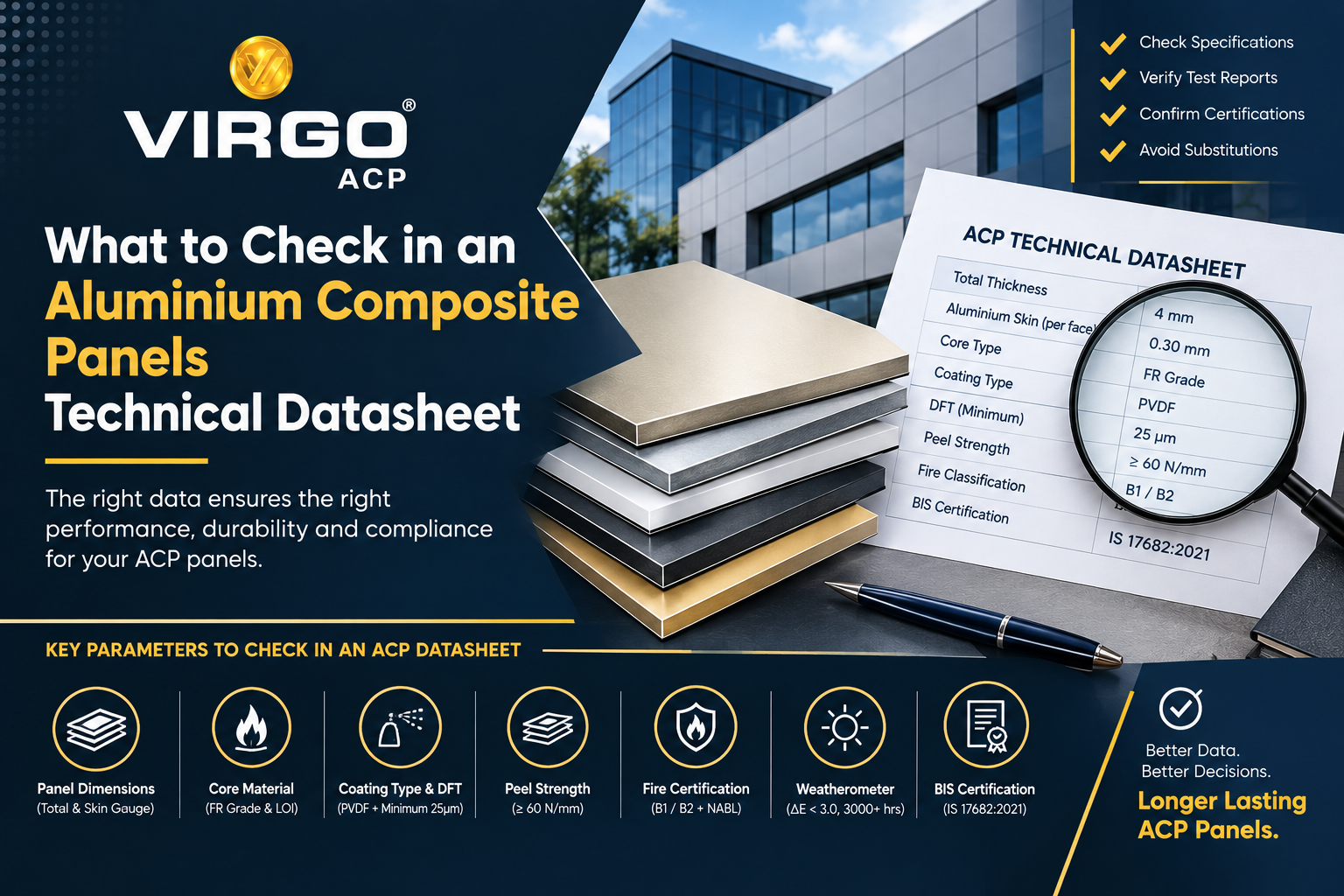
What you want is a test certificate from an NABL-accredited laboratory a lab that has been independently assessed and approved for the specific tests it runs. These certificates should cover:
• Peel strength with actual numerical result, not just a pass/fail tick
• Coating adhesion crosshatch test
• Tensile strength and elongation of the aluminium skin
• Weatherometer results how the panel performed after accelerated UV exposure
• Fire performance flame spread index and smoke development index
Ask for certificates dated within the past 12–18 months. If a manufacturer hands you a certificate from 2019, that’s not current quality assurance that’s an old document someone forgot to update.
One more thing: check whether the accreditation number on the lab certificate is real. NABL’s directory is also publicly searchable at nabl.gov.in. Takes another three minutes.
3. PE vs FR Core – Have This Conversation Explicitly
This is the most important conversation you’ll have with any ACP supplier, and it’s also the one that gets fudged the most.
PE core panels are cheaper. They’re also significantly more hazardous on building exteriors, particularly after several high-profile facade fire incidents internationally raised awareness about composite panel fire performance. India’s regulatory environment is catching up and if you specify PE-core ACP on a commercial building today, you may be looking at a compliance problem tomorrow.
The practical difference: in a fire test, a PE-core panel feeds the flame. An FR-core panel resists it not indefinitely, but long enough to matter when people are evacuating.
Don’t let the conversation get vague. Ask specifically: “Is this panel FR-grade, and does the test certificate confirm fire performance?” If the answer includes phrases like “it’s semi-FR” or “it meets basic standards” that’s a no.
| Feature | PE Core | FR Core |
| Core material | Polyethylene | Mineral-filled, fire-retardant compound |
| Flammability | Highly flammable | Self-extinguishing / slow burn |
| Best for | Interior signage, low-rise | External facades, hospitals, high-rises |
| Price | Lower | Moderate to higher |
| BIS IS 17682:2021 | Only basic grade | Required for FR-grade certification |
4. Coating Type and Micron Thickness – Two Different Questions
Most buyers ask about coating type. Fewer ask about coating thickness. You need both answers.
PVDF with 25 microns of dry film thickness is not the same as PVDF with 15 microns, even though both get called “PVDF coated.” Thinner coatings fade faster, show wear sooner, and provide less protection against the elements. Premium ACP sheets manufacturers in India apply 25–30 microns per side on exterior-grade panels. Anything below 20 microns on an exterior product should prompt a direct follow-up question.
Ask for the DFT (Dry Film Thickness) specification in the technical data sheet not in conversation, in a written document. If the supplier doesn’t have a TDS that specifies this, that’s your answer.
5. Check the Aluminium Skin Gauge – With a Measurement, Not a Promise
Standard panels in the Indian market tend to cluster around 4mm total thickness. The difference between a ₹50/sqft panel and a ₹80/sqft panel often comes down to one number: how thick the aluminium skin actually is.
Quality manufacturers use 0.30mm or thicker aluminium on each face of a 4mm panel. Budget panels sometimes use 0.18mm or even 0.15mm technically still 4mm total when you add the core, but far less structurally capable.
The only way to know for sure is to measure. Request a cross-section sample and use a digital micrometre. Any manufacturer worth their salt will have this data in their technical documentation without you having to ask twice and won’t object to you verifying it yourself.
6. Ask How They Make It – The Coil Coating Question
This one separates the manufacturers from the assemblers.
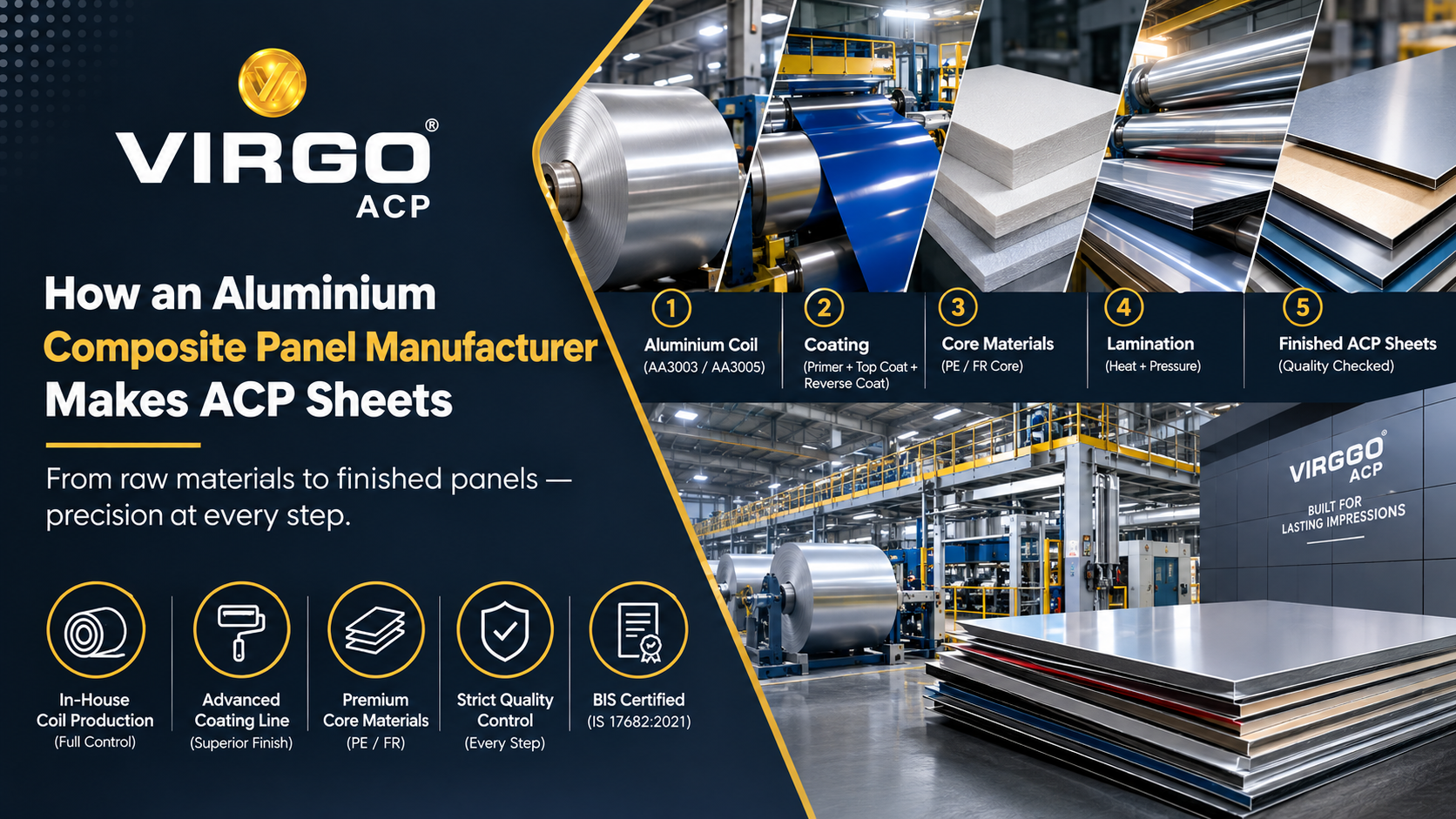
The quality of an ACP panel is largely determined during the coil coating process when aluminium coils are coated in a continuous production line before being bonded into finished panels. Manufacturers who run their own coil coating operations control the consistency of every panel that leaves their facility. Thickness, colour uniformity, adhesion quality all of it is traceable.
Manufacturers who buy pre-coated coils from third-party suppliers are at the mercy of that supplier’s process. Colour variation between batches, inconsistent coating thickness, supply disruptions these become your problem when the project is halfway through.
Go one level deeper: some manufacturers not only coat in-house but produce their own aluminium coils. This level of vertical integration is rare in India and represents a genuinely meaningful quality advantage. Ask the question directly: “Do you coat in-house, or do you source pre-coated material?” Their comfort with the question tells you something. Their answer tells you more.
7. Get a Sample Then Actually Test It
No brochure, no certificate, no Zoom call replaces holding the panel in your hands. Before any significant order, request a physical sample of the exact shade and finish you’re planning to use.
When you have it, do this:
• Flex test – Gently bend the panel. A properly bonded FR-grade ACP should have moderate rigidity without cracking the coating at the bend.
• Surface test – Run a fingernail firmly across the finish. PVDF coatings resist surface marring. Cheap polyester coatings leave a visible scratch.
• Edge check – Look at the cut edge. Aluminium and core should be tightly bonded with no gaps, bubbling, or visible air pockets.
• Weight check – FR cores are denser than PE cores. A 4mm FR panel is noticeably heavier than a PE panel of the same dimensions. If a panel sold as FR-grade feels suspiciously light, it probably is.
A manufacturer who’s reluctant to provide a sample is a manufacturer who doesn’t want you to examine the product too closely. That’s all you need to know.
Red Flags That Should Make You Walk Away Immediately
You’ll encounter these more than you’d like when evaluating ACP panel manufacturers in India:
Price 30–40% below market on PVDF products. PVDF resin is expensive. There is no version of a genuinely PVDF-coated, FR-grade, BIS-certified panel that costs significantly less than the market rate. If the price seems impossible, something in the specification is being quietly substituted.
BIS certification “in process.” This phrase has been in use for decades. Either a manufacturer is certified or they aren’t.
Test certificates with no NABL accreditation number. Any lab can produce a document that looks like a test certificate. The accreditation number is what makes it mean something.
Catalogues with no technical data sheets. Shade cards are for designers. Technical data sheets are for buyers who want to know what they’re actually purchasing. A manufacturer without published TDS documents is hiding something.
Pressure to commit without samples. There is no legitimate reason for a supplier to resist sending samples to a genuine project buyer. If they do, walk.
Ten Questions to Ask Before Signing Any Purchase Order
Keep this list handy whenever you’re evaluating any aluminium composite panel supplier:
- What is your BIS IS 17682:2021 licence number, and can I verify it?
- Is this FR-grade or PE-core, and do you have fire performance test data?
- What is the coating type, resin specification, and dry film thickness in microns?
- What is the aluminium skin gauge on each face?
- Can you share NABL-accredited test certificates dated within the last 18 months?
- Do you run coil coating in-house or source pre-coated material?
- Can I visit your production facility, or arrange a verified walkthrough?
- What’s your warranty policy specifically for finish and delamination?
- Can you provide project references I can contact directly?
- Can I get a sample before committing to volume?
A supplier who handles all ten with confidence and documentation is worth your time. One who stumbles on questions three through six isn’t.
Why Virgo ACP Earns a Different Conversation
Virgo ACP isn’t a new name in Indian manufacturing it’s backed by the Virgo Group, which has been in production since 1993. That matters because it means the quality systems, the supplier relationships, and the manufacturing discipline are built over decades, not assembled quickly to ride a market wave.
A few things make Virgo ACP genuinely stand apart from most ACP panel manufacturers in India:
They produce their own aluminium coils. This is rare most manufacturers depend on external coil suppliers and carry that supply chain risk into their product consistency. Virgo’s vertical integration means they control the raw material that everyone else has to source. Batch-to-batch colour consistency, coating uniformity, and traceability are meaningfully better as a result.
They’re BIS IS 17682:2021 certified not just claiming it. They hold triple ISO certification across quality management (9001), occupational health and safety (45001), and environmental management (14001). These aren’t decorative logos. They reflect an operational culture that takes documented process seriously.
Their product range 16 series, 300+ shades – covers every application from external high-rise facades to premium retail interiors. And with a manufacturing presence in Saudi Arabia operational from 2025, Virgo is building for international project standards, not just domestic market tolerance.
If you’re looking for an ACP Sheets Manufacturer in India that can back up its claims with documentation, physical verification, and the kind of manufacturing depth that shows up in the product Virgo ACP is worth a close look.
| Request a free sample or download the technical catalogue → virgoacp.com |
Frequently Asked Questions
Q1. What is the best ACP panel for external building facades in India?
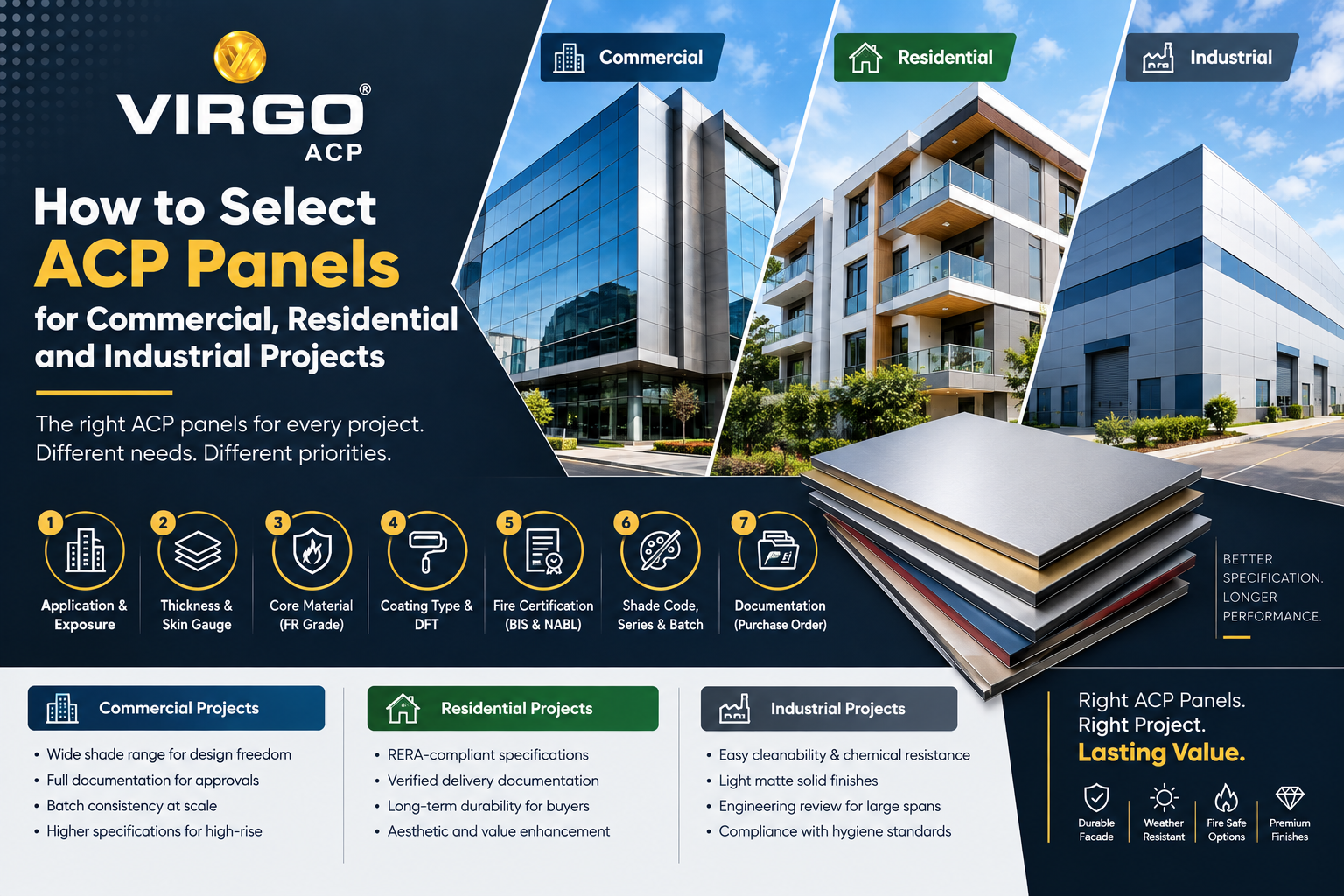
For external facades especially buildings with public occupancy or height above 15 metres you want FR-grade ACP with PVDF coating, certified under BIS IS 17682:2021. PVDF handles India’s combination of intense UV, monsoon moisture, and temperature variation better than any other coating type. Don’t compromise on the core material for external applications: FR is not a premium upgrade, it’s a safety baseline.
Q2. How do I verify if an ACP manufacturer is genuinely BIS certified?
Ask for the BIS licence number directly. Then go to bis.gov.in, access the licensed products directory, and search under IS 17682:2021. The listing will show the manufacturer name, licence number, and validity dates. Takes under five minutes and removes any ambiguity.
Q3. What is the real difference between PVDF and polyester coating on ACP panels?
PVDF contains fluoropolymer resins that bond at a molecular level with aluminium oxide which is why the finish remains stable under prolonged UV and weather exposure for 20+ years. Polyester coatings are organic and break down under sustained UV chalking, fading, and peeling within 5–7 years in Indian outdoor conditions. For any external application, there’s no serious argument for polyester.
Q4. How thick should the aluminium skin be on a 4mm ACP panel?
On a quality 4mm ACP panel, each aluminium face should be at least 0.30mm thick. Budget panels use skins as thin as 0.15mm technically still 4mm total but structurally weaker and more susceptible to denting, thermal deformation, and delamination over time. Ask for the specification in writing and verify with a sample if possible.
Q5. Are ACP panels fire-resistant?
Standard PE-core ACP panels are not fire-resistant they’re a known fire hazard on building exteriors and have been implicated in several international facade fire incidents. FR-grade ACP panels, with mineral-filled cores, significantly reduce flame spread and smoke development. FR-grade panels certified under BIS IS 17682:2021 or EN 13501-1 are the appropriate specification for any external facade application.
Q6. How many genuine ACP panel manufacturers are there in India?
The industry has hundreds of entities selling ACP but the number of genuine manufacturers with their own production facilities, coil coating operations, and valid certifications is considerably smaller. Estimates put it at fewer than 30 at meaningful scale. The rest are traders, assemblers, or resellers operating under manufacturer branding. Always verify whether the entity you’re buying from actually makes the product.
Q7. What’s acceptable for interior ACP applications?
For interiors cabin partitions, false ceilings, shop fascias PE-core ACP with SDP or standard polyester coating is generally acceptable and more cost-effective than FR-grade. Focus on colour consistency, flatness, and finish quality. The exception: any interior with a fire safety compliance requirement (hospitals, schools, hotels, public buildings) still warrants FR-grade specification.
One Last Thing Before You Decide
The ACP market isn’t going to police itself. Manufacturers who cut corners on core material, coating thickness, or aluminium gauge are rarely called out publicly because by the time the problems surface, the immediate transaction is long closed.
Your protection is your own process. Ask the questions. Request the documents. Verify the certifications. Test the samples. It takes a few extra days and a few extra emails and it’s the difference between a facade that performs for twenty years and one you’re fixing in five.
Work with ACP panel manufacturers who make that process easy. The ones who make it difficult are telling you something important.