A structural engineer reviewing a coastal building facade inspection report wrote one sentence that should appear on every specification sheet in India: ‘The ACP panels didn’t fail. They did exactly what 3mm ACP sheets do when spanned 1100mm in a coastal wind zone.’
The ACP panels were visibly bowing. Not cracking — bowing. Across a metallic-finish aluminium ACP sheet elevation, that bow reads as a wavy, inconsistent surface across the entire third floor. Remediation required removing forty-six ACP sheets and replacing them with correctly specified 4mm ACP panels. Thickness in ACP sheets governs one thing: rigidity under load. This distinction drives every decision in the table below.
Why Thickness Matters in ACP Sheets
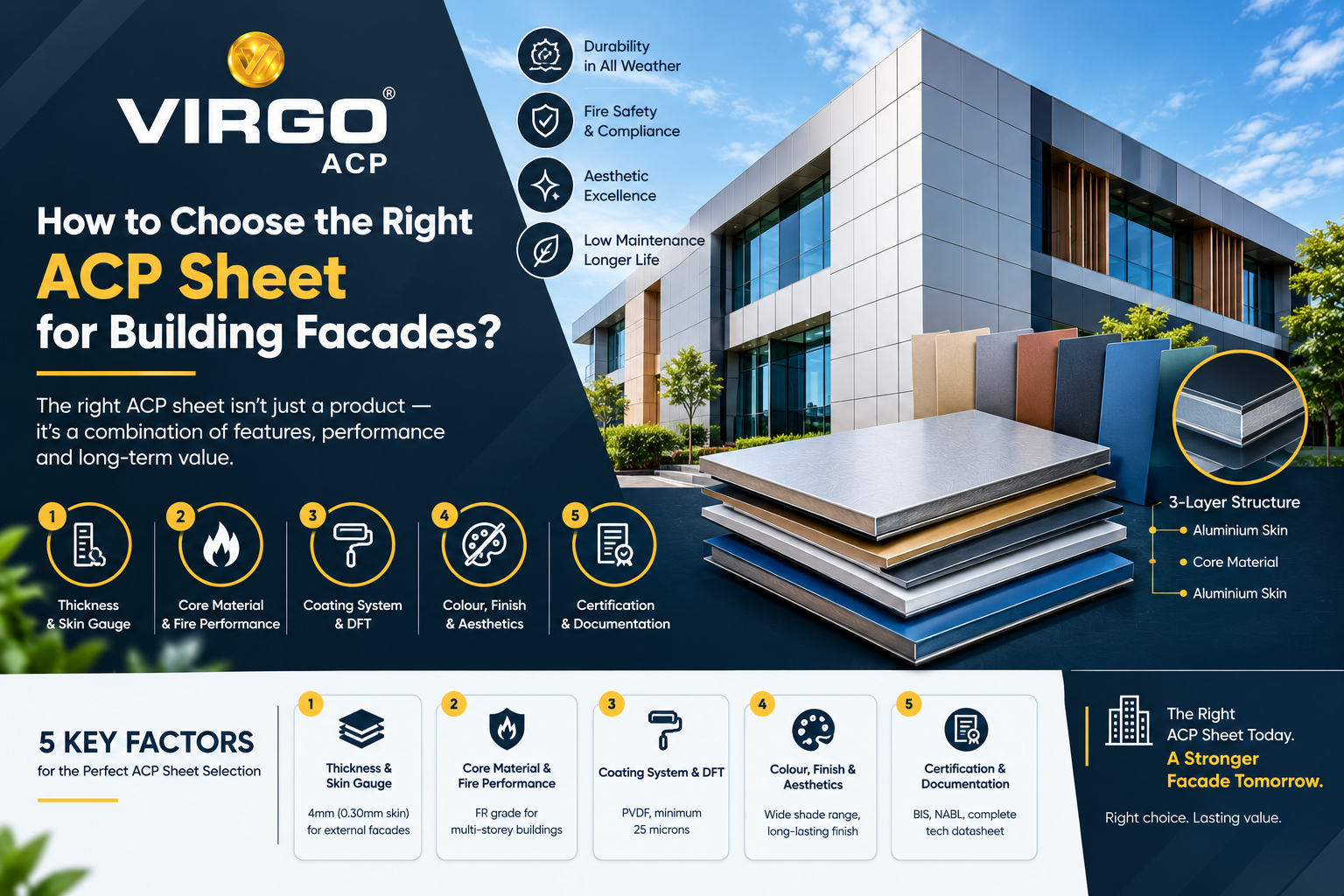
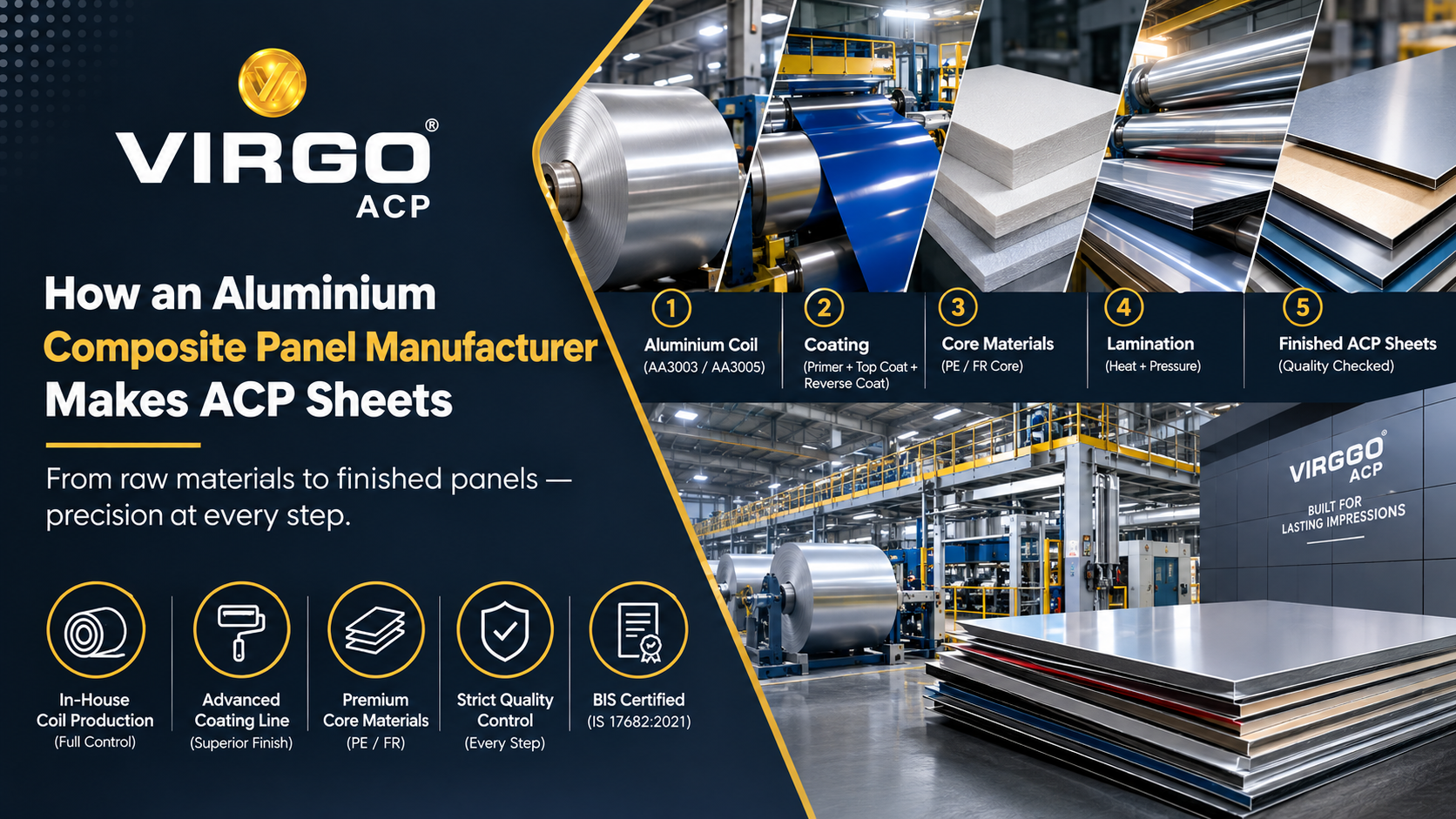
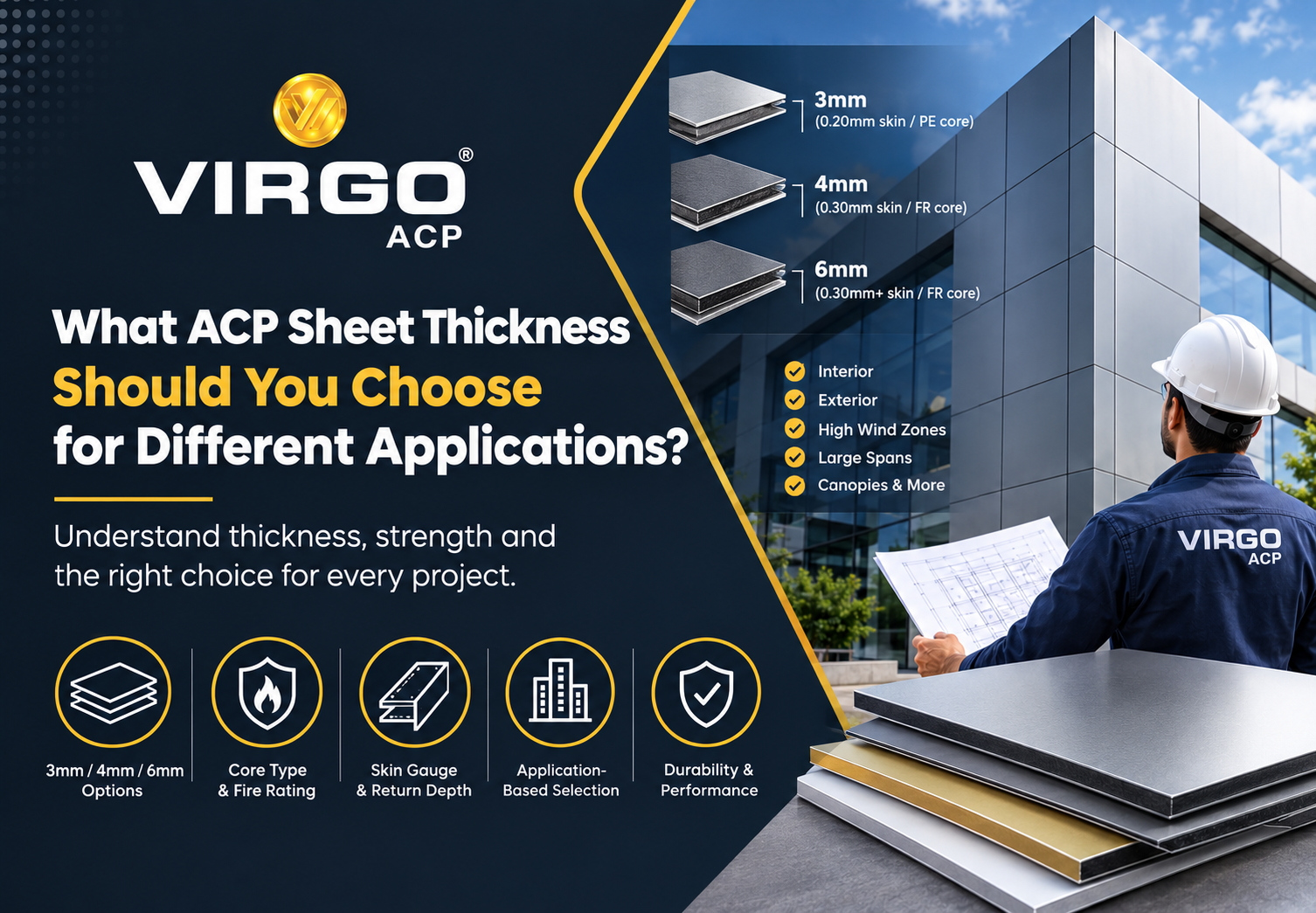
ACP sheets construction is three bonded layers: two aluminium skins and a core. A standard 4mm aluminium ACP sheet has approximately 0.30mm of aluminium on each face and 3.40mm of core. The bending resistance of ACP sheets scales with the cube of panel depth — a 4mm ACP sheet is approximately 2.4 times more resistant to bending than a 3mm ACP panel of the same width. The jump from 3mm to 4mm ACP cladding sheets for external applications is categorical, not incremental.
The second thing thickness controls in ACP sheets is fabrication depth — how deep a return fold can be routed before breaking through the face of the aluminium ACP sheet. More thickness means more material for returns, enabling more ACP panels installation system options.
3mm ACP Sheets — Interior Applications Only
Three-millimetre ACP sheets are correctly specified for: interior wall cladding with spans under 600mm, exhibition display systems, retail fixtures, interior feature walls, and signage fascias in covered locations. These are interior ACP panels applications where external durability of the aluminium ACP sheet is irrelevant.
The failure mode when 3mm ACP sheets are used externally is predictable: visible deflection on spans above 800mm under moderate wind load. Three-millimetre ACP cladding sheets also produce shallow returns — approximately 12–15mm maximum — which limits compatibility with external ACP panels fixing systems requiring 20mm or deeper returns.
4mm ACP Sheets — The External Standard
Four-millimetre ACP sheets are the default for external building facades in India under BIS IS 17682:2021. At approximately 5.5 kg/sqm, 4mm ACP panels handle the wind loads, thermal cycling, and fabrication requirements of standard commercial and residential ACP cladding sheets installations.
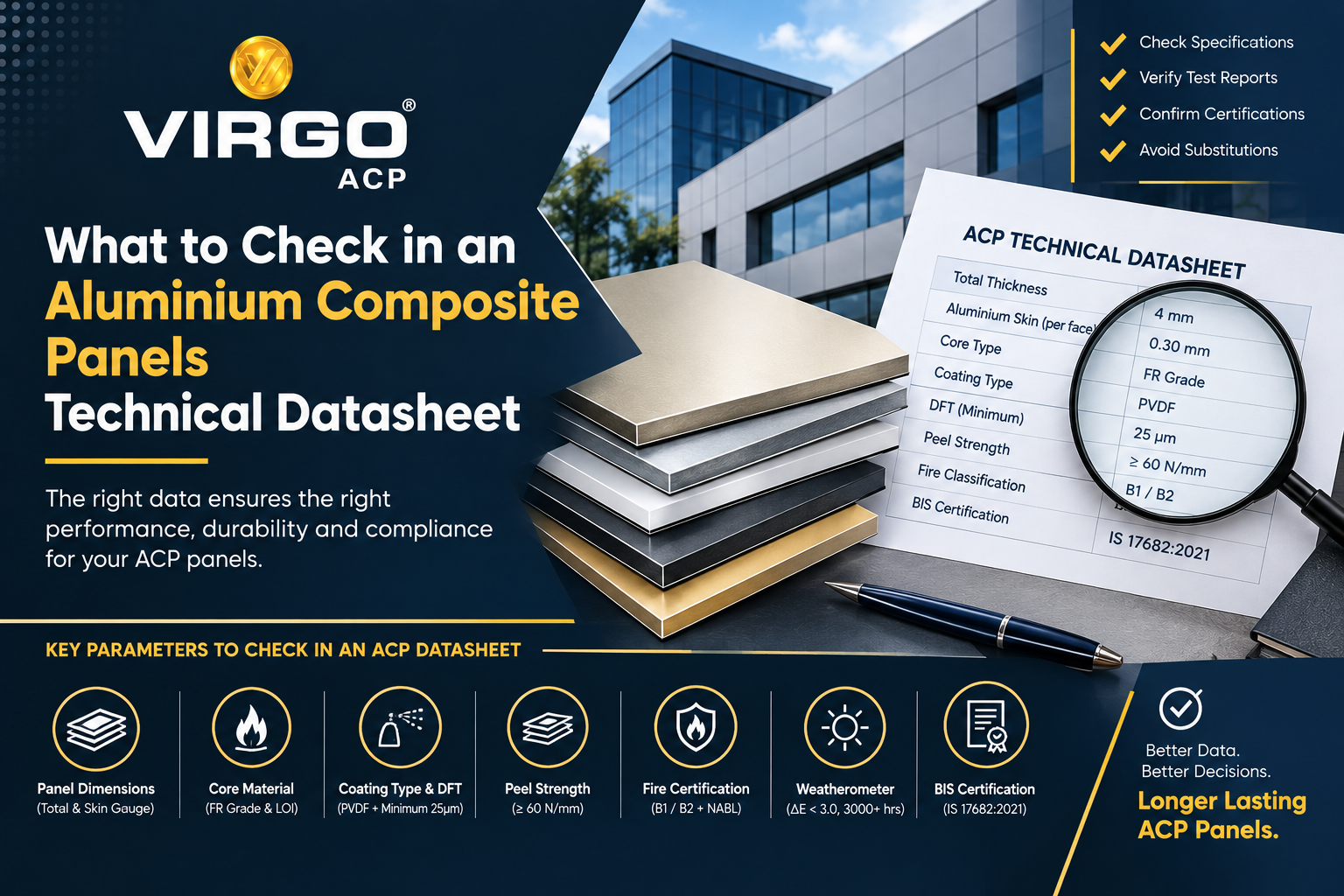
Within the 4mm specification, aluminium skin thickness per face is the variable that separates ACP sheets products. Both 0.20mm and 0.30mm-skin products are described as ‘4mm ACP panels‘ — with different surface rigidity, dent resistance, and external durability for aluminium ACP sheet applications.
Skin Gauge | ACP Sheets Application | External Compliance |
0.20mm | Interior ACP panels only | Not appropriate for external ACP sheets |
0.25mm | Protected exterior, low wind ACP cladding sheets | Marginal for standard external |
0.30mm | Standard external ACP panels | IS 17682:2021 standard for aluminium ACP Sheet |
0.50mm | High-wind exterior ACP sheets | Compliant — premium specification |
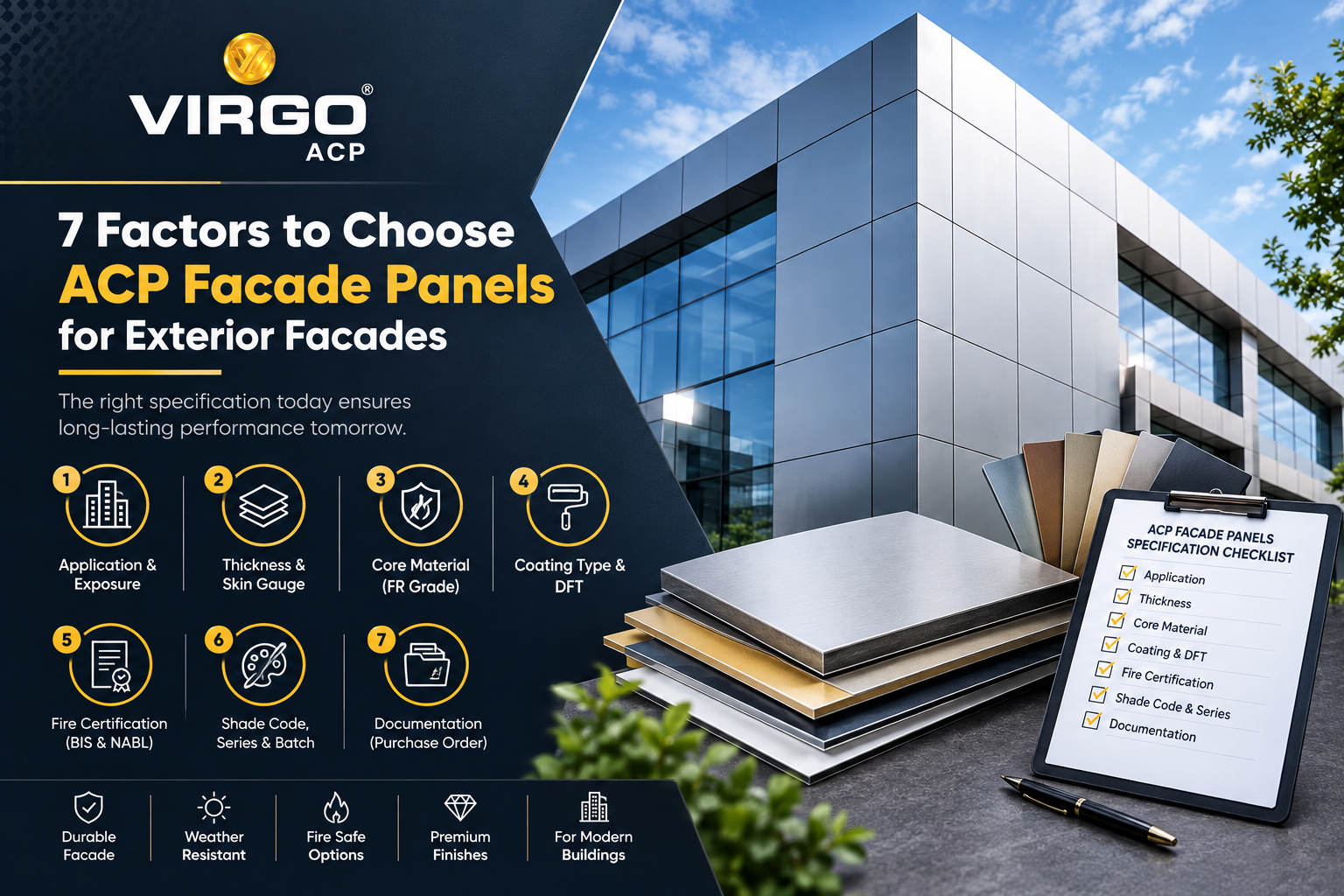
For external ACP cladding sheets in India, the specification must read: 4mm total thickness, 0.30mm aluminium skin per face, FR-grade core. Without all three numbers, the ACP panels specification is incomplete.
6mm ACP Sheets — Structural Grade
Six-millimetre ACP panels enter the specification when ACP sheets spans exceed 2000mm without intermediate subframe support, when the project is in a high wind-load zone (coastal, high-rise above 30m), or when the design requires aluminium ACP sheet return depths above 25mm that 4mm ACP cladding sheets cannot support.
The bending resistance of 6mm ACP panels versus 4mm ACP sheets is approximately 3.4 times greater. At 8 kg/sqm (versus 5.5 kg/sqm for 4mm ACP sheets), the additional dead load of 6mm ACP panels affects subframe structural design.
ACP Sheets Thickness Selection by Application
Application | ACP Sheets Thickness | Skin Gauge | Core |
Interior wall feature | 3mm or 4mm ACP sheets | 0.20mm+ | PE acceptable |
Interior signage | 3mm ACP panels | 0.20mm | PE acceptable |
External residential ACP cladding sheets | 4mm ACP sheets | 0.30mm | FR required |
External commercial ACP panels | 4mm aluminium ACP Sheet | 0.30mm | FR required |
High-rise above 30m — ACP sheets | 4mm or 6mm ACP panels | 0.30mm+ | FR required |
Large-span canopy | 6mm ACP cladding sheets | 0.30mm | FR required |
Industrial, large bay — ACP panels | 6mm ACP sheets | 0.30mm+ | FR required |
Frequently Asked Questions
Q. What is the standard ACP sheet thickness for external facades in India?
Ans. 4mm ACP sheets — the standard for external ACP panels applications under BIS IS 17682:2021. For very large spans or high wind-load zones, 6mm ACP cladding sheets are appropriate. 3mm ACP sheets are interior aluminium ACP sheet specification only.
Q. When should I specify 6mm ACP sheets instead of 4mm ACP panels?
Ans. When ACP sheets spans exceed 2000mm without intermediate support, when the project is in a high wind-load zone (coastal, high-rise above 30m), or when the installation design requires ACP cladding sheets return depths above 25mm that 4mm ACP panels cannot support.
Q.Is 3mm ACP cladding sheets specification appropriate for external facades?
Ans.Only in very specific conditions — spans under 600mm, protected locations. For standard external ACP panels, 3mm ACP sheets are under-specified and will show visible deflection above 800mm spans.
Q.What is aluminium skin thickness in ACP sheets and why does it matter?
Ans. Skin thickness is the gauge of the face sheets in an aluminium ACP sheet. For external ACP panels, 0.30mm minimum per face is the correct ACP cladding sheets specification for dent resistance, surface rigidity, and fabrication depth.
Q.Does ACP sheets thickness affect fire performance?
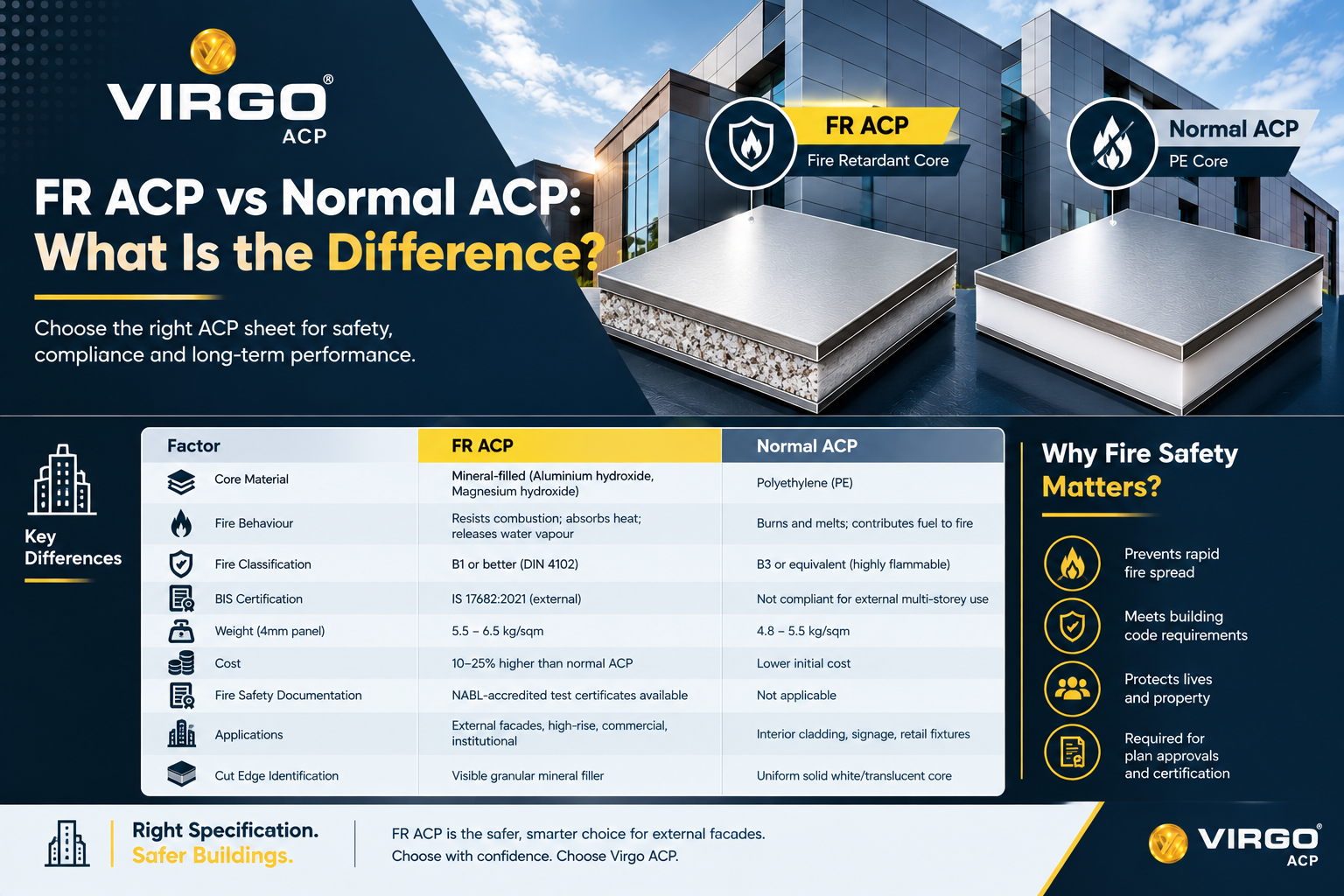
Ans. Thickness doesn’t determine fire performance in ACP panels — core type does. FR-grade core is the fire compliance variable in ACP cladding sheets, available in 3mm, 4mm, and 6mm aluminium ACP sheet products.
Virgo ACP range of ACP sheets across 300+ shades and 16 series at virgoacp.com/products/