Every facade project eventually comes down to one practical question: how many sheets do you actually need? Order too few ACP sheets and your project stalls halfway through installation. Order too many, and you are left with wasted material sitting in a warehouse. At Virgo ACP, we have seen how even a small mistake in cladding quantity estimation can lead to project delays, increased costs, and unnecessary material wastage. Getting the cladding quantity right isn’t just a matter of convenience, it directly affects your budget, your project timeline, and how smoothly the installation goes.
Whether you are an architect finalising a specification, a contractor preparing a quote, or a homeowner planning an exterior renovation, this guide walks you through a simple, reliable method to calculate cladding quantity for Aluminium Composite Panels, so your next order is accurate the first time.
Table of Contents
- Why Accurate Cladding Calculation Matters
- Understanding ACP Sheets and Standard Sizes
- Step-by-Step Process to Calculate Cladding Quantity
- Factors That Affect Cladding Quantity
- Common Mistakes to Avoid
- Why Choose Virgo ACP for Your Cladding Project
- Conclusion
- Frequently Asked Questions
- 1. How do I calculate the number of ACP sheets needed for a wall?
- 2. What is the standard size of an ACP sheet?
- 3. How much wastage should I allow for cladding sheets?
- 4. Does panel thickness affect the quantity required?
- 5. Should I order all cladding sheets from the same batch?
- 6. Can Virgo ACP help me calculate cladding quantity for my project?
Why Accurate Cladding Calculation Matters
Cladding is usually one of the larger line items in a facade budget, so a miscalculation has a real cost. Underordering means a second procurement cycle, possible shade mismatches between production batches, and delays while you wait for fresh stock. Overordering ties up capital in material that may never get used. On top of that, precise measurement helps your fabricator plan the substructure, cutting pattern, and labour more efficiently, which keeps the whole project on schedule.
A well-calculated order also reduces on-site wastage. Offcuts from oversized orders often go unused, while panels cut to fit an underestimated area can leave visible seams or mismatched joints on the finished building facade materials. Getting the numbers right at the planning stage prevents most of these issues before they start.
Understanding ACP Sheets and Standard Sizes
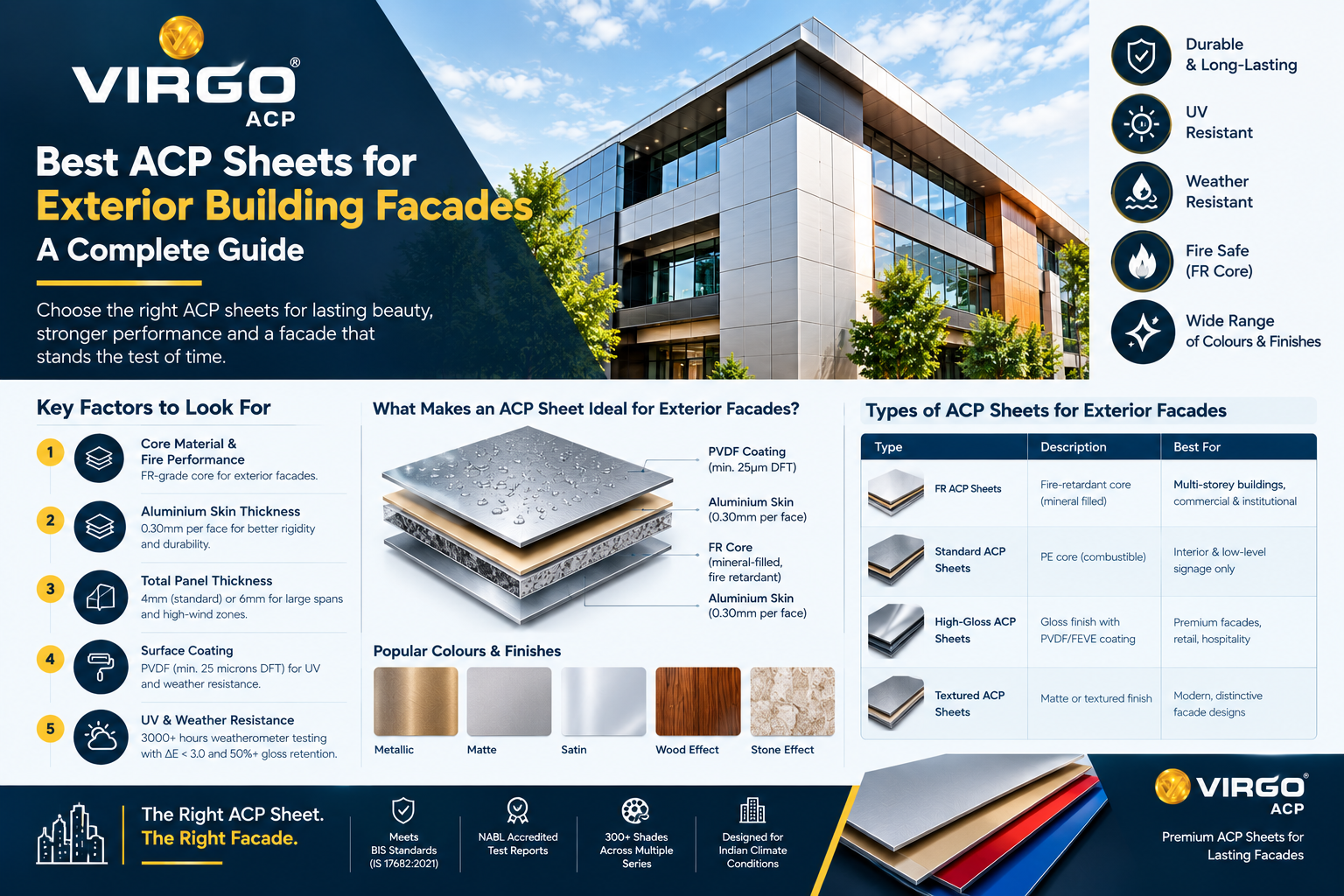
Before calculating quantity, it helps to know what you are working with. An Aluminium ACP Sheet typically consists of two thin aluminium skins bonded to a solid core, available in thicknesses ranging from about 3mm to 6mm depending on the application. Standard Aluminium Composite Panels are commonly available in sizes such as 8 feet by 4 feet, 10 feet by 4 feet, and custom lengths up to 20 feet, though this varies by manufacturer.
Panel width usually stays fixed at 4 feet (1220mm), while length can vary. Knowing the exact sheet size your supplier offers is the first input you need before any quantity calculation, since it determines how many panels are required to cover a given wall area with minimal cutting.
Step-by-Step Process to Calculate Cladding Quantity
Calculating the quantity of ACP cladding sheets required for a project follows a fairly consistent process across residential, commercial, and industrial buildings. Here is how to approach it.
Step 1: Measure the Wall or Facade Area
Start by measuring the total height and width of every wall or facade section that needs cladding. Multiply height by width for each section to get the area in square feet or square metres. For buildings with multiple elevations, measure each face separately and add them together to get the total surface area.
Step 2: Deduct Openings
Windows, doors, ventilation grills, and other openings should not be included in your cladding area. Measure each opening and subtract its area from the total wall area. Many contractors keep a small allowance around openings for trims and flashing, so check with your fabricator on how much extra material this requires.
Step 3: Choose Panel Size and Thickness
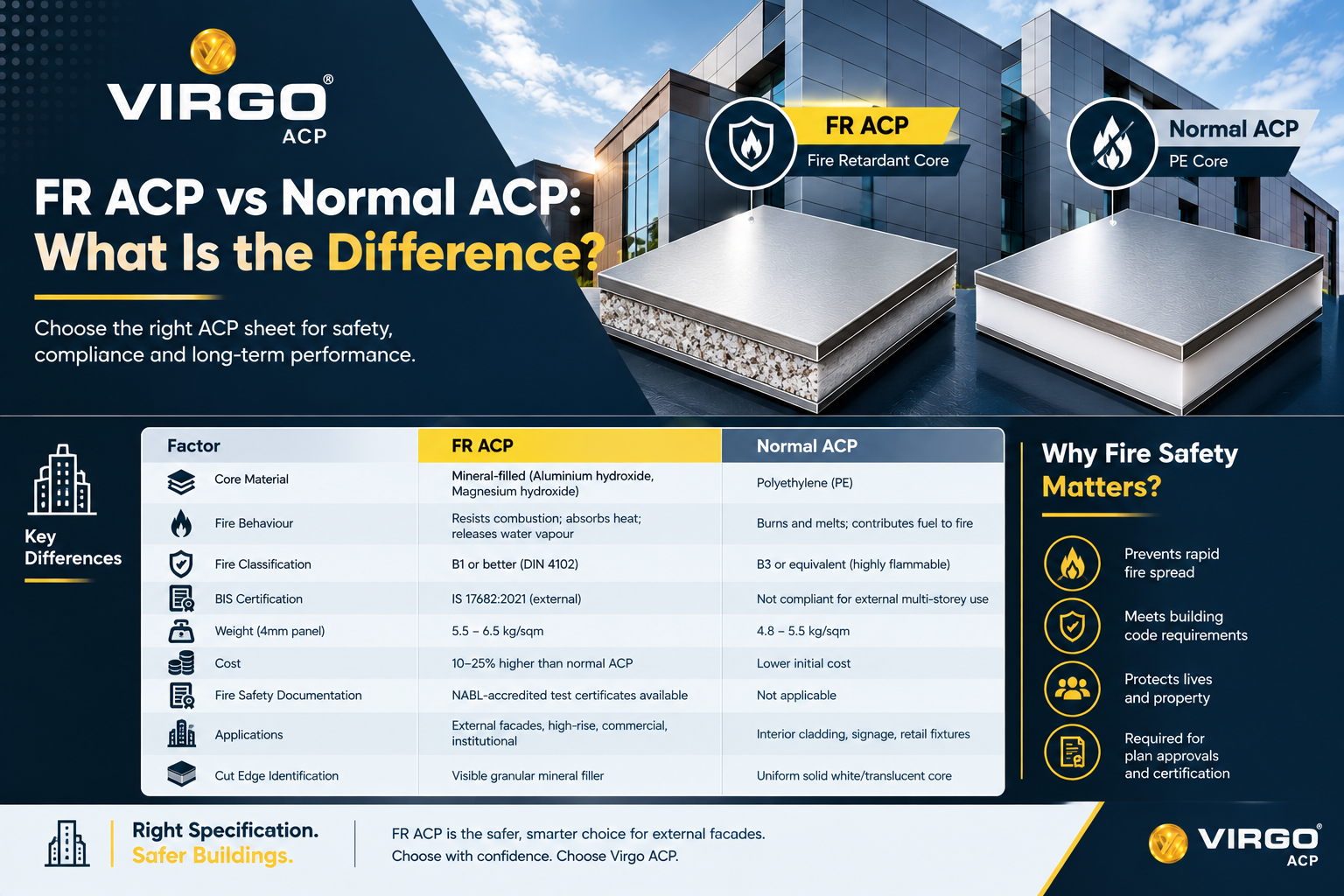
Once you know your net area, decide on the panel dimensions and thickness suited to the application. Exterior wall cladding panels for high-rise facades generally use thicker, fire-retardant grade sheets, while interior signage or partition work can use thinner panels. This choice affects how many sheets fit into your total area, since larger sheets mean fewer joints and less wastage.
Step 4: Calculate the Number of Sheets
Divide the total net wall area by the area of a single panel to get the base number of sheets required. For example, if your net facade area is 1,000 square feet and each ACP sheet covers 32 square feet (8 feet x 4 feet), you would need approximately 32 sheets before accounting for wastage.
Step 5: Add a Wastage Allowance
No installation uses 100% of every sheet. Cutting for corners, curves, joints, and irregular sections always generates some offcuts. Industry practice is to add a wastage margin of roughly 5% to 10% on top of the calculated quantity, depending on the complexity of the facade design. Simple rectangular facades need less allowance, while curved or multi-angled designs need more.
Factors That Affect Cladding Quantity
Beyond the basic formula, a few project-specific factors can change how much material you actually need.
Building Design and Facade Complexity
A flat, rectangular facade uses material far more efficiently than a design with curves, cutouts, or multiple planes. Complex geometries increase the number of cuts, and therefore the wastage percentage, so it’s worth reviewing your architectural drawings closely before finalising quantity.
Panel Orientation
Whether panels are installed horizontally or vertically affects how efficiently they cover a wall. Choosing an orientation that aligns with the natural dimensions of the facade usually reduces the number of cuts and leftover offcuts.
Substructure and Fixing System
The type of aluminium framing or substructure used for fixing ACP panels can influence panel spacing and joint width, which in turn affects the exact quantity needed. It’s best to finalise your fixing system in consultation with your fabricator before placing a bulk order.
Common Mistakes to Avoid
- Measuring only the overall building footprint instead of each individual wall face.
- Forgetting to deduct window and door openings from the total area.
- Ignoring wastage allowance and ordering the exact calculated quantity.
- Not accounting for shade or batch variation when ordering panels for a large facade.
- Choosing panel thickness without checking fire safety norms applicable to the building type.
Why Choose Virgo ACP for Your Cladding Project
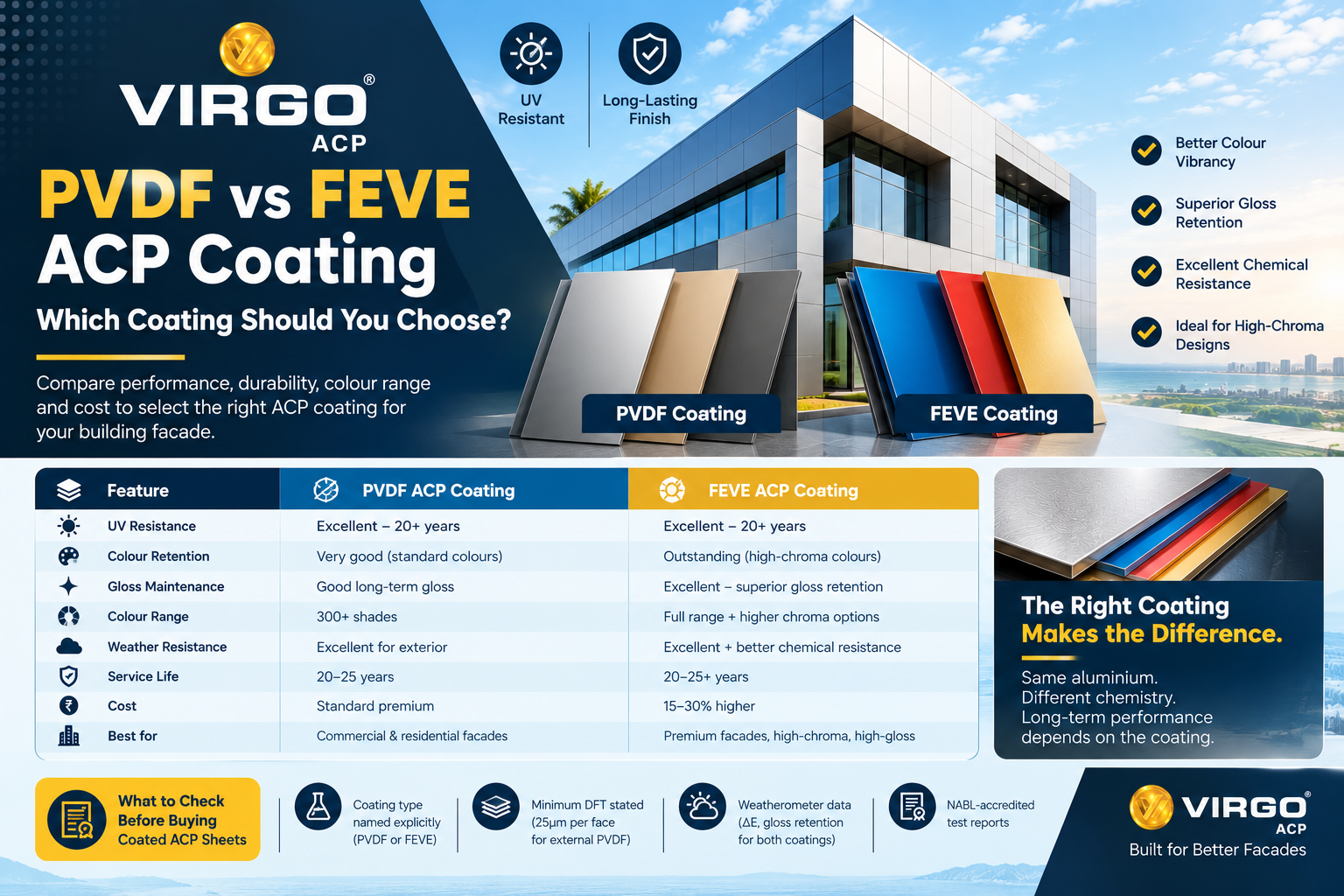
Once your quantity is calculated, the next decision is who to source from. Virgo ACP has been part of the Virgo Group’s building materials legacy for over three decades, and today manufactures a wide range of ACP panels with more than 300 shades, PVDF and FEVE coatings, and internationally certified fire-retardant cores.
Working with an established name among ACP Sheet Dealers gives you access to consistent batch quality, reliable stock availability, and technical guidance on quantity planning, panel selection, and installation. Virgo ACP’s panels are used across commercial, residential, and industrial projects nationwide, backed by ISO certification and BIS-compliant specifications, so architects and contractors can plan facades with confidence rather than guesswork.
Conclusion
Calculating cladding quantity doesn’t need to be complicated once you break it into clear steps: measure the wall area, deduct openings, select your panel size, divide to get the base sheet count, and add a sensible wastage margin. Getting this right at the planning stage saves money, avoids delays, and ensures your facade comes together exactly as designed.
If you are planning a facade project and want help finalising panel quantity, shade selection, or fire-rated specifications, Virgo ACP’s team can guide you through the process from the very first calculation to the final installation.
Frequently Asked Questions
1. How do I calculate the number of ACP sheets needed for a wall?
Measure the total height and width of the wall to get the area, subtract any window or door openings, then divide the net area by the coverage area of one panel. Add a 5% to 10% wastage allowance to arrive at the final order quantity.
2. What is the standard size of an ACP sheet?
Most Aluminium Composite Panels come in a fixed width of 4 feet, with lengths of 8 feet, 10 feet, or custom sizes up to 20 feet. Always confirm exact dimensions with your supplier, as sizing can vary between manufacturers.
3. How much wastage should I allow for cladding sheets?
A wastage margin of 5% to 10% is standard for most facades. Simple, flat wall designs need less allowance, while facades with curves, multiple angles, or intricate cutouts should be planned closer to the higher end.
4. Does panel thickness affect the quantity required?
Thickness does not change the area calculation, but it does influence panel selection and cost. Thicker, fire-retardant grade panels are generally recommended for high-rise and commercial exterior wall cladding panels, while thinner sheets are common for interior or signage applications.
5. Should I order all cladding sheets from the same batch?
Yes, wherever possible. Ordering the full requirement in one batch from a trusted name among ACP sheet dealers helps avoid slight shade or finish variations that can occur between different production runs.
6. Can Virgo ACP help me calculate cladding quantity for my project?
Yes. Virgo ACP’s team can review your facade drawings and help finalise panel size, thickness, and quantity, along with shade and fire-rating recommendations suited to your project.
Get in touch with Virgo ACP for premium Aluminium Composite Panels, sample requests, or to find a dealer near you.