An architect in Pune once said that the most important decision on a commercial facade project isn’t which ACP sheet for building facade you choose — it’s that you understand why you’re choosing it. He had seen three projects on the same street where contractors picked the cheapest available ACP facade sheets. Two had visible surface degradation within four years. The third, where a proper ACP sheet selection guide had been followed, looked exactly as specified eight years later.
The difference wasn’t luck. It was methodology. Choosing the right ACP sheet for building facade applications isn’t complicated once you understand the five variables that drive performance. This guide breaks each one down.
What Is an ACP Sheet for Building Facades?
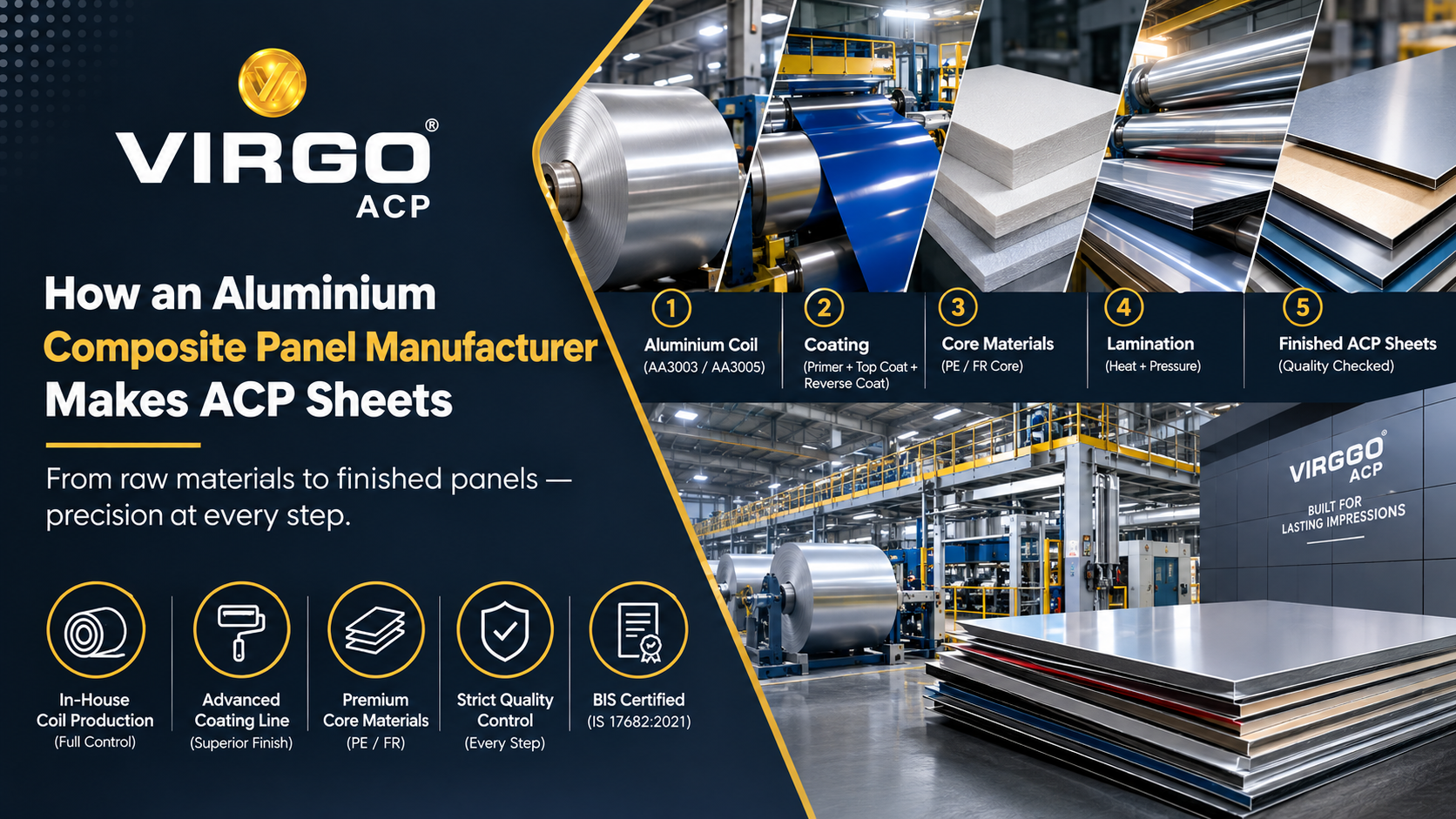
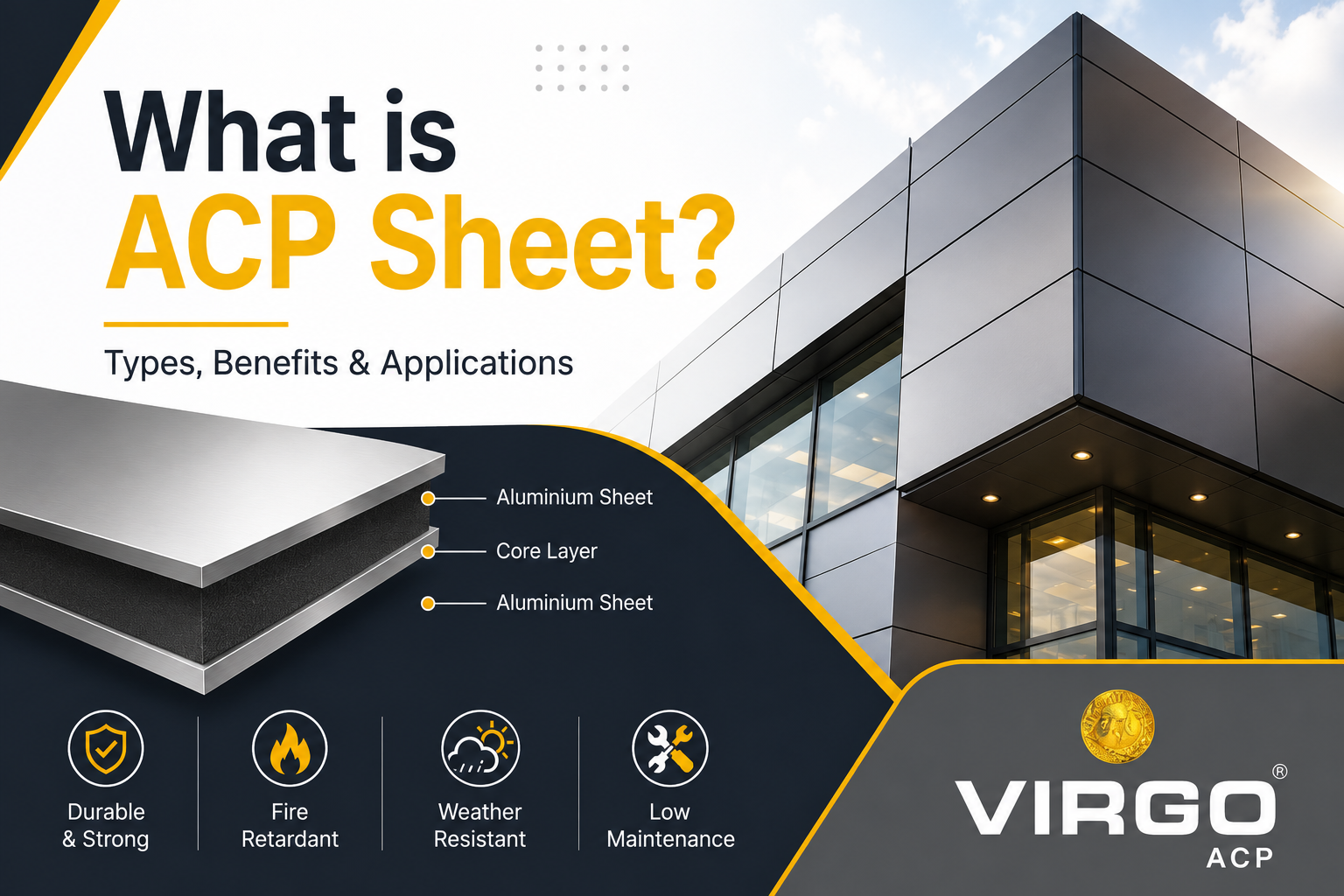
An ACP sheet for building facade is a three-layer composite panel: two aluminium face sheets permanently bonded to a core material. The aluminium skins give the ACP facade sheets their rigidity, weather resistance, and paintable surface. The core determines weight, fire behaviour, and structural characteristics.
ACP sheets for building facades are used externally because they handle UV exposure, rain, temperature cycling, and pollution without absorbing moisture or corroding. The best ACP sheet for facade applications combines all of these properties in a specification matched to the specific building, environment, and performance requirements of the project. An aluminium composite panel for facade installation typically covers large external wall surfaces efficiently with minimal structural dead load.
Why Is Choosing the Right ACP Sheet for Building Facade Important?
The wrong ACP sheet for building facade doesn’t announce itself at installation. It announces itself three to five years later — when the coating starts chalking on a south-facing elevation, when ACP facade sheets bow across a wide bay because skin gauge was too thin, or when the building authority asks for FR documentation that doesn’t exist.
- Structural requirements — thickness and skin gauge of aluminium composite panel for facade determines performance under wind load
- Appearance and durability — coating system on ACP sheets for building facades governs how long the facade looks as it did at installation
- Weather exposure — UV, monsoon, coastal salt, and pollution attack ACP facade sheets differently; the correct ACP sheet for exterior facade accounts for all of these
- Fire safety — the core material in an ACP sheet for building facade is the fire safety variable; PE-core burns, FR-core suppresses combustion
- Long-term maintenance — the best ACP sheet for facade choice determines how much cleaning and maintenance the building will require
Key Factors When Choosing an ACP Sheet for Building Facade
ACP Sheet Thickness
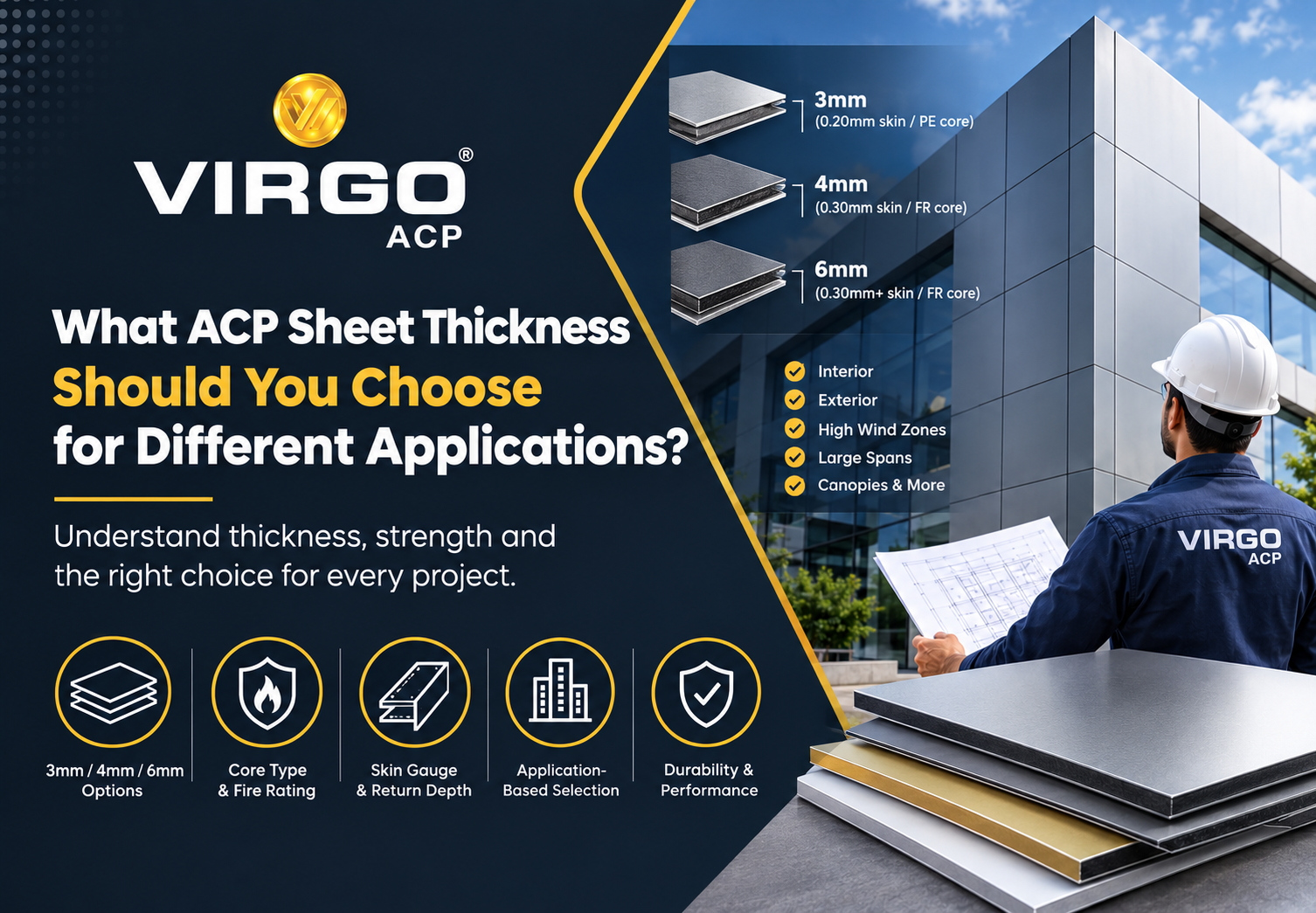
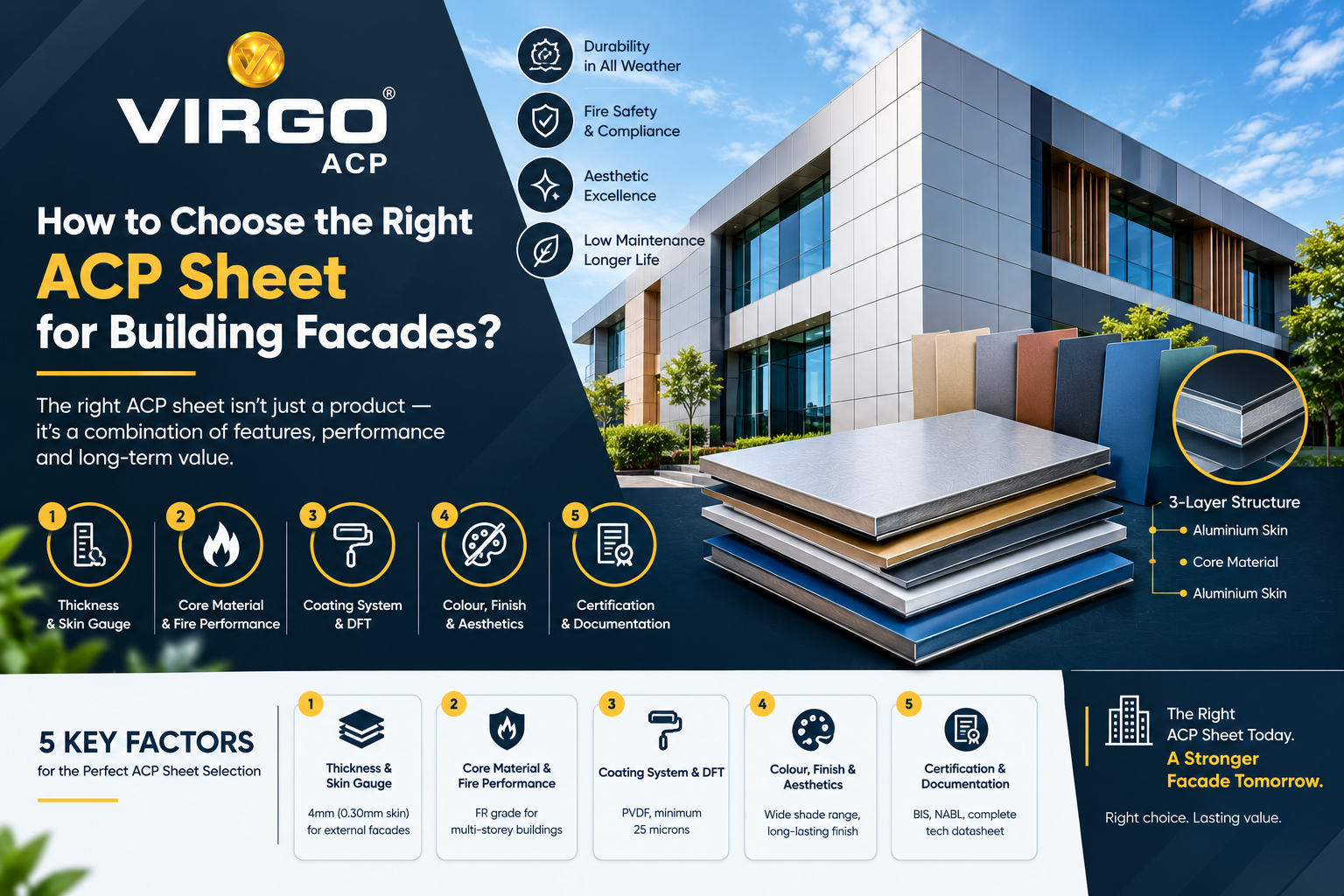
The standard aluminium composite panel for facade applications is 4mm total thickness — the IS 17682:2021 default for external ACP sheets for building facades. Three-millimetre ACP facade sheets are appropriate for interior applications only. Six-millimetre is specified for spans exceeding 2000mm without intermediate subframe support.
Aluminium Skin Thickness
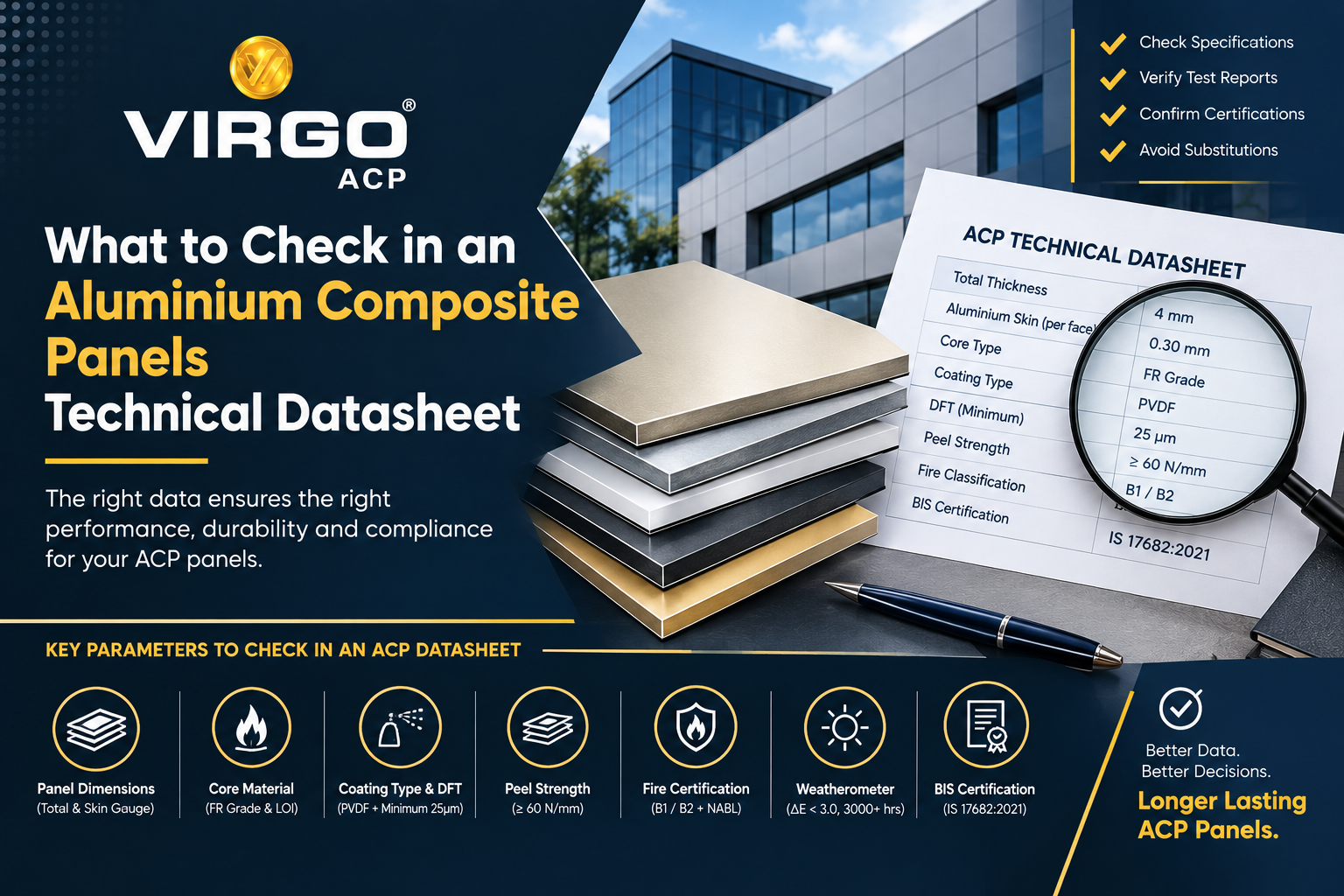
Both 0.20mm and 0.30mm-skin products are labelled as ‘4mm ACP facade sheets.’ For external ACP sheet for building facade applications, 0.30mm aluminium skin per face is the minimum correct specification under IS 17682:2021. Economy ACP sheets for building facades with 0.20mm skins underdeliver on surface rigidity and dent resistance. Always request skin gauge separately as part of any ACP sheet selection guide process.
Core Material and Fire Performance
This is the most consequential variable in any ACP sheet for building facade specification. PE (polyethylene) core in normal ACP facade sheets is combustible — not appropriate for external multi-storey ACP sheets for building facades. FR (fire-retardant) core in the best ACP sheet for facade applications contains mineral fillers that suppress combustion. This is a fire safety requirement, not a premium specification. Cut an ACP sheet for exterior facade panel edge — FR-core shows visible granular mineral content. PE-core is a uniform solid plastic.
ACP Surface Coating
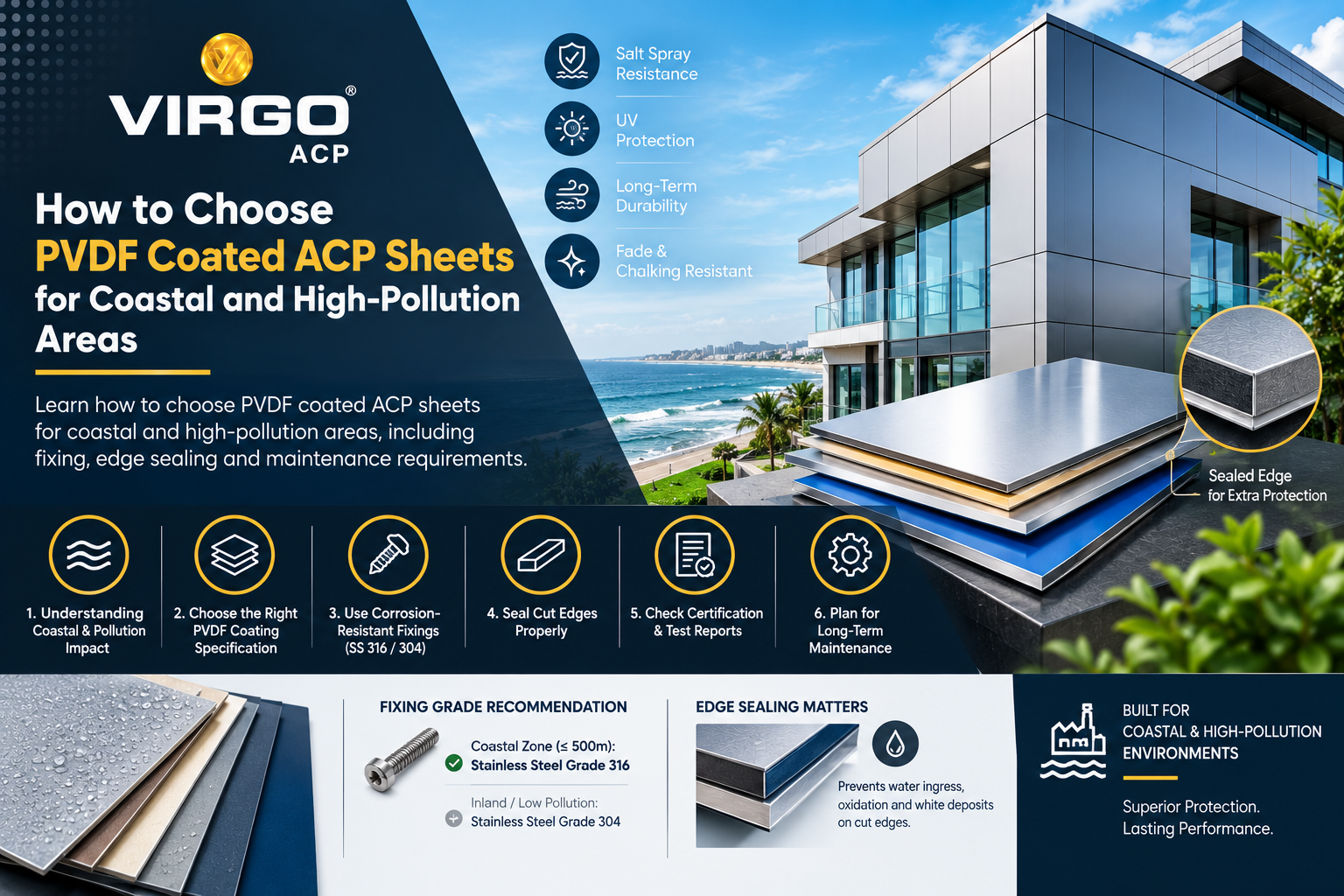
PVDF (polyvinylidene fluoride) at minimum 25 microns DFT is the correct coating for external ACP sheets for building facades in India. India’s UV index exceeds 10 for six to eight months per year — polyester-coated ACP facade sheets begin chalking within three to five years on south-facing elevations. The best ACP sheet for facade UV resistance uses PVDF coating, which resists UV degradation through its fluorine-carbon molecular bond for 20+ years.
Colour and Finish
The best ACP sheet for facade applications comes in a finish that matches design intent and can be maintained at the cleaning frequency the building management will realistically commit to. Dark ACP facade sheets show dust accumulation faster in polluted environments. Matte finishes are most forgiving for the best ACP sheet for building facade in high-pollution locations with lower cleaning budgets.
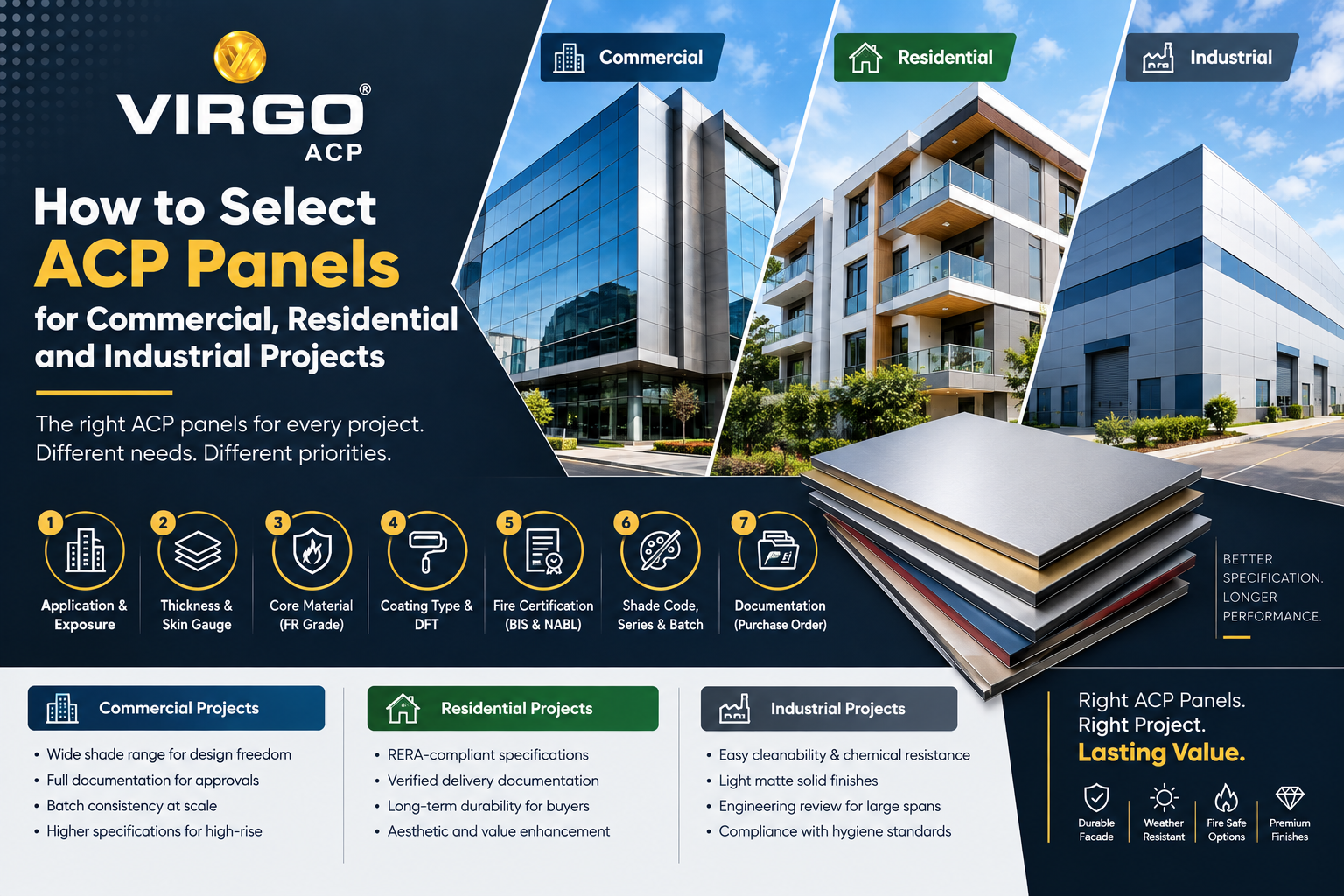
How to Choose ACP Sheets for Building Facades Based on Building Type
Building Type | Best ACP Sheet for Facade Specification |
Residential | FR-core ACP sheets for building facades, PVDF 25μm+, precise shade codes for RERA documentation |
Commercial | FR-core best ACP sheet for facade, PVDF 25μm+, 300+ shade range, batch consistency for phased ACP facade sheets |
Corporate offices | ACP sheet for building facade with precise brand colour matching, PVDF for 20-year colour retention on ACP facade sheets |
Retail buildings | FR-core ACP sheet for exterior facade, high-chroma or metallic ACP facade sheets for visibility |
Institutional | FR-core aluminium composite panel for facade, BIS IS 17682:2021 certified, NABL fire test documentation |
How Indian Weather Conditions Affect ACP Sheet for Exterior Facade Selection
Heat and sunlight
South-facing ACP facade sheets experience surface temperatures above 65°C in Indian summers. The best ACP sheet for building facade in high-UV zones requires PVDF coating at 25+ microns DFT — polyester ACP sheets for building facades fail under this UV load within three to five years.
UV exposure
India’s extreme UV is the primary reason polyester-coated ACP facade sheets fail early. PVDF coating on the best ACP sheet for facade applications resists UV through its fluorine-carbon molecular bond.
Rain and humidity
PVDF-coated aluminium composite panel for facade is waterproof. The risk in monsoon conditions is in installation details — joint sealant and cavity drainage around ACP sheets for building facades.
Dust and pollution
PVDF-coated ACP facade sheets clean more easily than polyester alternatives. Mid-tone matte finishes are the most practical ACP sheet for exterior facade specification in high-pollution Indian cities.
Common Mistakes to Avoid When Selecting ACP Sheet for Building Facade
- Specifying total thickness without skin gauge for ACP facade sheets — both 0.20mm and 0.30mm products appear as ‘4mm ACP sheets for building facades‘
- Accepting PE-core ACP sheet for exterior facade on multi-storey buildings — PE is combustible; the best ACP sheet for facade external applications requires FR-grade core
- Choosing coating based on sample card — best ACP sheet for building facade looks identical at installation whether PVDF or polyester; the difference appears at year four
- Ordering ACP facade sheets without a shade code — ‘champagne’ describes a colour family; a shade code ties the aluminium composite panel for facade to a specific specification
- Deferring documentation to after installation — BIS IS 17682:2021 certification and NABL test reports for ACP sheets for building facades should be purchase order conditions
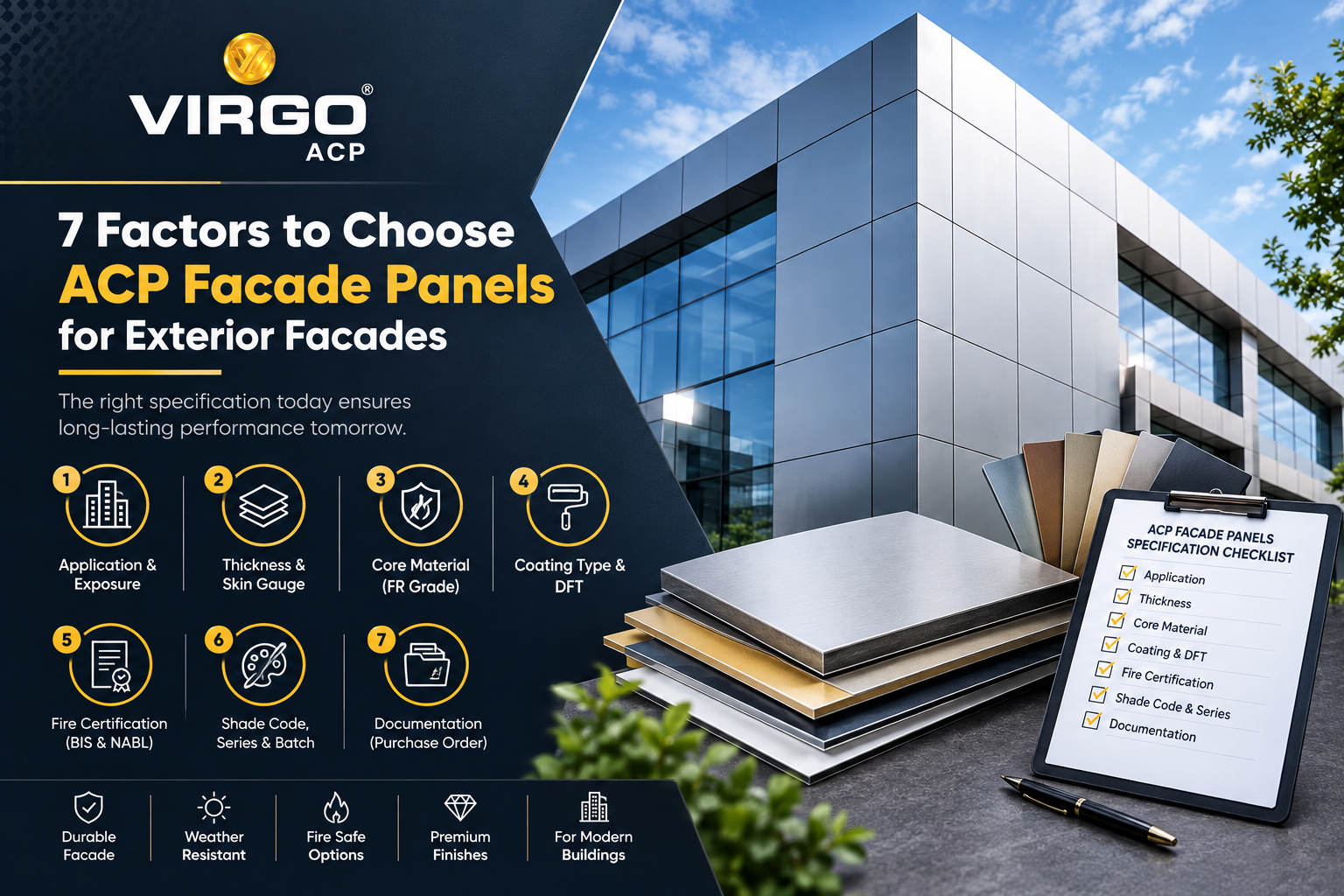
ACP Sheet for Building Facade Selection Checklist
ACP Sheet for Building Facade Element | Minimum Requirement for External Application |
Total panel thickness | 4mm ACP sheets for building facades (standard) / 6mm for large spans |
Aluminium skin thickness | 0.30mm per face minimum for ACP facade sheets |
Core type | FR-grade — IS 17682:2021 compliant aluminium composite panel for facade |
ACP surface coating | PVDF at minimum 25μm DFT for ACP sheet for exterior facade |
Fire certification | BIS IS 17682:2021 for best ACP sheet for facade — verify at bis.gov.in |
Shade specification | Manufacturer shade code — not colour description for ACP facade sheets |
Peel strength | Minimum 60 N/mm per IS 17682:2021 for ACP sheets for building facades |
Weatherometer performance | 3000+ hours, ΔE < 3.0 for best ACP sheet for facade |
Frequently Asked Questions
Q. What is the correct ACP sheet for building facade specification in India?
Ans.The correct ACP sheet for building facade specification is 4mm total thickness, 0.30mm aluminium skin per face, FR-grade core, and PVDF coating at minimum 25 microns DFT — meeting BIS IS 17682:2021 requirements. This applies to all external ACP sheets for building facades on multi-storey commercial and residential buildings.
Q. What is the best ACP sheet for facade UV resistance in India?
Ans. The best ACP sheet for facade UV resistance uses PVDF coating at minimum 25 microns DFT. PVDF resists India’s extreme UV load — index above 10 for six to eight months — without chalking or colour shift for 20+ years. Polyester-coated ACP facade sheets begin degrading within three to five years under the same conditions.
Q. How do I use an ACP sheet selection guide for a high-rise building?
Ans. For high-rise ACP sheet for exterior facade specification: FR-grade core is mandatory; PVDF coating at 25+ microns DFT; consider 6mm ACP facade sheets for upper floors in high wind-load zones; stainless steel grade 316 fixings in coastal locations; and obtain NABL-accredited fire test certificates and current BIS IS 17682:2021 certification before finalising ACP sheets for building facades procurement.
Q. What documentation should come with ACP sheets for building facades?
Ans. A complete ACP sheet for building facade delivery should include: tax invoice with shade code, coating type, DFT, core grade, and skin thickness; current BIS IS 17682:2021 certificate verifiable at bis.gov.in; NABL-accredited test reports; and written manufacturer warranty. Missing documentation from aluminium composite panel for facade deliveries creates compliance gaps.
Virgo ACP offers ACP sheets for building facades with BIS IS 17682:2021 certification, FR-grade core and PVDF coating in 300+ shades. Explore the complete ACP facade sheets range at virgoacp.com/products/