The structural engineer’s report arrived halfway through the schematic design phase of a seven-storey commercial development in Hyderabad. The architect had specified Indian granite on the primary elevation for a ‘premium, permanent, prestigious’ facade. The engineer’s note was brief: at 35 kg/sqm for the granite cladding plus fixing and backing frame, the facade alone was adding 490 tonnes of dead load to the building’s structure. To carry that, the columns needed upsizing, the foundations deepening, and the structural budget revised upward by approximately ₹2.1 crore.
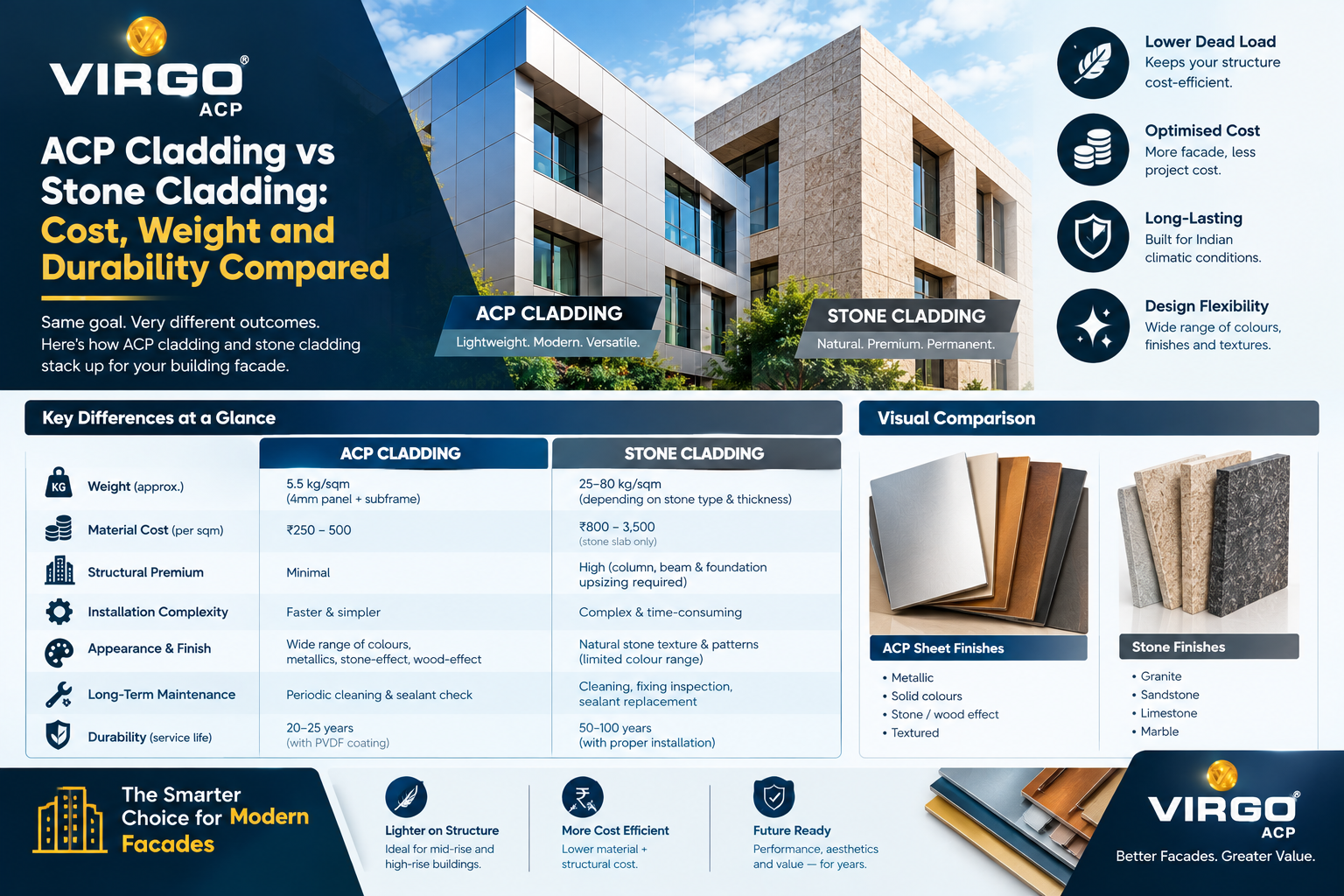
The project switched to ACP cladding vs stone cladding being evaluated properly for the first time. A stone-effect ACP facade panels specification — which the client initially resisted as ‘not the real thing’ — delivered a comparable visual result at 5.5 kg/sqm, eliminated the structural premium entirely, and came in at approximately 60% of the total stone cladding cost. The ACP cladding vs stone cladding comparison is more nuanced than price per sqm. This guide covers the complete picture.
What Are Aluminium Composite Panels?
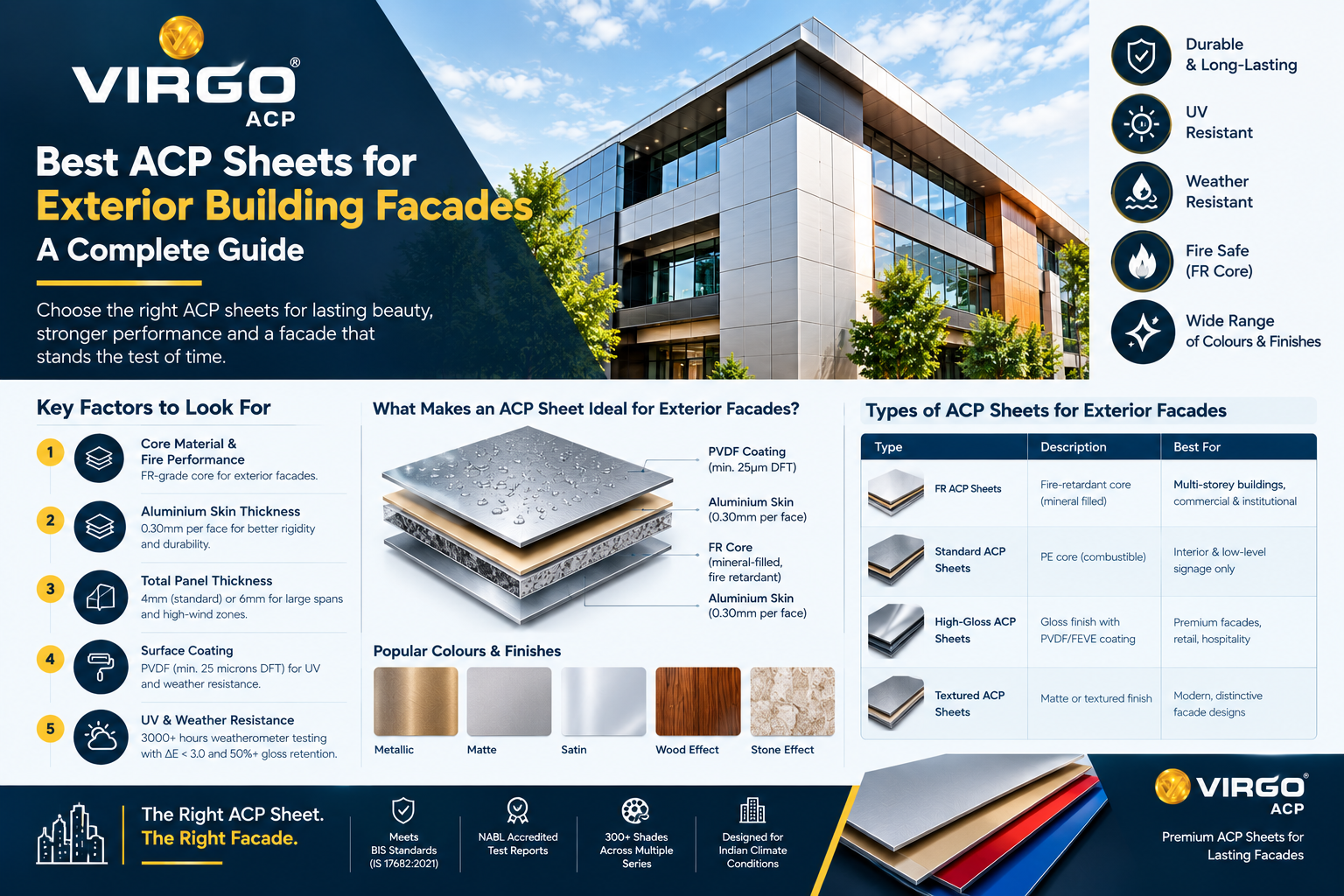
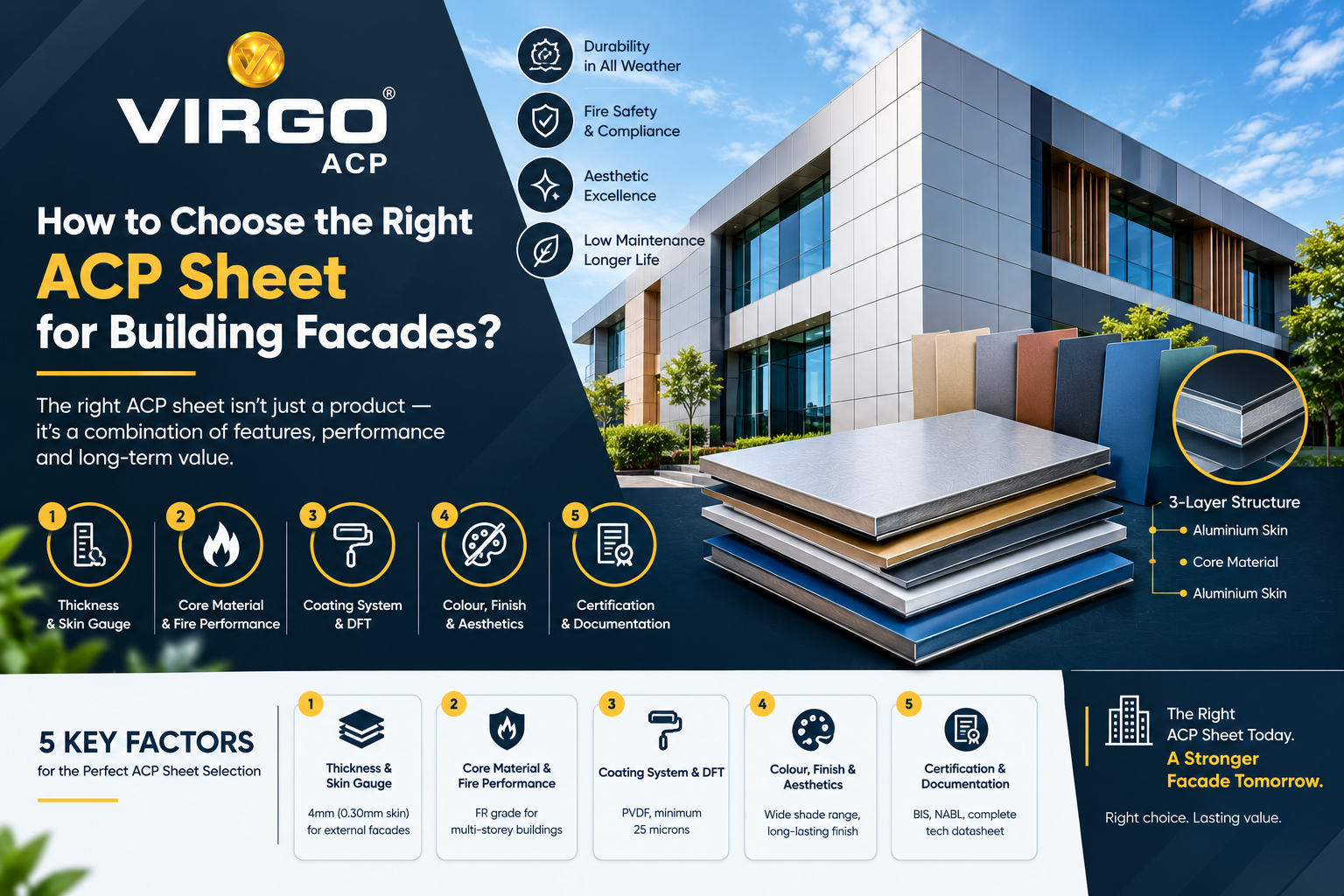
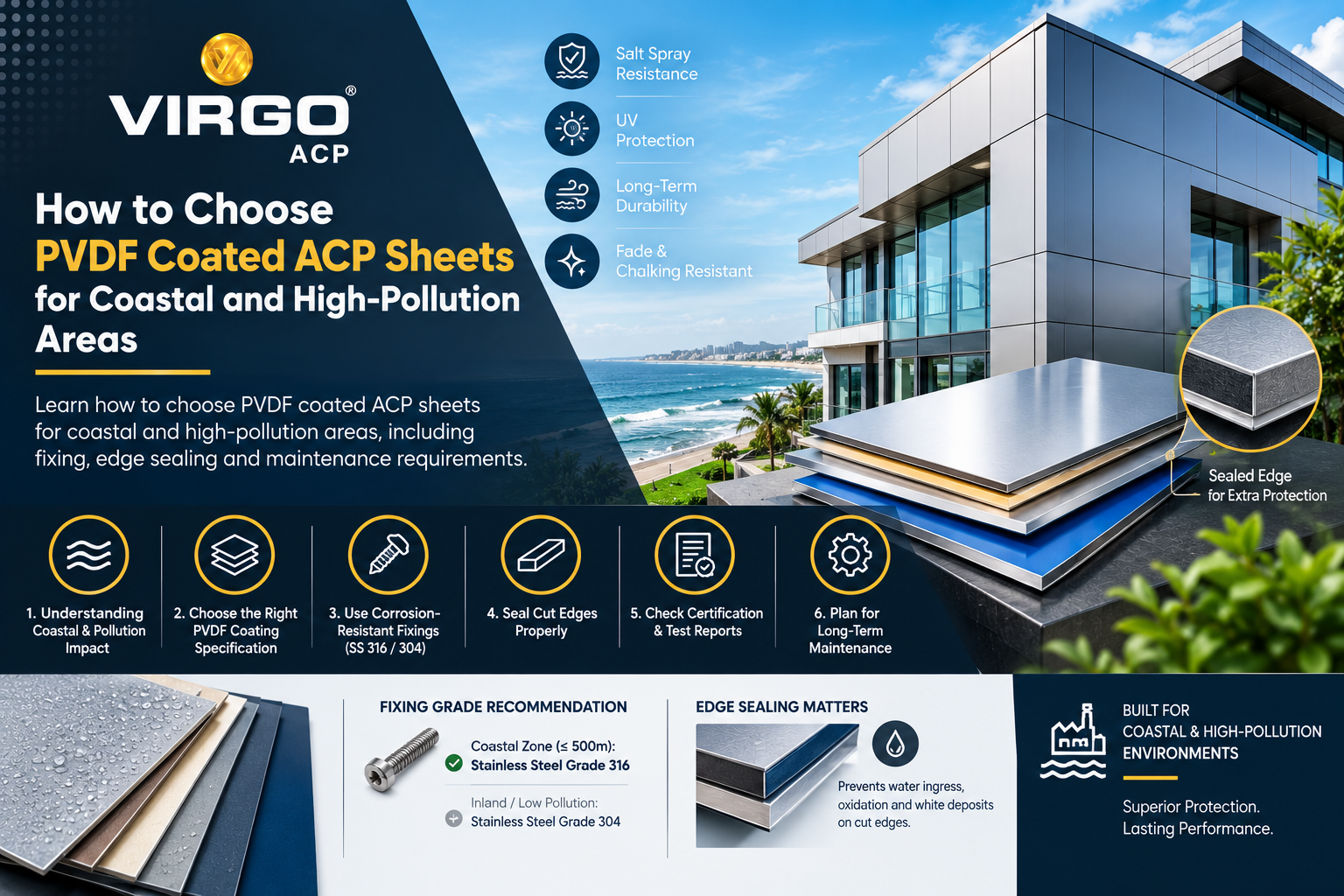
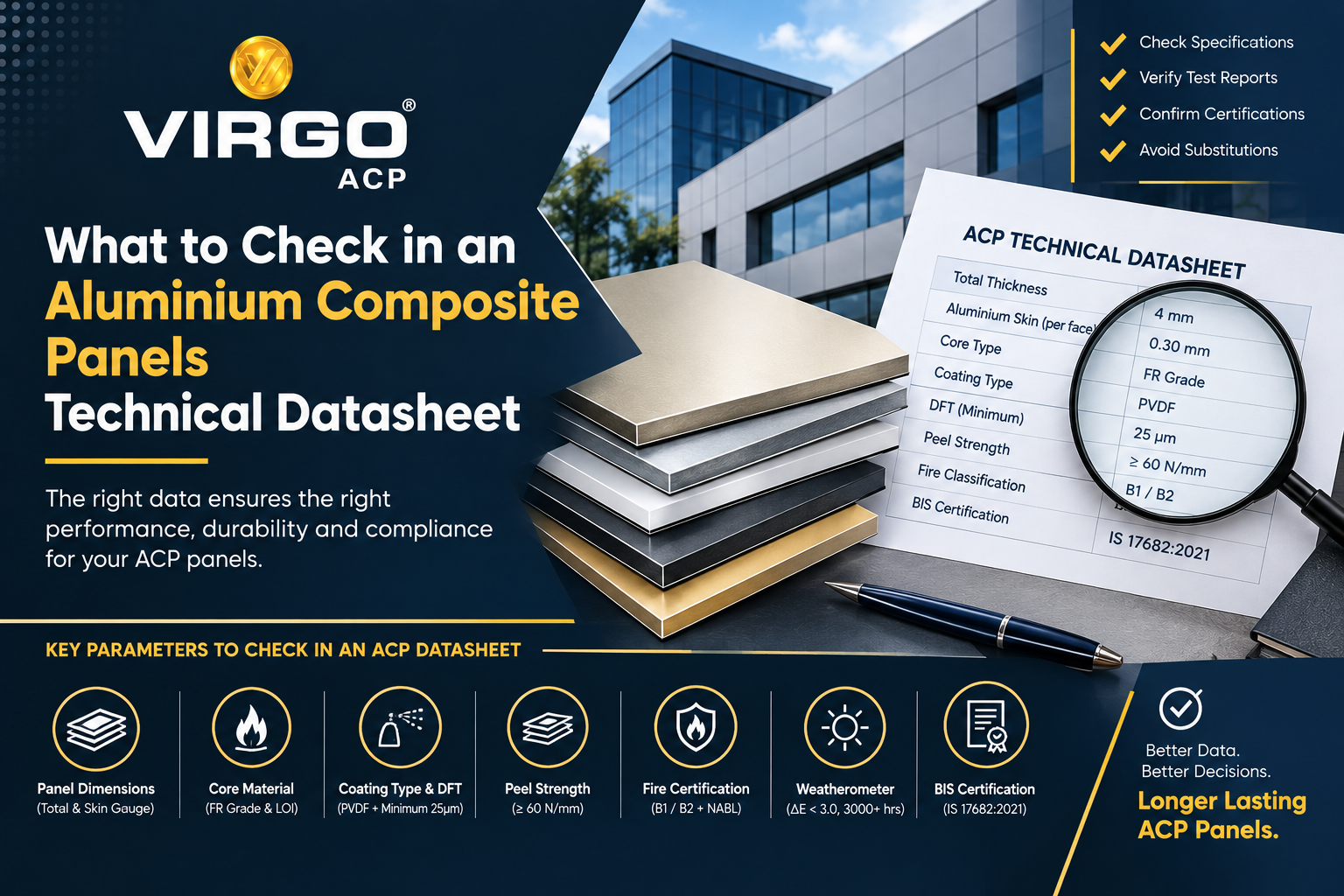
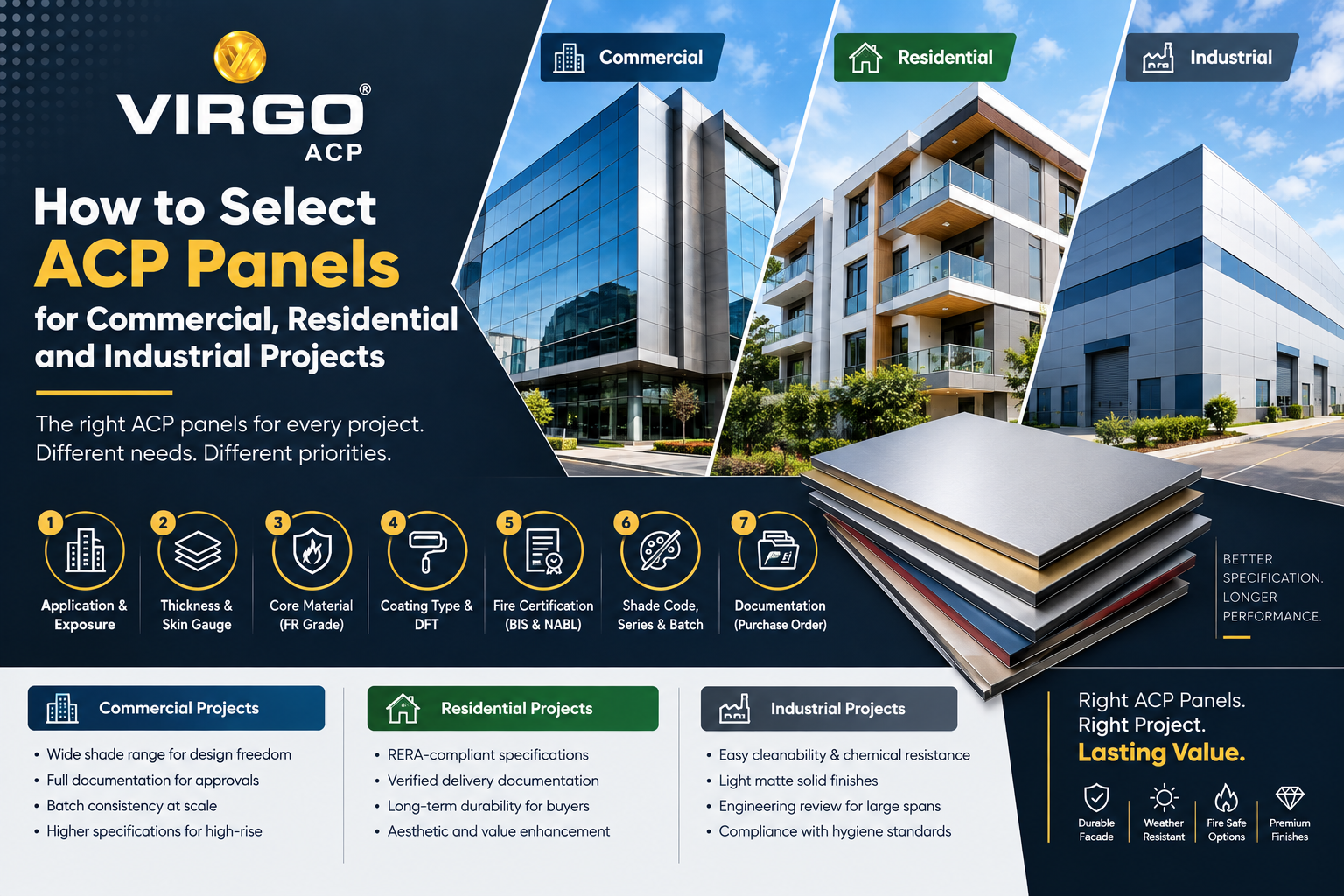
Aluminium Composite Panels are three-layer panels: two aluminium skins permanently bonded to a core material. ACP cladding sheets are used across commercial and residential building facades because they are lightweight, weather-resistant with PVDF coating, and available in a wide range including solid colours, metallics, and stone-effect finishes.
ACP facade panels are installed on an aluminium subframe in a ventilated cavity system. At 5.5 kg/sqm for a standard 4mm ACP cladding sheets system including subframe, the structural implications of Aluminium Composite Panels are a fraction of those from natural stone exterior wall cladding panels.
Natural Stone Cladding Explained
Natural stone cladding — granite, sandstone, limestone, marble — is cut into slabs of approximately 20–30mm thickness and mechanically fixed to the building’s structure. Stone itself weighs 25–80 kg/sqm depending on stone type and thickness. Stone is genuinely permanent when correctly installed — properly specified granite on a commercial building can perform for 50–100 years. The challenge is precisely what the Hyderabad project discovered: weight, cost, installation complexity, and the structural premium required to carry this building facade material.
Weight: The Most Critical Difference in ACP Cladding vs Stone Cladding
Building Facade Material | Approximate Weight | Structural Impact on 5,000 sqm Facade |
ACP cladding sheets (4mm + subframe) | 5.5 kg/sqm | ~27.5 tonnes added dead load |
Granite cladding (25mm + fixing + backing) | 35 kg/sqm | ~400–500 tonnes added dead load |
Sandstone / Limestone (20mm + fixing) | 50–65 kg/sqm | ~250–325 tonnes added dead load |
Marble cladding (20mm + fixing) | 55–70 kg/sqm | ~275–350 tonnes added dead load |
For a mid-rise commercial building, the difference between ACP cladding vs stone cladding in dead load typically translates to a structural cost difference of ₹800–1,500 per sqm just in additional column, beam, and foundation sizing — before accounting for the ACP sheets vs stone material cost difference itself.
Cost: ACP Cladding vs Stone Cladding Across the Full Project
Material cost comparison
ACP cladding sheets (PVDF-coated FR-grade): approximately ₹250–500 per sqm. Natural stone exterior wall cladding panels: approximately ₹800–3,500 per sqm for the stone slab alone. For Aluminium Composite Panels, the material cost is the dominant cost. For stone, the material is just the beginning.
Structural premium
Stone cladding on a mid-rise building adds substantial structural cost that ACP facade panels don’t require. On a 5,000 sqm facade, this structural differential alone can exceed ₹50 lakhs.
Long-term cost
ACP cladding sheets need periodic cleaning and sealant maintenance. Stone needs cleaning, and over decades, fixing inspection, possible anchor replacement, and surface treatment. In the ACP cladding vs stone cladding lifecycle cost comparison, ACP sheets consistently produce lower total cost.
Durability: How Each Building Facade Material Performs Over Time
ACP facade panels durability
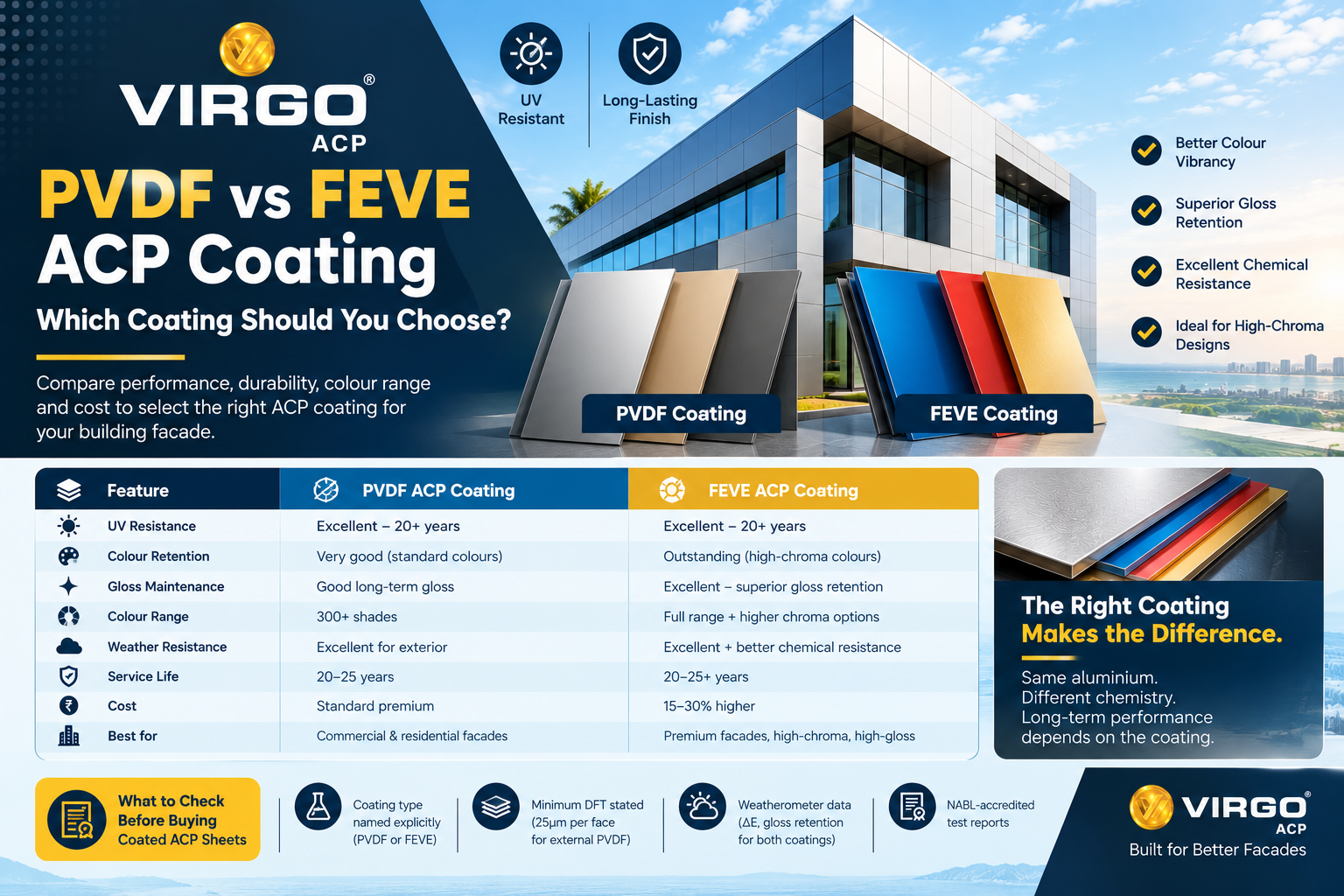
PVDF-coated Aluminium Composite Panels maintain their surface appearance for 20–25 years on Indian external facades without chalking, colour shift, or gloss reduction — provided correct PVDF coating specification is used at 25+ microns DFT with FR-grade core. ACP cladding sheets are waterproof, don’t absorb moisture, and don’t corrode.
Stone cladding durability
Natural stone is genuinely long-lasting — properly installed granite is essentially permanent as a building facade material. However, stone in Indian external conditions is subject to biological growth in humidity, staining from pollution, surface pitting in acid rain environments, and thermal cycling stress on fixing anchors. Neither building facade material is unconditionally ‘more durable’ — the comparison depends on climate, maintenance, and the specific performance measure.
ACP Cladding vs Stone Cladding: Full Comparison Table
Factor | ACP Cladding Sheets / ACP Facade Panels | Stone Cladding |
Weight | 5.5 kg/sqm — ACP sheets including subframe | 50–100 kg/sqm depending on stone type |
Structural premium | Minimal — ACP cladding sheets | Significant — upsized columns, foundations |
Material cost (sqm) | ₹250–500 — Aluminium Composite Panels, PVDF FR-grade | ₹800–3,500 — stone slab only |
Installation complexity | Moderate — exterior wall cladding panels system | High — specialist stone masons, heavy handling |
UV resistance | Excellent — PVDF coated ACP facade panels | Good — stone is not UV-sensitive |
Moisture absorption | None — ACP sheets are waterproof | Varies — granite low, sandstone/limestone higher |
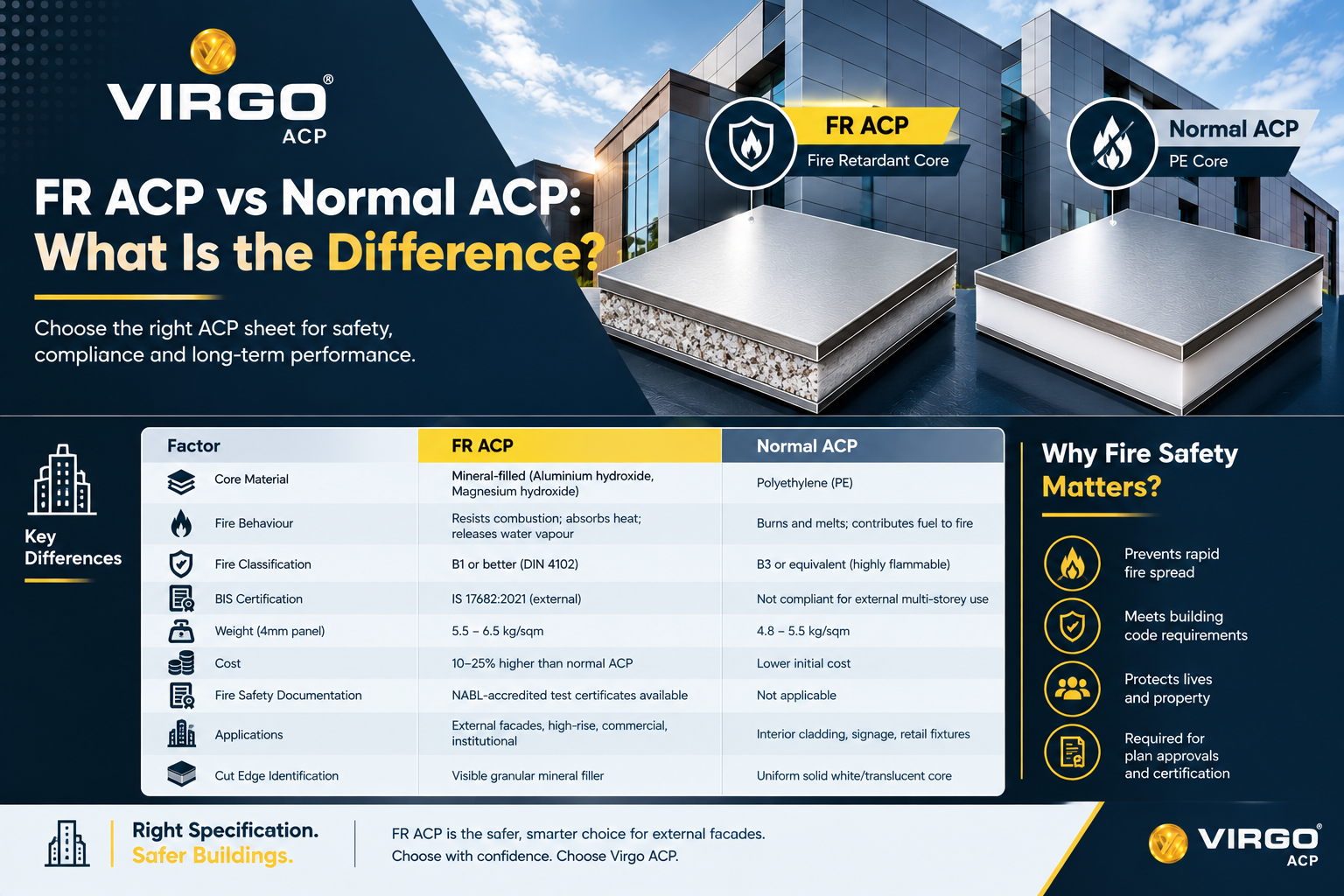
Fire performance | FR-grade Aluminium Composite Panels — BIS IS 17682:2021 compliant | Non-combustible — no equivalent ACP building facade materials standard |
Maintenance (annual) | Cleaning + sealant — ACP cladding sheets | Cleaning + stain treatment + fixing inspection over time |
Appearance lifespan | 20–25 years — PVDF ACP facade panels specification | 50–100 years structural with maintenance |
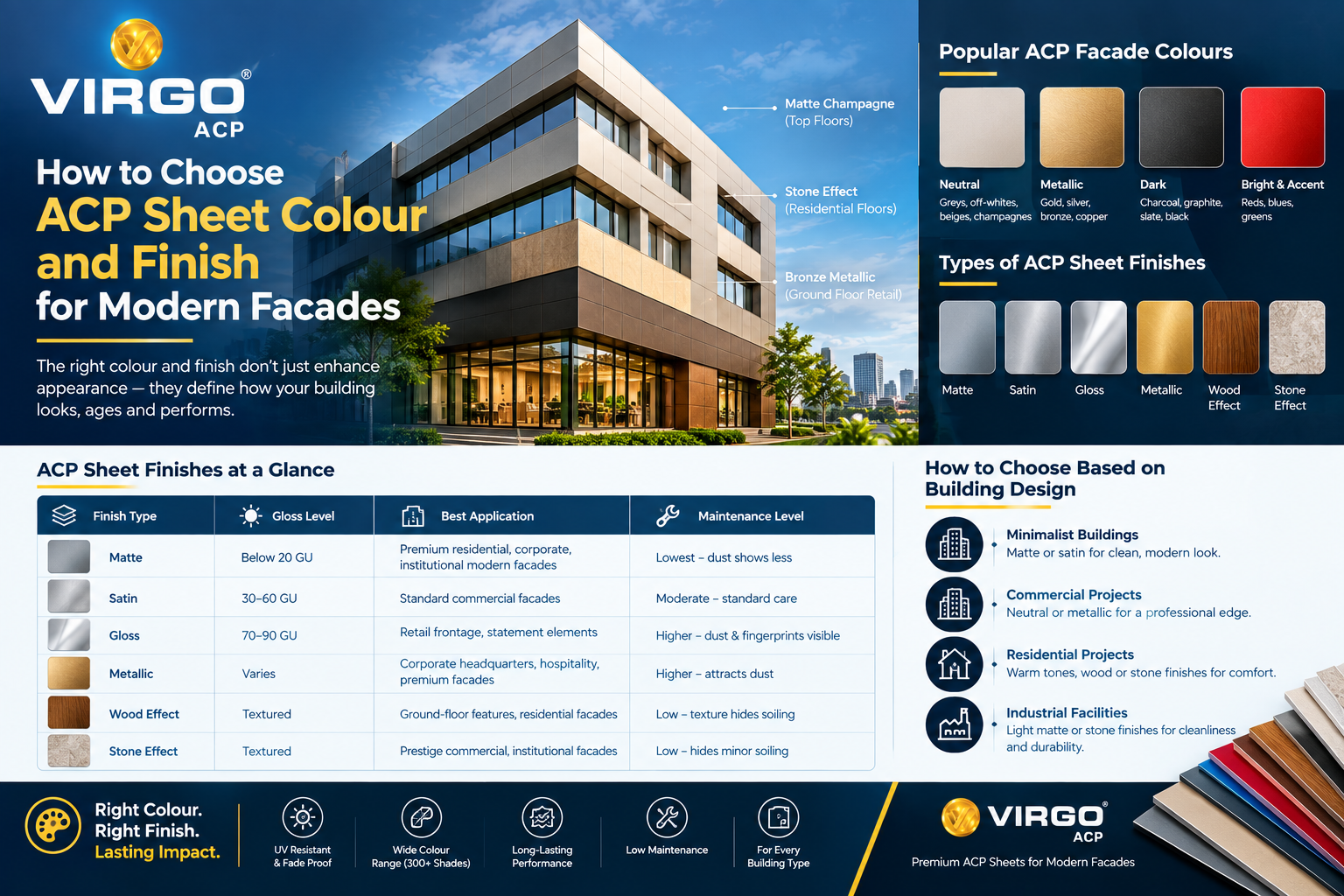
Design flexibility | 300+ colours, stone-effect ACP sheets | Natural stone — authentic veining, no batch consistency |
Repairability | Individual ACP cladding sheets panels — straightforward replacement | Specialist stone restoration, scaffold access required |
Where Each Building Facade Material Works Best
ACP cladding sheets are better for
- Mid-rise to high-rise commercial buildings where structural weight matters for Aluminium Composite Panels vs stone
- RERA-registered residential buildings requiring documented material specifications for exterior wall cladding panels
- Tight construction programmes where installation speed favours ACP facade panels
- Projects where stone-effect ACP sheets achieve the visual intent without the structural cost
Stone cladding is better for
- Prestige civic or institutional buildings where natural material authenticity is non-negotiable as a building facade material
- Low-rise buildings where structural weight is not a constraint
- Projects with 50+ year design lives where permanence is the primary criterion
Frequently Asked Questions
Q. Is ACP cladding cheaper than stone cladding on a total project basis?
Ans. In the ACP cladding vs stone cladding total cost comparison, ACP cladding sheets almost always cost significantly less. ACP sheets material costs ₹250–500/sqm versus ₹800–3,500/sqm for stone. The full cost difference includes the structural premium for stone — upsized columns and foundations that add ₹800–1,500 per sqm in structural cost on mid-rise buildings. ACP facade panels eliminate this structural premium entirely.
Q. Which is lighter — ACP cladding or stone cladding?
Ans. ACP cladding sheets are dramatically lighter. A 4mm ACP facade panels system weighs approximately 5.5 kg/sqm. Natural stone exterior wall cladding panels range from 50 to 100 kg/sqm including fixing and backing. On a 5,000 sqm facade, this is the difference between approximately 27 tonnes and 500 tonnes of added dead load — a structural engineering difference, not a detail.
Q. Is ACP durable enough for exterior facades as a building facade material?
Ans. PVDF-coated Aluminium Composite Panels on external facades maintain appearance and performance for 20–25 years without chalking, colour shift, or surface degradation. ACP cladding sheets don’t absorb moisture, don’t corrode, and don’t develop biological growth. For building facade materials performance comparisons, properly specified ACP sheets perform comparably to most stone types over a typical commercial building lifespan.
Q. Which building facade material needs less maintenance — ACP or stone?
Ans. ACP cladding sheets need cleaning and sealant inspection — no surface treatment, no specialist restoration. Stone exterior wall cladding panels need cleaning, stain treatment in pollution environments, biological growth treatment in humid climates, and fixing inspection after 15–20 years. ACP facade panels consistently produce lower lifecycle maintenance costs in the ACP cladding vs stone cladding comparison.
Q. Can ACP look like stone cladding?
Ans. Stone-effect Aluminium Composite Panels replicate granite, sandstone, travertine, and marble appearances effectively. At close range (under 1 metre), stone-effect ACP cladding sheets read as a printed surface rather than natural stone. For facades viewed from street level or adjacent buildings, stone-effect exterior wall cladding panels achieve the visual intent effectively.
Virgo ACP offers ACP cladding sheets and ACP facade panels in 300+ shades — including stone-effect Aluminium Composite Panels. BIS IS 17682:2021 certified. Explore the full range at virgoacp.com/products/