
FR ACP vs Normal ACP: What Is the Difference?
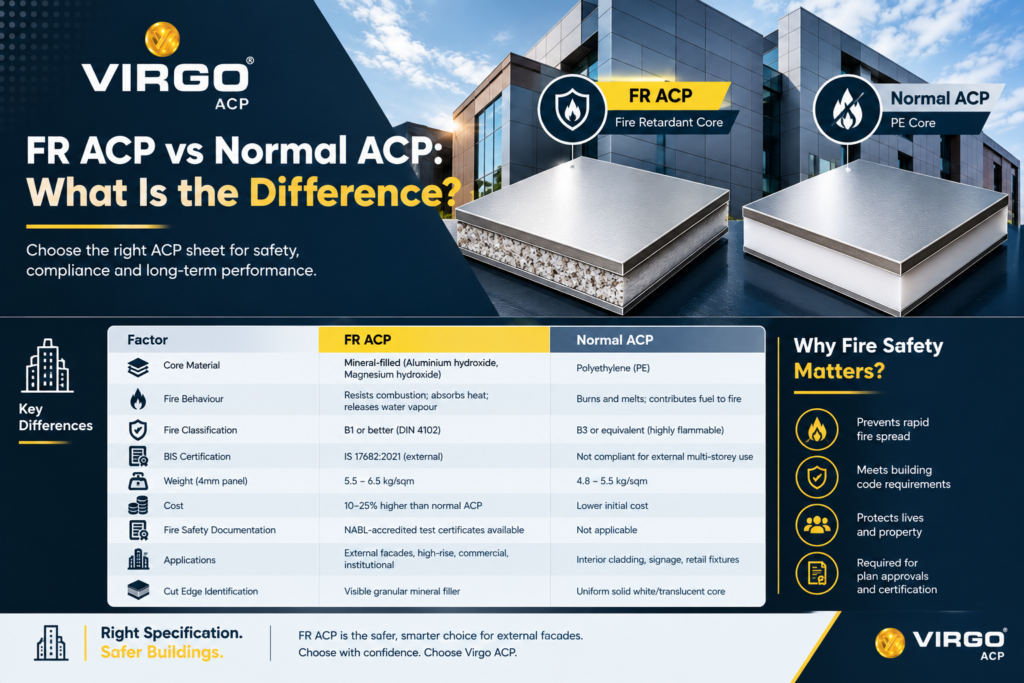
The question comes up in almost every significant facade project specification meeting: do we need FR ACP or will normal ACP sheet work for this application? When a procurement manager asks this question, they’re usually weighing cost. When a fire safety consultant asks it, they already know the answer — and it’s FR ACP. The FR ACP vs normal ACP debate is genuinely important and becomes more so every year as Indian building codes tighten. Getting the FR ACP vs normal ACP decision right before procurement protects the project, the developer, and everyone in the building. What Is FR ACP? FR ACP stands for fire-retardant aluminium composite panel. The ‘FR’ designation refers to the core material — the layer between the two aluminium skins — which contains mineral filler compounds that resist combustion. The mineral fillers in FR ACP cores — typically aluminium hydroxide or magnesium hydroxide — undergo an endothermic decomposition reaction when exposed to fire heat: they absorb heat and release water vapour. This simultaneously removes heat energy from the combustion zone and dilutes oxygen available to sustain burning. FR ACP is classified under DIN 4102 standards as B1 (non-flammable) or better. FR ACP sheet benefits include: fire performance meeting regulatory requirements for external facades on occupied buildings; ability to provide NABL-accredited fire test certificates and BIS IS 17682:2021 certification documentation; and the ACP fire safety compliance necessary for building authority plan approvals. What Is Normal ACP? Normal ACP refers to aluminium composite panels with a PE (polyethylene) core — the original and historically most common ACP construction. Normal ACP sheet is lightweight, extremely easy to route and fold in fabrication, and less expensive than fire retardant ACP sheet. Normal ACP sheet has legitimate applications: interior wall cladding, exhibition displays, retail fixtures, and interior feature walls where ACP fire safety requirements don’t apply in the same way as external facades. The issue is when normal ACP sheet is specified or substituted into applications requiring fire resistant ACP. Normal ACP sheet construction: two aluminium skins bonded to a polyethylene core. Polyethylene burns readily. Several high-profile building fires internationally — including Grenfell Tower in London in 2017 — involved normal ACP or PE-core ACP in external cladding, significantly contributing to fire spread. This is the fundamental reason the FR ACP vs normal ACP decision matters. FR ACP vs Normal ACP: Key Differences Factor FR ACP Normal ACP Sheet Core material Mineral-filled compound (aluminium hydroxide, magnesium hydroxide) Polyethylene (PE) Fire behaviour Resists combustion; absorbs heat; releases water vapour Burns and melts; contributes fuel to fire Fire classification B1 or better (DIN 4102) B3 or equivalent (highly flammable) BIS IS 17682:2021 (external) Compliant — fire retardant ACP sheet standard Non-compliant for external multi-storey use Weight (4mm panel) 5.5–6.5 kg/sqm 4.8–5.5 kg/sqm Cost 10–25% higher than normal ACP sheet Lower initial cost ACP fire safety documentation NABL-accredited fire test certificates available Not applicable for fire performance Applications External facades, high-rise, commercial, institutional Interior cladding, signage, retail fixtures Cut edge identification Visible granular mineral filler in core cross-section Uniform solid white/translucent plastic core Why Is ACP Fire Safety Important for Building Facades? ACP fire safety matters because facades are one of the primary pathways through which fire spreads vertically in multi-storey buildings. External cladding systems with combustible cores allow fire to move from floor to floor far faster than internal fire spread — faster than evacuation systems are designed for. Beyond life safety, ACP fire safety has regulatory implications: BIS IS 17682:2021 classifies products for fire performance for external ACP on multi-storey buildings. Building authority approvals in most major Indian cities now require FR ACP fire documentation. Projects specified with normal ACP sheet instead of fire retardant ACP sheet risk rejection at plan approval or completion certification stage. Where Is FR ACP Commonly Used? Commercial Buildings Any commercial building above ground floor with external ACP cladding should use FR ACP. The documentation requirements, regulatory environment, and RERA disclosure obligations all point to fire retardant ACP sheet for commercial applications. High-Rise Buildings FR ACP vs normal ACP is not a choice for buildings above 15 metres in most Indian states — fire safety codes require fire resistant ACP. FR ACP sheet benefits are mandatory, not optional, for high-rise applications. Hospitals and Institutions Healthcare facilities require FR ACP for all external cladding. ACP fire safety documentation must be available for building licensing and healthcare accreditation inspections. Public Buildings Government procurement guidelines increasingly specify fire retardant ACP sheet by default. FR ACP sheet benefits in terms of BIS certification availability and test documentation make FR ACP the standard for public sector projects. How to Choose Between FR ACP vs Normal ACP Building height — any building above two storeys requires FR ACP for external cladding; normal ACP sheet is not appropriate for multi-storey external facades Application (interior vs exterior) — interior feature walls can use normal ACP sheet where ACP fire safety requirements for the specific space don’t require FR classification; external facades always require fire retardant ACP sheet Fire safety requirements — if a fire safety consultant or building authority requires FR classification, FR ACP is the only answer in the FR ACP vs normal ACP decision Regulatory requirements — RERA-registered residential projects and institutional funding increasingly require FR ACP documentation; normal ACP sheet cannot provide ACP fire safety documentation Does FR ACP Cost More Than Normal ACP? FR ACP costs approximately 10–25% more than normal ACP sheet on a per-sqm basis. The FR ACP vs normal ACP cost comparison is misleading without considering what normal ACP sheet costs on a project: regulatory rejection requiring re-specification to fire retardant ACP sheet mid-project; remediation costs if the building authority requires removal and replacement of non-compliant normal ACP sheet; fire liability exposure in the event of a fire; and insurance implications for buildings with non-compliant facade materials. The FR ACP sheet benefits over the project lifecycle are not proportional to the 10–25% cost premium. FR ACP vs Normal ACP: What to Check Before Buying Core type on